Full Cassette vs Semi Cassette Awnings
If you are comparing full cassette vs semi cassette awnings, you are already asking the right question. The cassette style affects how well your awning fabric and arms are protected, how clean the system looks when closed, and how much you will spend upfront. It also has a direct impact on long-term performance, especially in places where sun, wind, rain, and seasonal changes all put outdoor products to work.
For homeowners and business owners, this is not a small detail. A retractable awning is a visible part of the property, but it is also a working system with moving arms, fabric tension, hardware, and in many cases motorized operation. Choosing the right cassette style means balancing appearance, protection, and budget.
Full cassette vs semi cassette: what is the difference?
The simplest way to understand full cassette vs semi cassette is to look at what happens when the awning retracts.
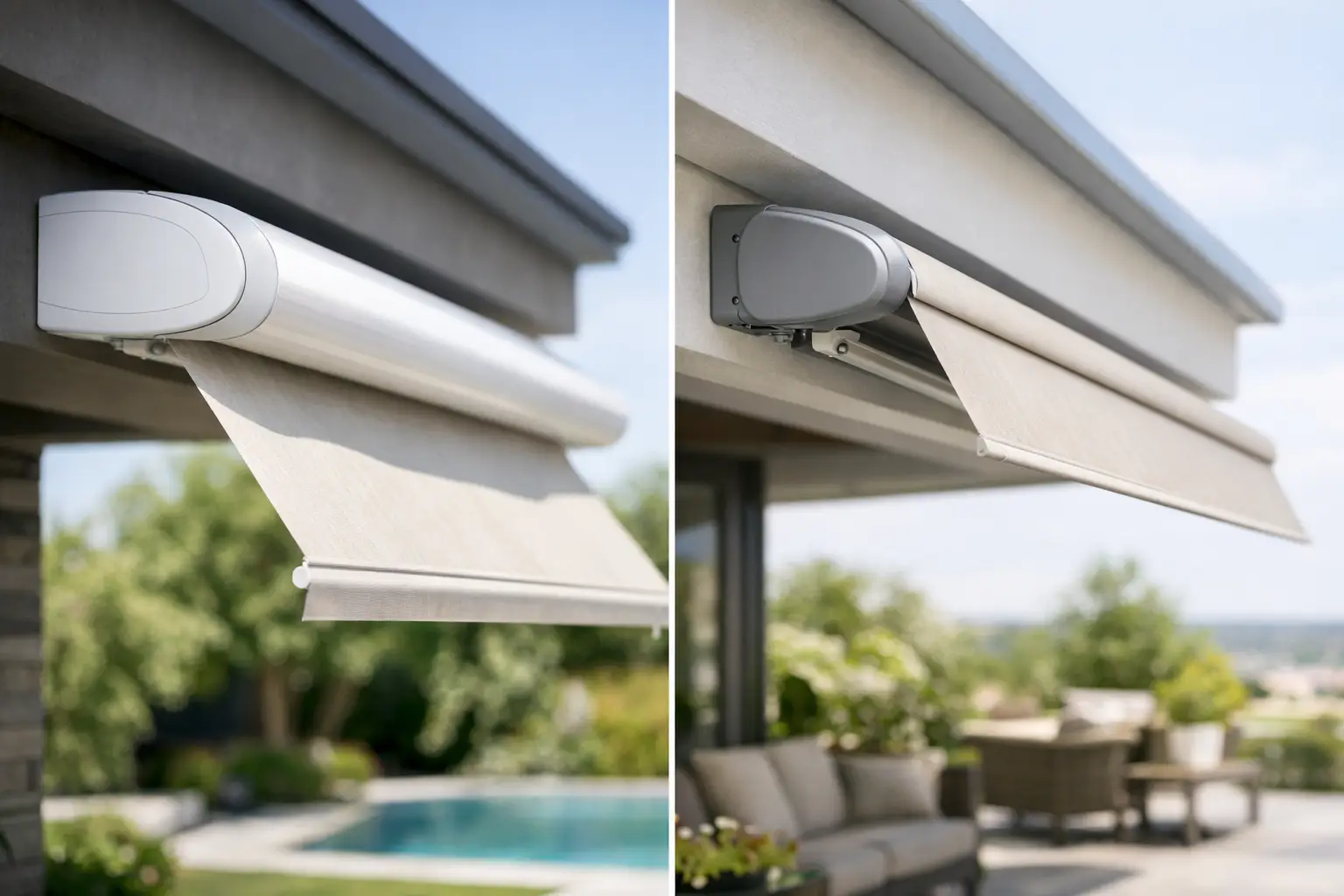
A full cassette awning encloses the fabric roll, folding arms, and most of the operating components inside a fully covered housing. When closed, the system is tucked away inside the cassette, which protects it from dirt, rain exposure, debris, and UV wear when not in use. This gives the awning a sleek, finished appearance and helps preserve the fabric and moving parts over time.
A semi cassette awning also uses a protective housing, but it does not fully enclose all components in the same way. Typically, the top portion of the fabric roll is more protected than a traditional open awning, while parts of the arms or underside remain more exposed. It still offers a cleaner look and better protection than a basic open design, but it does not seal everything away as completely as a full cassette model.
That difference may sound minor on paper, but in real-world use it matters.
Why cassette type matters more than many buyers expect
Most buyers first focus on projection, fabric color, motorization, or price. Those are all important. But the cassette style affects how the awning ages.
A full cassette unit is built for maximum protection when retracted. If your awning is installed on a sunny rear patio, a wind-prone deck, or a commercial frontage exposed to street dust and weather, that extra enclosure helps reduce wear. Fabric stays cleaner. Arms and hardware are less exposed. The overall look stays sharper for longer.
A semi cassette unit can still be an excellent choice, especially when the awning is installed under some natural shelter, such as a soffit or overhang, or when budget is a bigger factor. Many property owners do not need the highest level of enclosure to get strong daily performance. They need dependable shade, a good-looking system, and a price point that makes sense for the project.
This is where professional guidance matters. The right answer depends on your property conditions, how often the awning will be used, and how you want the system to look once retracted.
Full cassette awnings: where they stand out
A full cassette awning is usually the premium option, and there is a reason for that. It is designed to provide better all-around protection and a more refined finish.
From a design perspective, full cassette systems are often preferred for modern homes, upscale patios, storefronts, cafés, and restaurants where appearance matters as much as function. When the awning closes, the cassette creates a compact, polished profile instead of leaving visible fabric and arms underneath.
From a performance standpoint, the benefit is straightforward. Less exposure generally means less maintenance pressure and better protection for the fabric roll and mechanical components. If you are investing in a motorized system or high-end fabric, protecting those elements when the awning is not in use makes practical sense.
This style is also a strong fit for customers who want a cleaner architectural look. On many homes and commercial buildings, a full cassette blends into the façade more neatly and looks intentional rather than added on.
The trade-off is price. Full cassette systems typically cost more than semi cassette options because they include a more complete enclosure and often come with a more premium build profile. They can also be slightly bulkier depending on the model and projection size, although many modern designs keep the housing slim and attractive.
Semi cassette awnings: where they make sense
Semi cassette awnings sit in a very practical middle ground. They offer more protection and a more finished look than open awnings, while usually coming in at a lower price than full cassette models.
For many residential patios, balconies, decks, and backyard seating areas, this is enough. If the installation area already has some environmental shielding, or if the owner is mainly focused on getting strong shade coverage without stepping into a top-tier price range, a semi cassette can be the smart buy.
Commercial buyers also choose semi cassette systems when they need reliable coverage over storefront windows, customer seating, or service areas but want to keep the project cost under control. In these cases, the savings can be meaningful, especially on larger or multi-unit jobs.
A semi cassette is not a compromise in the sense of being low quality. It is simply a different protection level. With the right product, proper pitch, and professional installation, it can deliver excellent results.
Full cassette vs semi cassette on durability and maintenance
When customers ask which style lasts longer, the honest answer is that both can perform very well if the awning is properly sized, installed, and used correctly. But in a direct full cassette vs semi cassette comparison, the full cassette usually has the edge in long-term protection.
Because the fabric and arms are more enclosed, there is less exposure to weathering while the unit is closed. That can help preserve appearance and reduce buildup from dust, pollen, leaves, and general outdoor grime. Over time, that matters.
A semi cassette still offers protection, especially from above, but it leaves more of the structure exposed. In mild conditions, this may not be a concern. In tougher conditions, it can mean slightly more cleaning and a bit more wear over the years.
That said, no retractable awning should be treated as maintenance-free. Fabric should be kept clean and dry when possible. The system should be operated properly, and motorized units should be installed and adjusted by experienced technicians. A great product can still underperform if the installation is poor.
Which option looks better?
For most buyers focused on appearance, the full cassette wins. It creates a more integrated, higher-end finish, especially when retracted. This is one reason full cassette European-style awnings are so popular on design-driven residential projects and customer-facing commercial spaces.
A semi cassette can still look very good, particularly on traditional homes and practical-use installations where the awning is extended often and viewed primarily for its shade function. The difference is most noticeable when the system is closed.
If your goal is a streamlined exterior with minimal visible hardware, full cassette is usually the better fit. If your priority is value with a clean but less enclosed finish, semi cassette often checks the box.
How to choose the right cassette style for your property
The best choice comes down to a few real questions. How exposed is the installation area? How important is a fully enclosed look? Are you planning to motorize the awning? And how closely are you managing budget?
If you want the most polished appearance, stronger protection when retracted, and the best setup for preserving premium fabric and components, a full cassette awning is usually worth the upgrade.
If you want dependable shade, a cleaner look than an open awning, and better value on cost, a semi cassette may be the more practical option.
For buyers in Toronto and the GTA, weather conditions are part of the equation. Seasonal shifts, strong sun, and exposure to wind-driven rain can all influence how much benefit you get from a more enclosed system. This is why showroom consultation and site-specific recommendations matter. A good awning decision is not based on brochure language alone. It should reflect the wall location, mounting conditions, projection required, and how the patio or storefront is actually used.
At Welda Solar Shading Systems, this is where custom guidance makes the difference. The right awning is not just the one with the best feature list. It is the one that fits the property, the budget, and the way you plan to use the space.
If you are still weighing full cassette vs semi cassette, treat it as a value decision rather than a simple price comparison. Paying more for protection can make sense. So can choosing a well-built semi cassette if it fits the site and usage pattern. The smartest next step is to match the awning to the job, not the other way around.