GTA Patio Cover Consultation: What to Expect
A patio cover looks simple from the street. In practice, the wrong projection, the wrong mounting surface, or the wrong fabric can turn a good-looking upgrade into something that blocks light indoors, struggles in wind, or falls short when summer heat hits hard. A proper GTA patio cover consultation helps avoid that. It gives you real answers on fit, function, and long-term value before you commit to a system.
For homeowners, that usually means figuring out how to make a deck, terrace, or backyard sitting area more usable without overbuilding the space. For commercial operators, it often means adding comfortable coverage for guests while keeping the setup practical, durable, and easy to manage. In both cases, the consultation matters because patio shading is not one-size-fits-all.
Why a GTA patio cover consultation matters
The biggest mistake people make is shopping by appearance alone. A sleek retractable awning or pergola can look perfect online, but your actual site conditions decide whether it will perform the way you expect. Sun direction, wall strength, roofline clearance, drainage, wind exposure, and intended use all affect the right recommendation.
That is why a consultation should do more than produce a price. It should narrow down which product category makes sense for your property and explain the trade-offs clearly. A retractable awning gives flexible shade and can preserve open sky when you do not need coverage. A fixed or louvered pergola can provide a more architectural presence and stronger weather management. Drop shades can help with glare, privacy, and late-day sun, but they need to work with the main structure and the way you move through the space.
A good consultation also protects your budget. Sometimes a customer asks for a large motorized system when a simpler manual setup would meet the need. Other times, someone starts with the smallest option and realizes the patio really needs broader projection, integrated lighting, or side protection to be worth the investment. Clarity upfront saves money later.
What happens during a patio cover consultation
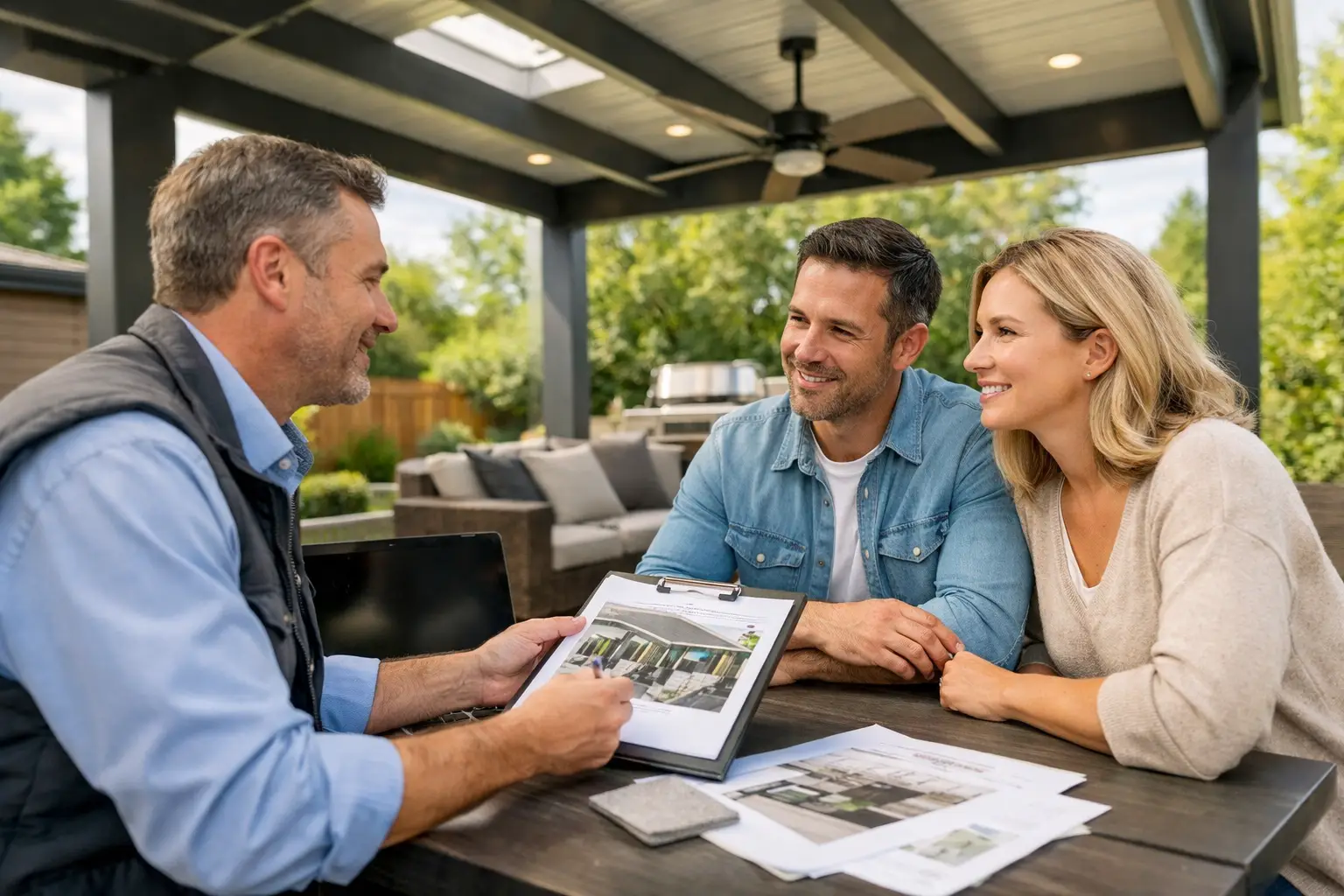
A professional patio cover consultation should feel focused, not complicated. The goal is to understand the space, define the problem, and match it to the right product.
It usually starts with how you want to use the area. If you are shading a residential patio, the questions may center on dining, entertaining, poolside lounging, or reducing indoor heat gain through rear-facing windows. If you are outfitting a restaurant or cafe patio, the discussion shifts toward guest comfort, table layout, traffic flow, weather exposure, and how often the system will be operated.
From there, measurements and mounting conditions come into play. Width and projection are only the beginning. Installers also need to assess wall structure, attachment points, soffits, brick or masonry condition, slope, and any obstructions such as downspouts, lighting, vents, or second-story overhangs. These details affect not just fit, but safety and performance.
Then comes product matching. This is where experience matters. A full-cassette retractable awning may be the right choice for a design-conscious homeowner who wants fabric protection and a clean look when the unit is closed. A folding arm system may suit a broad seating area without requiring posts. An aluminum louvered pergola may be better for customers who want more control over rain, sun, and integrated upgrades like lighting, heating, privacy screens, or insect protection.
The best consultations also address operation. Manual systems can be cost-effective and reliable for smaller residential applications. Motorized systems make more sense when the unit is large, used frequently, or part of a premium outdoor living setup. For commercial sites, motorization often improves daily convenience and helps staff operate the system consistently.
The questions worth asking during your GTA patio cover consultation
You do not need to know every technical detail before you book, but asking the right questions will help you compare options more confidently.
Ask what the system is designed to handle in real weather. Not every cover is meant for the same conditions. Some products are primarily for sun protection, while others are built to help manage light rain, stronger exposure, or more demanding commercial use. The answer may vary based on size, mounting, and location.
Ask how much coverage you will actually get at peak sun hours. This matters because the advertised dimensions of a system do not always translate into the shade pattern you expect on the ground. Sun angle changes throughout the day, and west-facing patios often need more than overhead projection alone.
Ask what upgrades are worth paying for and which ones are optional. Integrated lighting, heaters, wind sensors, privacy shades, and motor controls can improve comfort, but not every project needs all of them. A useful consultation explains where added features create day-to-day value and where they simply increase cost.
Ask about maintenance, service access, and replacement parts. A patio cover is a long-term exterior system. You want to know how easy it is to clean, service, and maintain over time, especially if the installation includes motors, lighting, or screen components.
Choosing the right product depends on how you use the space
This is where many consultations either become helpful or turn into generic sales talk. The right recommendation depends on usage, not just square footage.
For a backyard deck that gets harsh afternoon sun, a retractable awning may be the most efficient answer. It adds shade when needed, opens back up when you want full daylight, and can often deliver a strong visual upgrade without changing the entire structure of the yard. If the homeowner wants a streamlined appearance and better fabric protection when closed, a cassette model may justify the higher spend.
For a premium outdoor living area, a pergola can offer more presence and more functionality. It works well when the goal is to create an outdoor room rather than just a shaded patch. If rain management, integrated accessories, and year-round visual impact matter, that added structure can make sense. The trade-off is cost and permanence. It is a bigger installation with a different design impact.
For restaurants and hospitality patios, reliability and layout often matter more than style alone. Large-span awnings can help maximize usable seating while keeping the frontage open and attractive. In other cases, pergola systems with side shades may be the better fit because they create a more controlled guest environment. The right answer depends on the footprint, municipal requirements, and how the business operates during changing weather.
Why site conditions can change the recommendation
Two patios with the same dimensions can need completely different solutions. That is why an on-site review or showroom-backed planning process is so valuable.
A south-facing exposure may call for broad overhead shade, while a west-facing patio may need side screening to deal with low sun and glare. A solid masonry wall may support a large retractable unit, while another property may need a different mounting strategy because of framing limitations or architectural details. Condo terraces, townhomes, detached homes, and storefront patios each come with their own constraints.
This is also where customization pays off. Standard sizes can work in some cases, but custom-fit systems usually provide a better result when the goal is clean coverage, balanced proportions, and dependable operation. That matters even more when aesthetics are a priority or when the shaded area needs to align with doors, windows, railing lines, or outdoor furniture zones.
What a strong provider should bring to the table
A consultation should leave you with more than a brochure and a rough number. You should come away with a clear sense of what can be installed, what product type fits the space, what options are worth considering, and what the installation process will involve.
Look for a provider that can handle product selection, customization, and installation as one coordinated service. That reduces guesswork and helps ensure the recommendation is grounded in real installation conditions. It also matters for warranty support, service questions, and long-term performance.
Showroom access can be a real advantage as well. Seeing frame profiles, fabric choices, control options, and construction details in person tends to make decision-making easier. Photos can suggest quality. Physical comparison confirms it.
For customers in Toronto and the surrounding area, Welda Solar Shading Systems approaches consultation the way it should be handled – by aligning product choice with site conditions, usage goals, and a realistic budget, then carrying the project through professional installation.
The best time to book is before the busy season forces rushed decisions. If you are thinking about improving a patio, balcony, deck, or commercial outdoor area, a consultation is where the smart part of the project starts. It is the moment when ideas turn into a system that actually works for your space, not just one that looks good in a photo.