How to Clean Awning Fabric Without Damage
That green film along the edge of your awning is not just a cosmetic problem. Dirt, pollen, bird droppings, tree sap, and mildew can wear down fabric faster than most owners expect. If you are wondering how to clean awning fabric properly, the goal is not to make it look new for a weekend. It is to protect the material, preserve color, and avoid the kind of scrubbing or chemical use that shortens the life of the canopy.
Awnings are built to handle sun, light rain, and daily outdoor exposure, but fabric still needs routine care. The right cleaning method depends on what is actually on the surface, how long it has been there, and whether you are dealing with standard seasonal grime or a more stubborn stain. In most cases, a gentle approach works better than an aggressive one.
How to clean awning fabric the right way
Start by opening the awning fully so you can see the entire surface. If the fabric is wet from rain or morning dew, let it dry first. Cleaning a damp awning usually turns loose dirt into muddy residue, which makes the job harder.
Use a soft brush or dry broom to remove surface debris. Leaves, dust, cobwebs, and grit should come off before any water touches the fabric. This matters more than people think. If you skip this step and go straight to scrubbing, you can grind abrasive particles into the weave.
Next, mix a mild cleaning solution with lukewarm water and a small amount of gentle soap. A basic dish soap or mild fabric-safe soap is usually enough. You do not need a strong degreaser for general maintenance, and in many cases it is a bad idea. Harsh cleaners can strip protective coatings, fade the fabric, or weaken stitching over time.
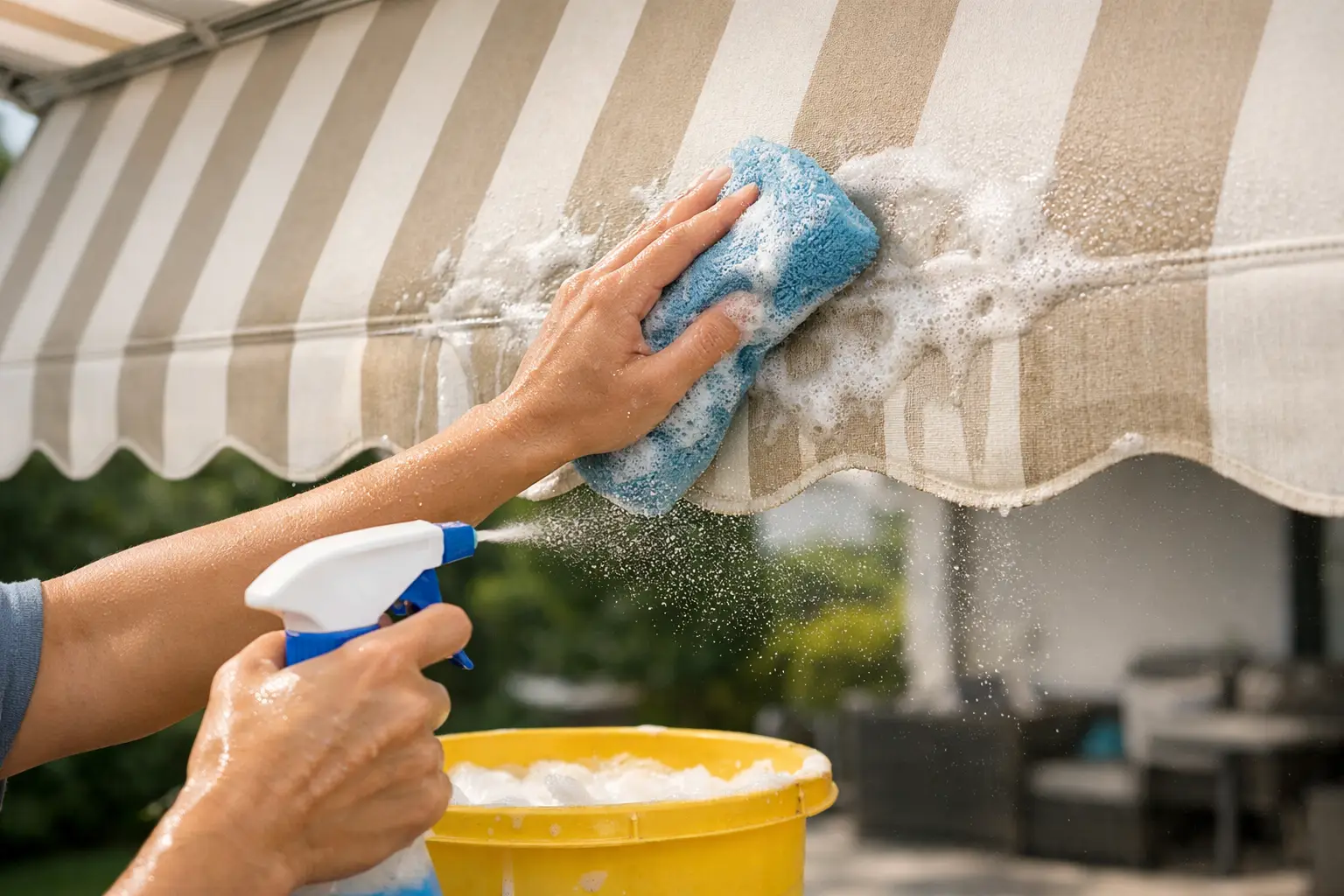
Apply the solution with a sponge, soft cloth, or soft-bristle brush. Work in sections instead of soaking the whole awning at once. Light pressure is usually all that is needed. Focus on visibly soiled areas, the front valance, and any sections under trees or near cooking areas where buildup tends to collect.
Let the soap sit for a few minutes, but do not let it dry on the fabric. Then rinse thoroughly with clean water. A garden hose is usually the safest option. High-pressure washing may seem faster, but it can force dirt deeper into seams, damage the fabric surface, and stress the frame if used too aggressively.
The final step is simple and easy to overlook. Leave the awning fully open until it is completely dry. Closing it while damp can trap moisture and create the exact mildew problem you were trying to solve.
What to avoid when cleaning an awning
A lot of awning damage happens during cleaning, not during weather exposure. That is why technique matters.
Bleach is a common mistake. Some people reach for it as soon as they see dark spotting, but bleach is often too harsh for awning fabrics and can affect thread, coatings, and color consistency. Solvent-based stain removers can create similar problems. If you are not sure whether a cleaner is safe, test it on a small hidden area first.
Wire brushes are another problem. Even if the fabric looks tough, overly stiff tools can rough up the surface and leave it more vulnerable to wear. The same goes for pressure washers. They have their place in exterior cleaning, but awning fabric is usually not it.
It also helps to avoid cleaning in direct midday heat. Soap dries too quickly, rinsing becomes uneven, and you are more likely to end up with residue marks. A mild day with some shade is ideal.
Dealing with mildew, tree sap, and stubborn stains
Not every stain responds to soap and water in the same way. Mildew is the one that concerns most property owners because it looks bad and tends to return if the real cause is not addressed. In many cases, mildew grows because moisture has been trapped after rain, humidity, or improper storage.
For light mildew, a mild soap solution and careful brushing may be enough. For heavier growth, the answer depends on the fabric type and manufacturer guidance. Some specialty awning fabrics can handle specific mildew treatments, while others need a more cautious approach. If you are unsure, it is better to check the care recommendations than experiment with stronger chemicals.
Tree sap is different. It usually needs patience more than force. Letting a safe cleaner sit briefly on the spot can help loosen it, but hard scraping is risky. Bird droppings should be removed as soon as possible because acidity can stain the fabric if left too long. Grease marks from outdoor cooking can also settle in quickly, especially on restaurant or commercial patio awnings, so early cleaning gives you the best chance of full removal.
If stains keep returning, the issue may not be cleaning at all. It may be drainage, overhanging trees, poor airflow, or an awning that is regularly closed before drying.
How often should you clean awning fabric?
For most homes, a light cleaning once or twice during the warmer season is enough, along with spot cleaning when needed. If the awning is near trees, a grill, a busy road, or a pool area, it may need more attention.
Commercial properties usually need a more frequent schedule. Restaurant and café awnings collect grease, air pollution, and heavier traffic-related dirt much faster than a typical residential patio setup. In those settings, appearance is part of the customer experience, so regular maintenance protects both the fabric and the presentation of the business.
The best approach is preventative. A quick brush-off every few weeks can do more for long-term appearance than an intense deep clean once a year. It also gives you a chance to spot small issues early, like loose stitching, sagging sections, or marks that may become permanent if ignored.
Fabric care after cleaning
Knowing how to clean awning fabric is only part of the job. Good aftercare keeps the material performing well between cleanings.
Try to retract the awning during severe weather rather than relying on cleaning to correct the aftermath later. Fabric can handle normal outdoor exposure, but heavy wind, pooling rain, and storm debris put unnecessary stress on both the canopy and the frame. If your system is motorized, use the convenience. One of the biggest advantages of a retractable awning is that you can protect it when conditions turn.
Trim back branches if the awning sits close to trees. This cuts down on sap, leaf staining, and bird activity. If you notice water pooling anywhere on the fabric, do not ignore it. Standing water can lead to staining, stretching, and mildew if the pitch or installation needs adjustment.
It is also worth checking seams, arms, and mounting points while the awning is open. Cleaning day is often the only time owners really inspect the full system. A fabric issue may actually be related to alignment, tension, or hardware wear.
When DIY cleaning is enough and when it is not
Routine washing is manageable for most homeowners, especially when the awning is accessible and the staining is light. But there are times when professional help makes more sense.
If the fabric is heavily mildewed, difficult to reach, extra large, or attached to a motorized system with high mounting points, do-it-yourself cleaning can become more of a risk than a savings. The same applies if the awning is older and you are seeing signs of seam failure, fabric thinning, or recurring discoloration. In those cases, cleaning may improve the surface, but it will not solve underlying wear.
For custom retractable systems, especially on larger patios or commercial storefronts, a professional inspection can tell you whether the fabric simply needs maintenance or if it is time to consider repair or replacement. That distinction matters. Spending hours scrubbing a canopy that is already at the end of its service life is not always the best use of time.
At Welda Solar Shading Systems, this comes up often with property owners who want their outdoor space to look sharp again without guessing their way through fabric care. The right advice depends on the age of the awning, the fabric type, and how the system is used day to day.
A clean awning does more than improve curb appeal. It helps your patio, deck, storefront, or restaurant frontage feel maintained, usable, and ready for the season. Treat the fabric gently, clean it before buildup gets heavy, and when the condition looks like more than surface dirt, get a professional opinion before small maintenance turns into avoidable damage.