How to Expand Restaurant Patio Space
A packed dining room on a warm Friday night is great. Watching empty outdoor tables sit unused because the sun is too harsh or a light rain sends guests inside is not. If you are figuring out how to expand restaurant patio space, the answer is often less about pouring more concrete and more about making your existing exterior area usable, comfortable, and profitable for longer hours and more of the year.
For many restaurant owners, patio expansion is really a capacity problem wrapped inside an operations problem. You want more seats, but you also need table turnover, server access, weather protection, and a setup that still looks like part of your brand. The smartest patio expansions solve all of those at once.
What expanding a restaurant patio really means
When owners think about expansion, they often picture a bigger footprint. Sometimes that is possible. Sometimes it is not. In practice, patio expansion usually falls into three categories: increasing the physical area, increasing the number of usable seats within the same area, or increasing how often that area can stay open.
That third option is the one many operators overlook. A patio that is only comfortable for two hours in the evening is not truly pulling its weight. Add overhead shade, rain coverage, privacy screening, or integrated lighting and heating, and the same square footage can start generating revenue from lunch through late evening.
That is why the first question is not how much space you have. It is how much usable patio time you are losing right now.
How to expand restaurant patio capacity without wasting space
Before choosing any structure or covering, look at traffic flow. A patio can technically fit more tables and still perform worse if guests feel cramped or staff cannot move cleanly through the floor. Expansion should improve revenue, not create bottlenecks.
Start by measuring the clear walking paths between tables, exits, and service stations. Check where guests pause, where servers turn with trays, and where host stands or barriers interrupt movement. In many cases, reworking the layout frees enough room for additional two-top tables or flexible joinable tables without making the patio feel crowded.
Furniture selection matters just as much. Heavy, oversized seating may look upscale, but it can eat up valuable square footage. Commercial-grade tables with slimmer profiles or modular arrangements often let you serve more parties while keeping the patio visually open. If brunch, dinner, and private events all use the same patio, flexible furniture gives you more operating options than a fixed layout.
Still, layout alone has limits. Once you reach the point where every extra seat starts hurting comfort, the next move is usually overhead coverage.
Shade is often the fastest path to a bigger-feeling patio
A restaurant patio does not need to physically grow to feel larger to customers. Covered space reads as more intentional, more comfortable, and more premium. It invites guests to stay longer and makes edge seating more desirable instead of the tables people avoid because they are too hot or too exposed.
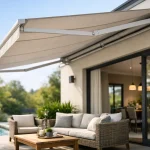
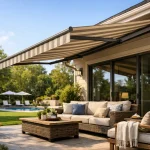
Retractable awnings are one of the most practical ways to do this. They extend coverage when you need it and retract when you want open sky or more winter light. For restaurants, that flexibility matters. A fixed solution can work well in some locations, but a retractable system gives you better control over changing weather, different times of day, and seasonal operation.
Motorized awnings are especially useful for hospitality settings because staff can adjust them quickly without disrupting service. If the sun shifts across the dining area or a brief shower starts, coverage can change in seconds. That keeps tables in service instead of forcing guests to relocate.
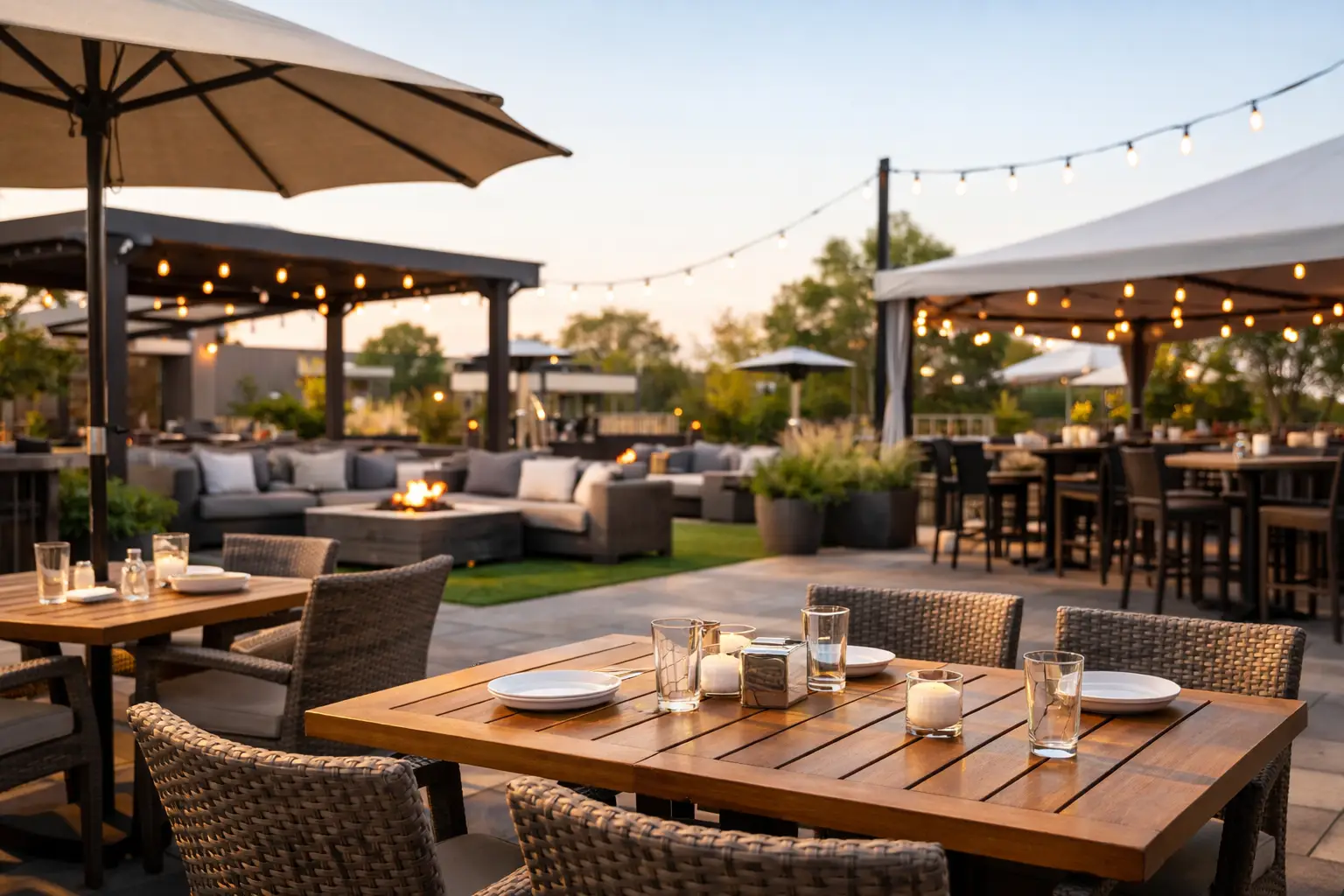
For larger patios or restaurants that want a more architectural finish, pergola systems can create a stronger sense of enclosure and define the dining zone more clearly. Add integrated lighting, heaters, side screens, or privacy shades, and you are not just covering a patio. You are turning it into a revenue-producing room outdoors.
Weather protection is what makes expansion pay off
A patio with no protection is vulnerable to every forecast. That limits reservations, creates staffing uncertainty, and reduces confidence when you try to fill outdoor tables. If guests think they may be uncomfortable in an hour, they are less likely to accept patio seating in the first place.
Rain coverage is the obvious issue, but sun management is often the bigger one. Harsh afternoon heat can knock out half your patio even on a perfect day. The right awning or pergola system reduces glare, lowers surface temperatures, and makes the area feel more stable and inviting.
Side protection can also make a major difference. Drop shades help block low-angle sun, light wind, and street exposure. That can make perimeter tables far easier to sell while giving the whole patio a more finished and private feel. In busy commercial areas, privacy screening also helps define your dining space and strengthen curb appeal.
If you want to stretch the season further, heating and lighting matter. Guests will sit outside longer when the patio feels intentional after sunset. Operators who invest in these upgrades usually see the benefit in evening covers first, then in shoulder-season service when competitors have already given up on outdoor seating.
Permits, codes, and building limits can shape the project
Any article about how to expand restaurant patio space should be honest about this part: what you want to build and what you are allowed to build are not always the same thing. Depending on your site, city requirements, landlord approvals, fire access, and sidewalk or frontage rules may affect how far you can extend, what kind of structure you can install, and whether your system must be removable or fixed.
This is where many projects slow down. Owners choose a concept before confirming site constraints, then end up redesigning it later. A better approach is to evaluate your footprint, access points, sun exposure, and mounting options first. That tells you whether a retractable awning, freestanding system, or pergola is the more practical fit.
It also helps to think about maintenance and durability early. Restaurant patios take more abuse than residential spaces. Grease, constant use, cleaning chemicals, and frequent operation all put pressure on the system. Commercial-grade products built for North American weather and daily use are worth the investment because downtime costs money.
Design still matters because comfort sells faster when it looks intentional
A functional patio that looks temporary can still leave money on the table. Guests respond to spaces that feel designed, not improvised. That does not mean overbuilding or chasing trends. It means choosing a system that matches your storefront, signage, and service style.
A sleek full-cassette retractable awning can work well for cafes, bistros, and polished street-facing concepts. A larger folding arm awning may be the better choice when wide coverage and flexibility matter most. An aluminum pergola can suit restaurants that want a more permanent premium look with lighting and climate upgrades built in.
Color, projection, frame style, and valance details all affect how the patio reads from the street. Done right, shade coverage becomes part of your branding. It can make the restaurant more visible, more inviting, and more memorable before guests even sit down.
The right patio expansion depends on your service model
Not every restaurant needs the same solution. Quick-service operators may care most about daytime shade and curb appeal. Full-service restaurants often need longer table comfort, evening ambiance, and weather reliability. Bars and hospitality venues may prioritize larger covered zones, lighting integration, and flexibility for events.
That is why there is no single best way to expand. If your goal is more lunch traffic, sun protection may be enough. If your goal is to add dependable evening covers and extend the shoulder season, a more complete system with screens, lighting, and heaters may deliver a better return.
Budget matters too, but so does cost per usable seat. A cheaper setup that only works on ideal days may look efficient upfront and underperform over time. A better-designed system often earns its value by keeping more tables active, more often, with fewer weather-related disruptions.
Make the patio easier to sell, not just larger
The best patio expansions do not simply add square footage. They remove reasons for guests to say no. Too hot, too bright, too windy, might rain, no privacy, not comfortable after dark – these are the real barriers that reduce patio revenue.
When you solve those issues with the right combination of layout, retractable coverage, weather protection, and design, the patio starts functioning like a true extension of the restaurant. It supports service, strengthens appearance, and gives you more flexibility in how you seat and serve.
If you are planning a project in Toronto or the GTA, working with an experienced shade and installation team can save time and costly missteps, especially when the goal is commercial durability and a custom fit. Welda Solar Shading Systems helps restaurant owners create patio spaces that work harder in real conditions, not just on paper.
A good patio expansion should do one simple thing well: make more of your outdoor space usable when customers actually want to be there.