Louvered Pergola vs Gazebo: Which Fits Best?
Picture a July afternoon when the patio is too hot to enjoy, then a quick rain shower pushes everyone back inside. That is usually the moment the louvered pergola vs gazebo question becomes real. Both can improve comfort, extend outdoor use, and add visual value to a property, but they solve the problem in very different ways.
If you are planning an upgrade for a backyard, rooftop terrace, restaurant patio, or poolside seating area, the right choice comes down to how you want the space to work day after day. Some buyers want a classic freestanding structure that creates instant character. Others want adjustable shade, cleaner lines, and more control over sun, rain, airflow, and add-on features. That difference matters more than the label.
Louvered pergola vs gazebo: the core difference
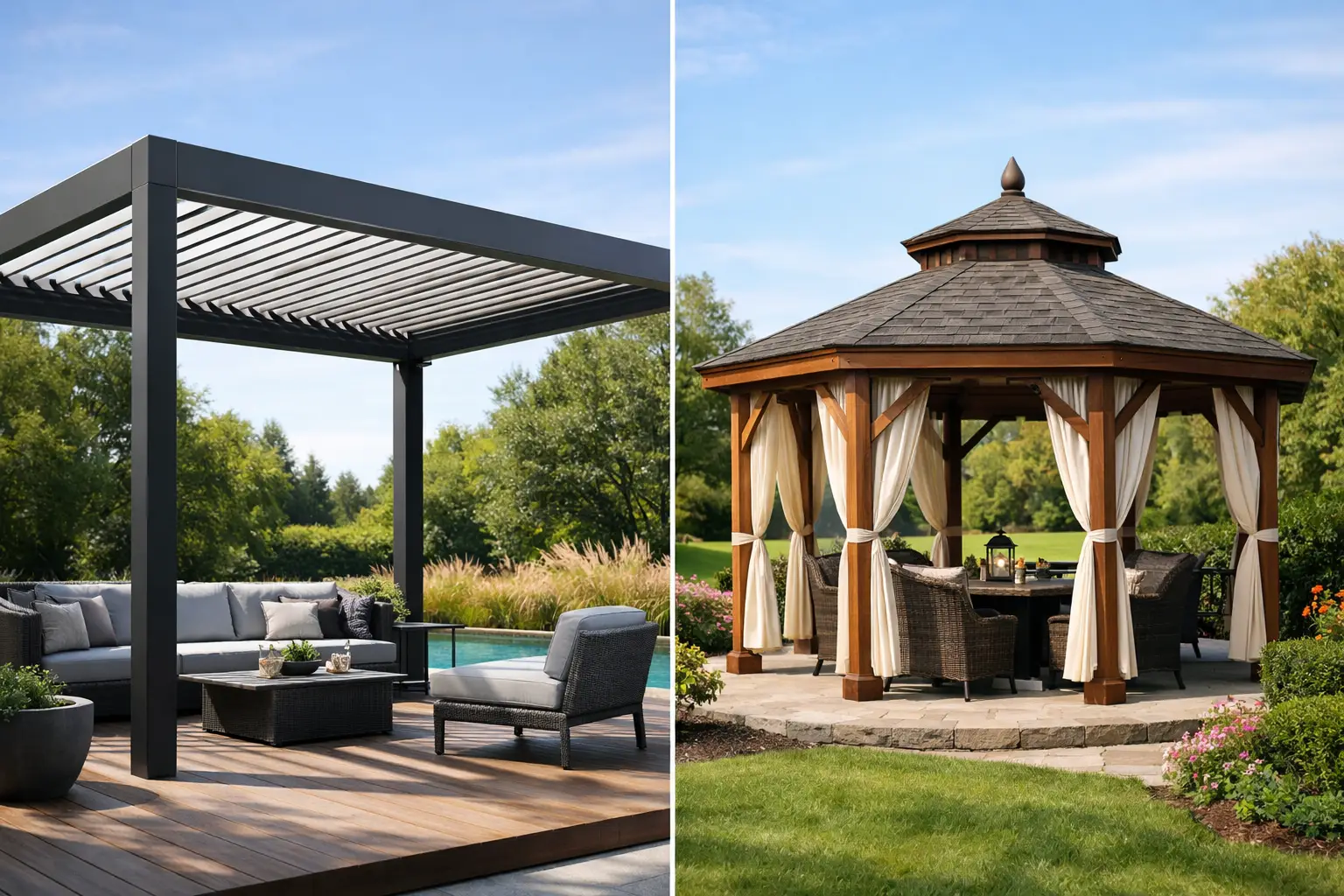
A gazebo is usually a fixed-roof outdoor structure, often freestanding, with a more traditional look. It creates a defined sheltered area and can feel decorative, permanent, and cozy. Depending on the design, it may have open sides, partial rails, or screening.
A louvered pergola is typically a more modern aluminum structure with adjustable roof louvers that rotate open or closed. When open, it lets in light and air. When closed, it provides stronger protection from direct sun and light rain. Many systems can also be upgraded with motorization, integrated lighting, privacy shades, heaters, and insect screens.
That adjustability is the big separating line. A gazebo gives you fixed coverage. A louvered pergola gives you control.
Which one performs better in real weather?
For many property owners, weather performance is where the decision gets easier.
A gazebo can provide dependable overhead shelter, especially if the roof is solid and well built. It can work well for occasional shade and basic rain coverage. But because the roof is fixed, you do not get to change how much sun or airflow enters the space. On a cooler day, that may not matter. On a hot day, a closed, fixed-top structure can trap warmth.
A louvered pergola is designed for more flexible use. You can angle the louvers to reduce glare without fully blocking daylight. You can open them when you want ventilation and close them when the weather shifts. For homeowners and commercial operators who want to use the space through changing conditions, that flexibility has real value.
In areas with mixed summer weather, strong sun, and seasonal rain, an aluminum louvered system often feels more practical because it adapts instead of forcing the same setting all day.
Style and curb appeal
The visual difference between these two options is just as important as the functional one.
A gazebo leans traditional. It can suit classic backyards, garden settings, and properties where a decorative focal point is part of the goal. If you like a softer, more ornamental look, a gazebo may fit the setting naturally.
A louvered pergola has a cleaner architectural appearance. It works especially well with newer homes, contemporary landscapes, and commercial patios that need a polished, professional finish. It tends to look more intentional and less decorative, which appeals to buyers who want the outdoor area to feel like an extension of the building rather than a separate garden feature.
This is one of those it depends decisions. If your priority is timeless charm, the gazebo may win. If your priority is a sleek outdoor living system that looks current and performs like a product upgrade, the pergola usually comes out ahead.
Comfort features make a big difference
When people compare structures, they often focus on the roof and forget how the space will actually feel once they start using it.
A standard gazebo can be comfortable, but the feature set is often simpler unless you add custom accessories later. A louvered pergola is built with upgrades in mind. Integrated LED lighting can extend evening use. Drop shades can cut low-angle sun and create privacy. Insect screens help make dinner outside easier. Heaters can stretch the season well beyond summer.
For a homeowner who wants more use out of a deck or patio, those additions can change the value of the investment. For a restaurant or hospitality space, they can help create more consistent customer seating and a better guest experience.
The structure is only part of the decision. The real question is how complete you want the outdoor environment to be.
Installation, customization, and fit
Gazebos are available in a wide range of ready-made and custom designs. Some are simple and budget-friendly. Others are more permanent and require substantial site work. That can make them attractive for buyers who want a straightforward outdoor shelter without too many moving parts.
A louvered pergola is usually a more tailored solution. It can be sized to suit a specific patio, terrace, pool deck, or commercial footprint. That matters if your space is not standard or if you want the structure to integrate neatly with the building. Professional measuring, customization, and installation become more important here, especially when adding motorized components or side screens.
For many buyers, this is where working with an experienced supplier matters. A good product on paper can still underperform if drainage, orientation, mounting, and clearances are not handled properly.
Maintenance and long-term ownership
Most buyers do not want an outdoor structure that becomes a constant maintenance project.
A wood gazebo may need more upkeep over time, depending on materials and exposure. That can include repainting, resealing, or addressing wear caused by moisture and sun. Even lower-maintenance gazebo materials still offer a fixed design, which limits how much you can adapt the space over time.
An aluminum louvered pergola is often chosen because it is durable, low maintenance, and built for modern outdoor use. It generally offers better resistance to rust, fading, and everyday weather exposure than more traditional materials. If long-term convenience is high on your list, that is a strong point in its favor.
Of course, moving parts mean you want quality hardware and proper installation. A cheaper system with poor engineering can become frustrating. The right system, installed correctly, tends to give you more day-to-day convenience with less seasonal upkeep.
Cost: upfront price vs usable value
The louvered pergola vs gazebo decision often comes down to budget, but price alone can be misleading.
A gazebo can have a lower entry cost, especially for basic models. If your goal is simple shelter and aesthetics, it may be the more affordable route. That makes sense for buyers with lighter usage expectations or tighter project budgets.
A louvered pergola usually costs more upfront, especially when motorization and integrated features are included. But it can deliver more usable hours, more comfort control, and a stronger sense of customization. For some buyers, that added function justifies the spend because the space gets used more often and in more conditions.
Commercial properties should think about return, not just cost. If a better-shaded patio helps seat more guests, reduce weather disruptions, or improve the overall look of the business, the value calculation shifts quickly.
Best fit for homeowners
For residential spaces, a gazebo works well when you want a classic backyard destination, a garden focal point, or a separate shaded retreat. It can be a good choice if flexibility is not your top concern and the visual style fits the home.
A louvered pergola is often the stronger option when the patio is closely tied to daily living. If you host often, want better sun control, care about a modern finish, or plan to add lighting and privacy features, it tends to offer more practical benefit. It feels less like a decorative add-on and more like a true outdoor room.
Best fit for commercial spaces
Businesses usually need structures that do more than look good. They need shade, rain management, comfort, and a polished appearance that supports operations.
A gazebo may suit certain hospitality settings, especially where ambiance is the main goal. But for restaurants, cafes, and customer-facing patios that need flexibility, a louvered pergola is often the smarter investment. Adjustable coverage helps staff respond to changing weather quickly, and add-ons like side shades and lighting can improve usability from lunch through evening service.
For Toronto and GTA businesses dealing with a short peak patio season, getting more workable days out of the space can make a measurable difference.
So which should you choose?
Choose a gazebo if you want a traditional look, fixed coverage, and a simpler structure that meets basic shelter needs. Choose a louvered pergola if you want modern style, adjustable comfort, and a system that can be customized around how you actually use the space.
The best choice is not the one with the most features. It is the one that solves your specific problem without forcing compromises you will notice later. If you want a patio cover that does more, adapts faster, and supports upgrades like lighting, screens, and motorized control, a louvered pergola usually gives you more room to grow. A quick conversation with an experienced installer, such as Welda Solar Shading Systems, can make that decision much easier before you commit to the wrong structure.