Pergola vs Retractable Awning: Which Fits?
If your patio gets too hot by noon or turns useless the moment light rain starts, the pergola vs retractable awning decision is not just about looks. It affects how often you use the space, how much flexibility you get, and how much work the installation requires.
For some properties, a retractable awning is the fastest way to create comfortable shade without changing the structure of the home. For others, a pergola delivers a more permanent outdoor room with stronger design impact and more upgrade options. The right answer depends on how you plan to use the space, what kind of weather protection you expect, and whether you want a lighter attachment or a more architectural build.
Pergola vs retractable awning: the main difference
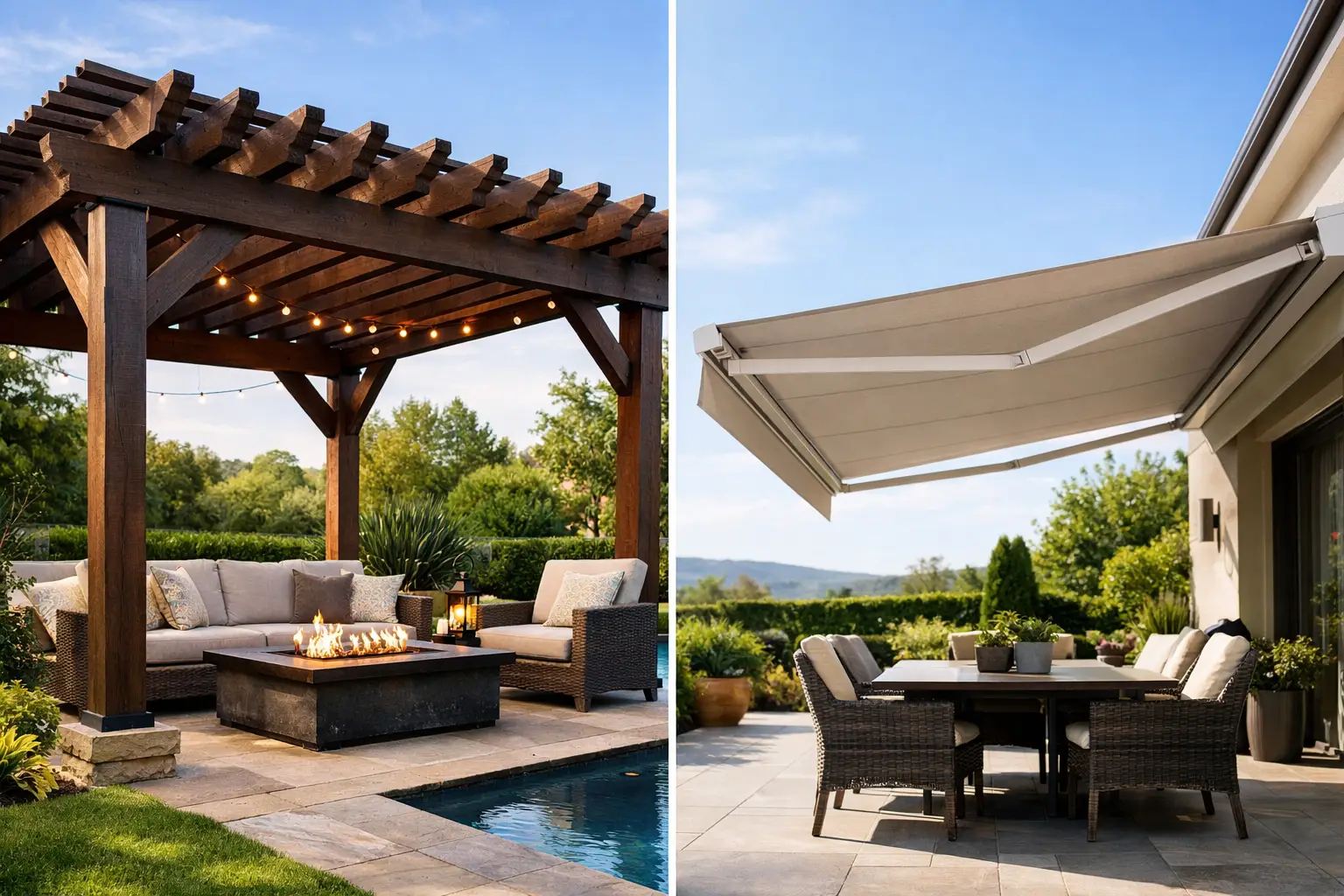
A retractable awning is usually mounted to the wall of a home or building and extends outward when you want shade. When retracted, it folds away and leaves the area open. This makes it popular for patios, decks, storefronts, and restaurant seating where flexibility matters.
A pergola is a freestanding or attached structure supported by posts. Modern aluminum pergolas can include adjustable louvers, lighting, heaters, privacy screens, and motorized controls. In practical terms, a pergola feels more like a built outdoor living zone, while a retractable awning feels more like a smart shade extension.
That difference matters because buyers often compare them as if they do the same job in the same way. They do not. Both provide shade, but they solve different problems.
When a retractable awning makes more sense
If your main goal is to reduce sun and heat over a patio or deck without taking on a major construction project, a retractable awning is often the better fit. It gives you shade when you need it and open sky when you do not. That flexibility is one of its biggest advantages.
This is especially useful for homeowners who want seasonal control. On bright summer afternoons, the awning can extend to cool the seating area and help reduce indoor heat gain near doors and windows. In cooler weather or lower sun conditions, it can stay retracted so you keep natural light.
For commercial spaces, retractable awnings are also practical because they expand usable outdoor seating without permanently enclosing the area. Restaurants and cafes often choose them for customer comfort, visual appeal, and easier day-to-day operation.
Cost is another reason many buyers lean toward an awning. In many cases, a retractable system is more affordable than a pergola, especially if you want effective coverage without a fully framed structure. Installation is typically less invasive as well.
That said, an awning is not the best answer for every site. It depends on the mounting surface, the projection needed, and local wind exposure. If you want a structure that defines the space all year and supports multiple integrated features, a pergola may be the stronger long-term option.
When a pergola is the better investment
A pergola usually makes sense when you want more than shade. You want structure, presence, and a dedicated outdoor area that feels intentional rather than add-on.
For larger backyards, poolside zones, rooftop terraces, and hospitality patios, pergolas often create a stronger visual result. Aluminum louvered pergolas in particular are attractive because they combine clean modern lines with practical weather control. Depending on the design, the louvers can open for sun and ventilation or close for stronger protection from overhead conditions.
A pergola also gives you more freedom to build out the experience. If you want integrated lighting, heaters for cooler evenings, drop shades for privacy, or insect screens, a pergola system can support those upgrades more naturally. That makes it appealing for homeowners creating an outdoor entertainment area and for business owners who need a patio that works across more hours of the day.
The trade-off is price and footprint. A pergola is usually a bigger investment, and the installation is more involved. It takes up visual and physical space in a way an awning does not. For some properties, that is a benefit. For smaller areas, it can feel heavier than necessary.
Cost, maintenance, and long-term value
Price matters, but so does what you are paying for.
A retractable awning is often the more budget-friendly route if your goal is straightforward shade coverage. You can get strong function, optional motorization, and a clean look without committing to a full frame system. It is a very efficient upgrade when the existing patio already works well and simply needs sun protection.
A pergola generally costs more because it is more product and more project. There is a structure to fabricate, customize, and install. If you add motorized louvers, privacy screens, lighting, or heating, the budget climbs further. But for buyers who want a premium outdoor area they can use more often and market more effectively, the extra investment may be justified.
Maintenance depends on the system and materials. Modern aluminum pergolas are popular because they are durable and low maintenance. Retractable awnings also hold up well when properly specified and professionally installed, but fabric and moving components still need care over time. In both cases, product quality and installation quality make a big difference in long-term performance.
Which one handles weather better?
This is where many buying decisions get clearer.
A retractable awning is excellent for shade and can help with light weather exposure depending on the model and pitch. But it is still a retractable fabric system. It is designed for controlled use, not for acting like a permanent roof in every condition. If weather changes quickly, the ability to retract the awning is a major benefit, but it also means the system relies on proper operation and appropriate use.
A pergola, especially an aluminum louvered model, usually offers a more structural approach to weather management. It feels more substantial because it is more substantial. For properties where outdoor use needs to continue through changing conditions, that can be a major advantage.
Still, weather performance is not a simple win for one product every time. If your priority is adjustable shade during hot months and you like the option to completely open the area, an awning may be more useful day to day. If your priority is creating a defined zone with more durable all-season character, a pergola may come out ahead.
Style and property fit
Some buyers start with performance and end up making the final decision based on appearance. That is not a mistake. These systems change how your exterior looks.
A retractable awning tends to feel lighter and less permanent visually. It works well when you want shade without heavily altering the architecture. It can also be a strong fit for homes and storefronts where wall-mount integration matters more than structural presence.
A pergola has more design authority. It can frame a backyard, elevate a terrace, or give a commercial patio a more upscale identity. If you want the outdoor area to feel like a destination rather than a simple seating zone, a pergola usually does that better.
The best choice depends on what your property already needs. Some spaces need flexibility. Others need definition.
How to choose the right system for your space
The fastest way to narrow down pergola vs retractable awning is to ask three practical questions.
First, do you want open sky on demand? If yes, a retractable awning has an obvious edge. Second, are you trying to create a true outdoor room with upgrades and year-round presence? If yes, a pergola is often the stronger match. Third, what is your budget for both product and installation? That answer usually eliminates options quickly.
It also helps to think about how the space is used on real days, not ideal ones. A family patio used mainly on sunny weekends may not need a full pergola structure. A restaurant patio trying to seat more guests consistently may need something more substantial and feature-ready.
For many property owners, the smartest next step is not guessing from photos. It is getting a site-specific recommendation based on projection, mounting conditions, exposure, drainage, and intended use. That is where professional guidance saves time and prevents expensive mismatches. If you are comparing systems for a home or business patio, Welda Solar Shading Systems can help you review custom options and installation requirements before you commit.
The best shade system is the one that makes your outdoor space easier to use, not harder to manage. Choose the option that fits your property, your weather expectations, and the way you actually live or do business outside.