9 Restaurant Patio Awning Ideas That Work
A patio can add revenue fast – until the sun gets harsh, a light rain clears tables, or guests avoid the edge seats because they are too exposed. That is why the best restaurant patio awning ideas are not just about looks. They are about keeping more seats usable, more often, without turning your outdoor space into a maintenance problem.
For restaurant owners, the right awning has to do three jobs at once. It needs to protect guests, support the look of the business, and make sense operationally for staff. A system that looks good but blocks service flow or struggles in changing weather is not really a good idea. The smartest patio shading choices balance coverage, flexibility, and long-term durability.
Restaurant patio awning ideas that add real value
The most effective patio upgrades usually start with how the space is actually used. A small sidewalk cafe has very different needs than a deep back patio at a full-service restaurant. Before choosing a style, it helps to think about table layout, sun direction, clearance, branding, and whether you need seasonal or daily flexibility.
Retractable awnings for flexible coverage
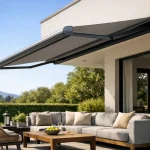
A retractable awning is often the first option worth considering because it gives you control. On bright afternoons, you can extend coverage and make outdoor seating more comfortable. On cooler evenings or lower-traffic times, you can retract it to open the space back up.
This works especially well for restaurants that want weather protection without committing to a fixed overhead structure. It also helps if your patio serves different purposes throughout the day. Lunch service may need strong shade, while evening service may benefit from a more open feel.
The trade-off is that retractable systems need proper sizing, quality hardware, and professional installation. On a commercial patio, larger projections and heavier use demand a stronger product than what works on a small home deck.
Motorized awnings for daily restaurant use
If staff will be adjusting the awning often, motorization is usually worth it. A motorized system makes changes quick and consistent, which matters during busy service. Instead of sending someone outside to crank a large awning manually, the team can respond to changing conditions with a wall switch, remote, or integrated control.
This is one of the best restaurant patio awning ideas for operators who are trying to make outdoor seating easier to manage, not more complicated. Motorization is especially useful on larger patios where timing matters and coverage needs can shift quickly with sun, wind, or light rain.
For higher-end spaces, it also supports a cleaner customer experience. Guests notice when the environment feels controlled and intentional.
Full-cassette awnings for a cleaner, more polished exterior
Restaurants that care about curb appeal should look closely at full-cassette awnings. When retracted, the fabric and arms are enclosed in a protective housing. That keeps the system looking tidier and helps protect key components when not in use.
This style works well for storefront restaurants, cafes, and hospitality spaces where the exterior presentation matters as much as the patio function. It is a smart choice if your building frontage is highly visible and you want shading that feels like part of the architecture instead of an afterthought.
The upfront cost can be higher than a more basic open-style system, but many businesses find the cleaner finish and added protection worth it.
Fixed-frame and pergola-style patio solutions
Some patios need more structure than a standard awning can provide. If your seating area is large, exposed, or expected to operate through more varied weather, a fixed-frame or pergola-style solution may make more sense.
Pergolas for upscale outdoor dining
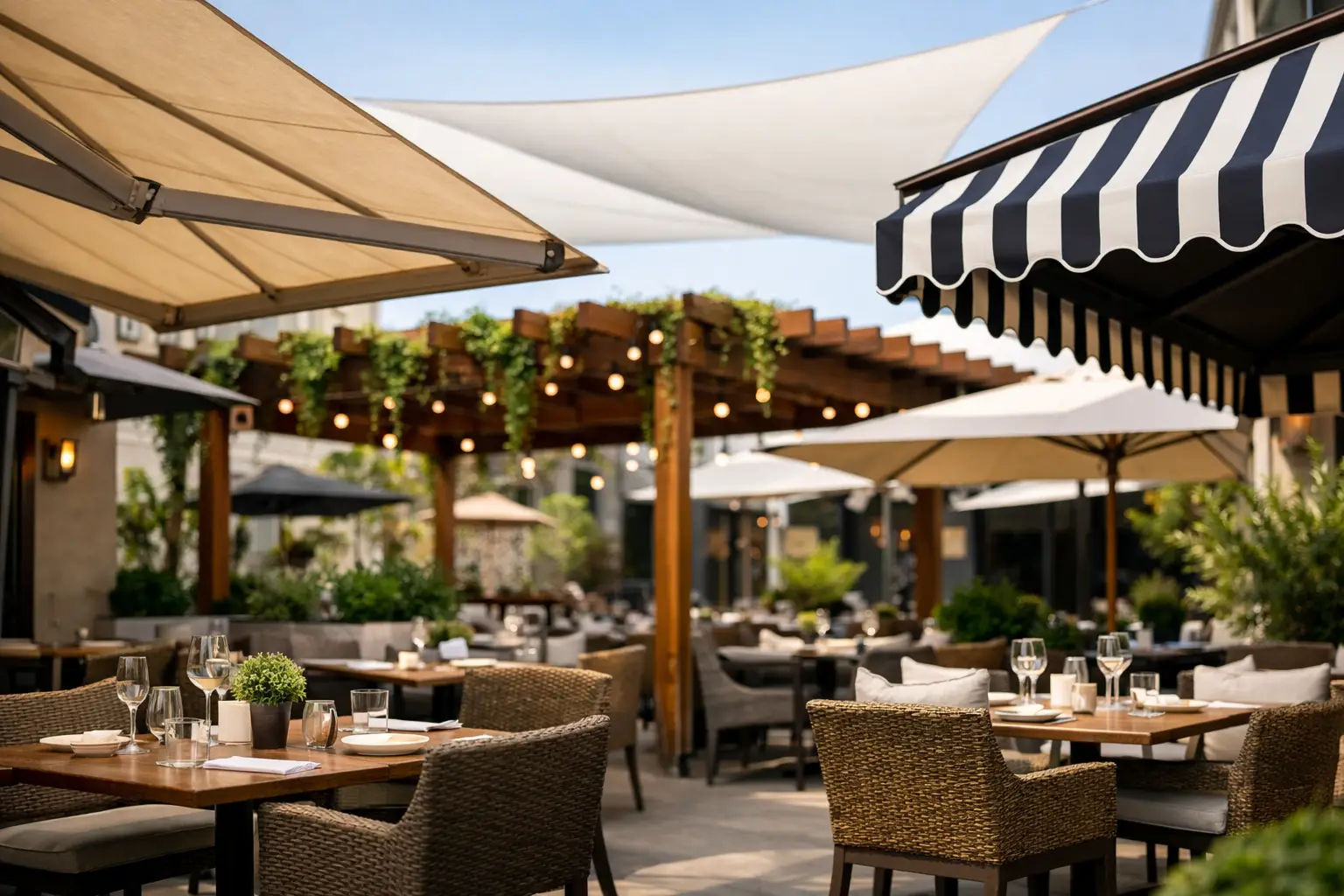
A pergola creates a more permanent outdoor room. For restaurants that want to build a stronger destination feel, this can be one of the most effective upgrades. It gives the patio a defined shape and can support integrated features like lighting, heaters, privacy screens, and side protection.
This is a strong fit for restaurants with enough space to justify a larger investment and a longer seasonal strategy. A pergola can help an outdoor dining area feel more intentional and premium, which matters if presentation is part of the brand.
The key question is flexibility. Some pergola systems offer adjustable louvers or add-on shade features, while others are more static. If your restaurant needs to respond quickly to different weather conditions, make sure the structure is not locking you into one environment all day.
Louvered roof systems for weather control
If you want something beyond basic shade, an aluminum louvered pergola offers more control. Adjustable louvers can help manage sunlight, ventilation, and light precipitation more effectively than a simple fabric cover.
For commercial operators, this can extend patio usability in a practical way. Guests stay more comfortable, and staff have a more dependable service area. It also gives the patio a modern, high-value appearance that works well for contemporary restaurants and hospitality properties.
This type of system is not the lowest-cost option, but it can be the right one if your outdoor seating plays a major role in revenue.
Don’t forget side protection
Many owners focus on overhead shade and overlook side exposure. That is often where comfort breaks down. Late-day sun, wind, street exposure, and light bugs can all make a patio less usable even when the top is covered.
Drop shades for sun, privacy, and wind control
Drop shade systems can be paired with awnings or pergolas to make a patio much more functional. They help block low-angle sun, improve privacy, and reduce wind without fully closing off the space.
For street-facing restaurants, this can make outdoor dining feel more comfortable and contained. For back patios, it can improve comfort during shoulder seasons. It is one of the more practical restaurant patio awning ideas because it solves several guest complaints at once.
If your patio gets direct western sun or frequent crosswinds, side shades can make a bigger difference than increasing overhead projection alone.
Design ideas that support branding
An awning should not look disconnected from the restaurant. It should support the identity of the business while still doing the heavy lifting on comfort and protection.
Match fabric and frame finishes to the concept
A casual cafe may do well with softer neutrals or striped fabric that adds energy. A steakhouse or elevated dining concept may benefit from solid colors, darker frames, and cleaner lines. Modern storefronts often look better with minimalist awning profiles, while traditional facades can handle more decorative presence.
The point is not to overdesign it. The point is to choose a system that looks intentional. When the awning fits the brand, the patio feels more established and inviting from the sidewalk.
Add lighting and heat where it counts
If you are already upgrading the patio cover, it makes sense to think about evening use. Integrated lighting can improve ambiance and help service continue smoothly after sunset. Heating options can stretch the patio season and make more nights profitable.
These upgrades are especially useful when outdoor seating is a key part of your floor plan. They also help your investment work harder instead of only solving midday sun exposure.
How to choose the right restaurant patio awning idea
The best system depends on how your restaurant operates. If you need flexibility and efficient day-to-day use, a retractable or motorized awning is often the strongest option. If you want a more built-out patio experience, a pergola or louvered structure may be the better fit.
Budget matters, but so does downtime, maintenance, and guest comfort. A lower-cost option that underperforms during your busiest months can end up costing more in missed patio use. It is usually smarter to choose a system based on your traffic pattern, exposure, and service style instead of price alone.
Professional measurement and installation are also a big part of getting this right. Commercial patios have more variables than residential spaces – frontage limits, clearances, drainage, building attachment points, and daily wear all matter. A custom-fit system will usually perform better and look better than trying to force a standard solution into a commercial layout.
If you are comparing restaurant patio awning ideas for a property in Toronto or the GTA, it helps to work with a company that understands local weather demands, installation requirements, and the realities of commercial outdoor seating. Welda Solar Shading Systems offers custom options, professional installation, and consultation support for businesses that want a patio cover that works as hard as the space itself.
A good patio awning does more than add shade. It turns outdoor seating into a more dependable part of your business, and that is where the real value starts.