What Louvered Pergolas Cost
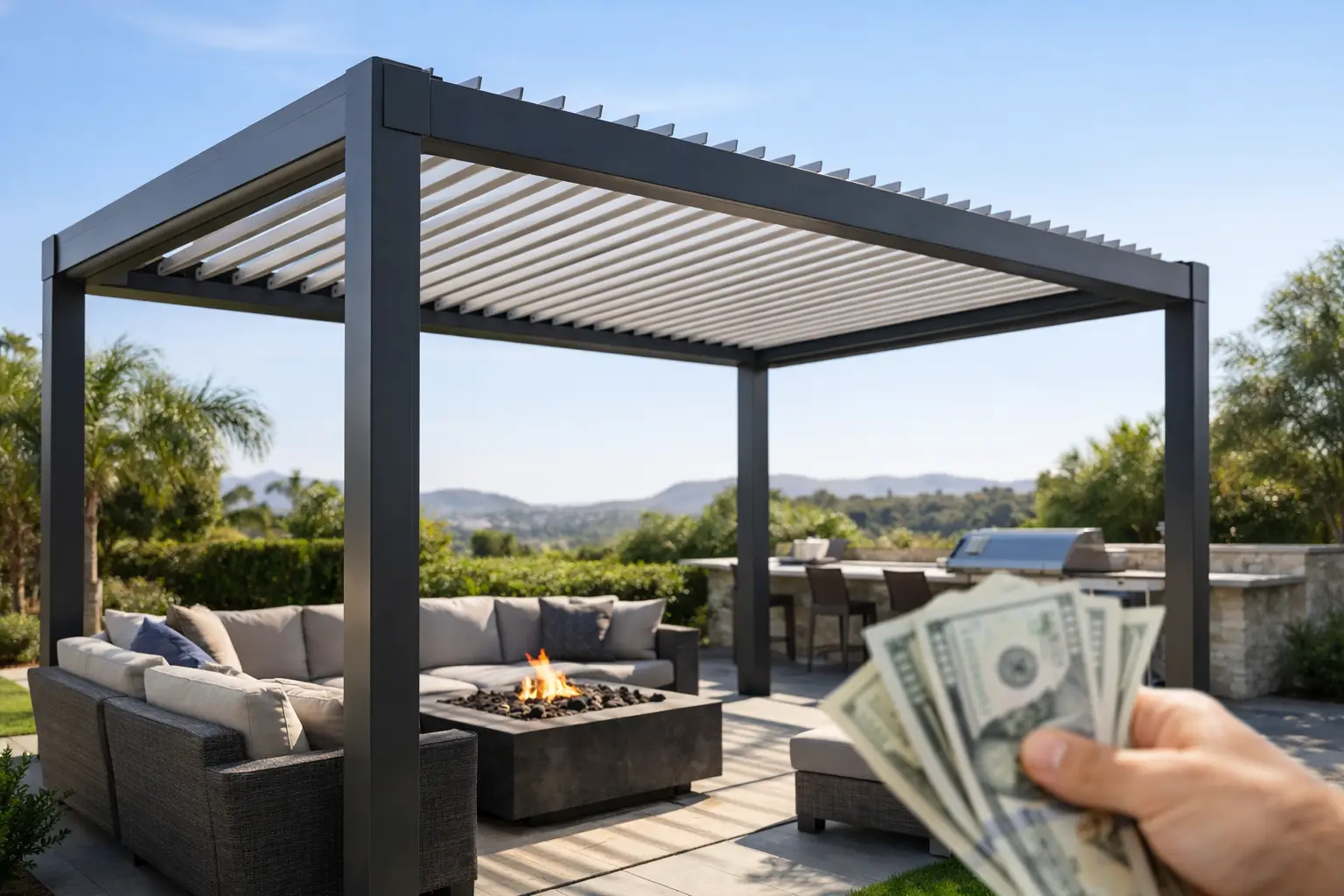
Sticker shock usually happens when someone prices a pergola like it is just a frame with a roof. An aluminum louvered pergola is not that kind of product. It is a permanent outdoor structure with moving roof slats, drainage management, custom sizing, and upgrade options that can turn a patio into a much more usable space.
If you are comparing options for your home or commercial property, understanding aluminum louvered pergola cost starts with one basic fact: price depends heavily on size, features, and installation conditions. A simple freestanding unit will cost far less than a large custom system attached to a building with motorized louvers, privacy screens, lighting, and heaters.
What is the typical aluminum louvered pergola cost?
For most buyers, aluminum louvered pergola cost typically starts in the several-thousand-dollar range for a smaller, simpler unit and can climb well into five figures for larger custom installations. In practical terms, many professionally installed systems fall somewhere between about $10,000 and $35,000+, depending on scope.
That is a wide range, but there is a reason for it. A compact residential pergola covering a modest patio is a very different project than a restaurant patio system designed for heavy use, weather exposure, and customer comfort. The materials may both be aluminum, but the engineering, accessories, and labor can vary a lot.
If you see unusually low online pricing, look closely at what is actually included. Many advertised prices exclude delivery, installation, footings, electrical work, site prep, and premium options. Some are kit-only prices that do not reflect a finished, installed structure.
Why louvered pergolas cost more than basic patio covers
A fixed patio cover is usually less expensive because it has fewer moving parts and less engineering involved. A louvered pergola is designed to do more. You can open the roof for sun and airflow, close it for shade or light rain protection, and add integrated features that improve comfort throughout more of the year.
That flexibility is the main reason many property owners are willing to invest more upfront. Instead of building a space that works only on perfect-weather days, you get a system that adapts to changing conditions. For homeowners, that often means a better backyard experience. For restaurants and hospitality spaces, it can mean more usable seating and better revenue potential.
The trade-off is cost. More capability usually means more components, more customization, and more installation detail.
The biggest factors that affect aluminum louvered pergola cost
Size and projection
This is the clearest price driver. A larger pergola needs more material, more structural support, and more labor. A small unit over a condo terrace will cost far less than a wide-span backyard installation or a commercial patio cover.
Shape matters too. Standard rectangles are generally more cost-effective than layouts that require custom angles or special engineering around an existing building.
Freestanding vs attached installation
Freestanding pergolas often need more posts and footing work. Attached systems can sometimes reduce that need, but they may require additional structural planning where the pergola connects to the building. Neither option is always cheaper. It depends on the site.
A straightforward ground-level patio is usually easier than a rooftop deck, elevated terrace, or uneven surface.
Manual vs motorized louvers
Motorization adds convenience and usually adds cost. For many buyers, it is worth it. Opening and closing the louvers at the push of a button feels very different from manually adjusting the roof, especially on larger systems.
Motorized models may also support remote controls, wall switches, smart features, or weather sensors. Those upgrades improve usability, but they move the budget upward.
Drainage design and weather performance
Not all pergolas handle rain the same way. Better systems are designed to channel water through integrated gutters and posts when the louvers are closed. That engineering matters, especially in climates where weather changes quickly.
If your goal is not just shade but better rain management, expect that requirement to influence price. It is one of the reasons premium aluminum systems cost more than basic decorative pergolas.
Upgrades and built-in features
This is where budgets can move fast. Popular upgrades include LED lighting, infrared heaters, motorized privacy screens, side enclosures, and insect screens. These add comfort and functionality, but they are not minor add-ons.
For some buyers, lighting and a privacy shade are the sweet spot. For others, especially commercial properties, a more enclosed setup makes sense because it extends operating time and improves customer comfort.
The right question is not whether upgrades cost more. They do. The better question is which upgrades you will actually use enough to justify the investment.
Installation complexity
Professional installation is a major part of total project cost. If the surface is level, access is easy, and utilities are simple, labor is more predictable. If installers need to work around tight access, existing structures, unusual drainage conditions, or electrical routing, the labor side can increase.
Permitting can also affect timeline and budget depending on the project type and local requirements.
Residential vs commercial pricing
Residential buyers usually focus on comfort, appearance, and backyard usability. Commercial buyers often look at the pergola as an operating asset. That difference matters.
A homeowner might choose a mid-sized pergola with motorized louvers and integrated lighting. A restaurant owner may need a larger footprint, stronger weather protection, side screens, heaters, and a layout that supports customer flow. Commercial projects often require more customization, and that tends to raise costs.
The return can also be different. For a home, value shows up in lifestyle improvement and curb appeal. For a business, it may show up in seat count, customer retention, and more consistent patio use.
What should be included in the price?
When comparing quotes, make sure you are comparing complete project pricing rather than partial numbers. A useful quote should make clear whether it includes the pergola system, delivery, professional installation, mounting or footing requirements, motorization, electrical coordination for powered features, and any selected upgrades.
Warranty coverage also matters. So does post-installation support. Replacement parts, adjustment service, and product guidance are not flashy line items, but they matter over time.
This is one reason many buyers prefer working with a company that handles supply, customization, and installation together. It reduces the guesswork and helps avoid the common problem of buying a product first and figuring out site realities later. For buyers in Toronto and the GTA, Welda Solar Shading Systems is positioned around exactly that kind of full-project support.
How to tell if the cost is worth it
An aluminum louvered pergola is usually worth the price when you want your outdoor space to work harder. If your patio is too hot in the afternoon, exposed to light rain, or not comfortable enough to use regularly, a louvered system can solve a real problem instead of just adding decoration.
It is also a strong fit for buyers who care about clean design and low maintenance. Aluminum holds up well, looks modern, and does not come with the same upkeep concerns as wood. That does not mean it is cheap. It means the long-term ownership experience is often easier.
On the other hand, if you only want occasional shade and your budget is tight, a retractable awning or simpler patio cover may be the better fit. Spending more only makes sense when the extra function matches how you plan to use the space.
How to budget smartly
A good way to approach aluminum louvered pergola cost is to separate must-haves from nice-to-haves. Start with the coverage size you actually need. Then decide whether motorization is essential, whether lighting should be integrated from the start, and whether screens or heaters are realistic priorities.
That process helps prevent two common mistakes. The first is underbuying and ending up with a pergola that does not solve the comfort problem. The second is overbuilding a feature-heavy system that looks great on paper but stretches the budget too far.
If you are planning a home improvement or a commercial patio upgrade, the smartest next step is usually a real quote based on your space, not a generic online estimate. Site conditions, dimensions, and intended use affect pricing too much for broad numbers to tell the full story.
A well-designed pergola should feel like money spent on better everyday use, not just a bigger line item. When the size is right, the features are practical, and the installation is handled properly, the cost starts to make a lot more sense.