Best Balcony Shade Options That Last
A balcony that gets full afternoon sun can turn into the least usable part of your home. It looks great from inside, but once the heat builds up, the space sits empty. The right shade changes that fast. It lowers glare, cuts heat, adds privacy, and makes the balcony feel like an actual living area instead of a hot ledge.
The challenge is that there is no one-size-fits-all answer. The best shade solution for balcony spaces depends on how much sun you get, how exposed the area is to wind, how much clearance you have, and whether you want a fixed look or flexible coverage. If you want something that works well and keeps looking good over time, custom fit matters more than most people expect.
What is the best shade solution for balcony use?
For most homeowners, a retractable awning is the best balance of shade, flexibility, appearance, and value. It gives you coverage when you need it and opens back up when you want sunlight or a clear view. That matters on a balcony, where space is limited and permanent structures can feel heavy or overbuilt.
A retractable system also works well when sun conditions change throughout the day. Morning shade needs are different from late afternoon heat, and a fixed cover cannot adapt. If your balcony is used for coffee in the morning, reading in the afternoon, and dining in the evening, adjustable shading gives you more control.
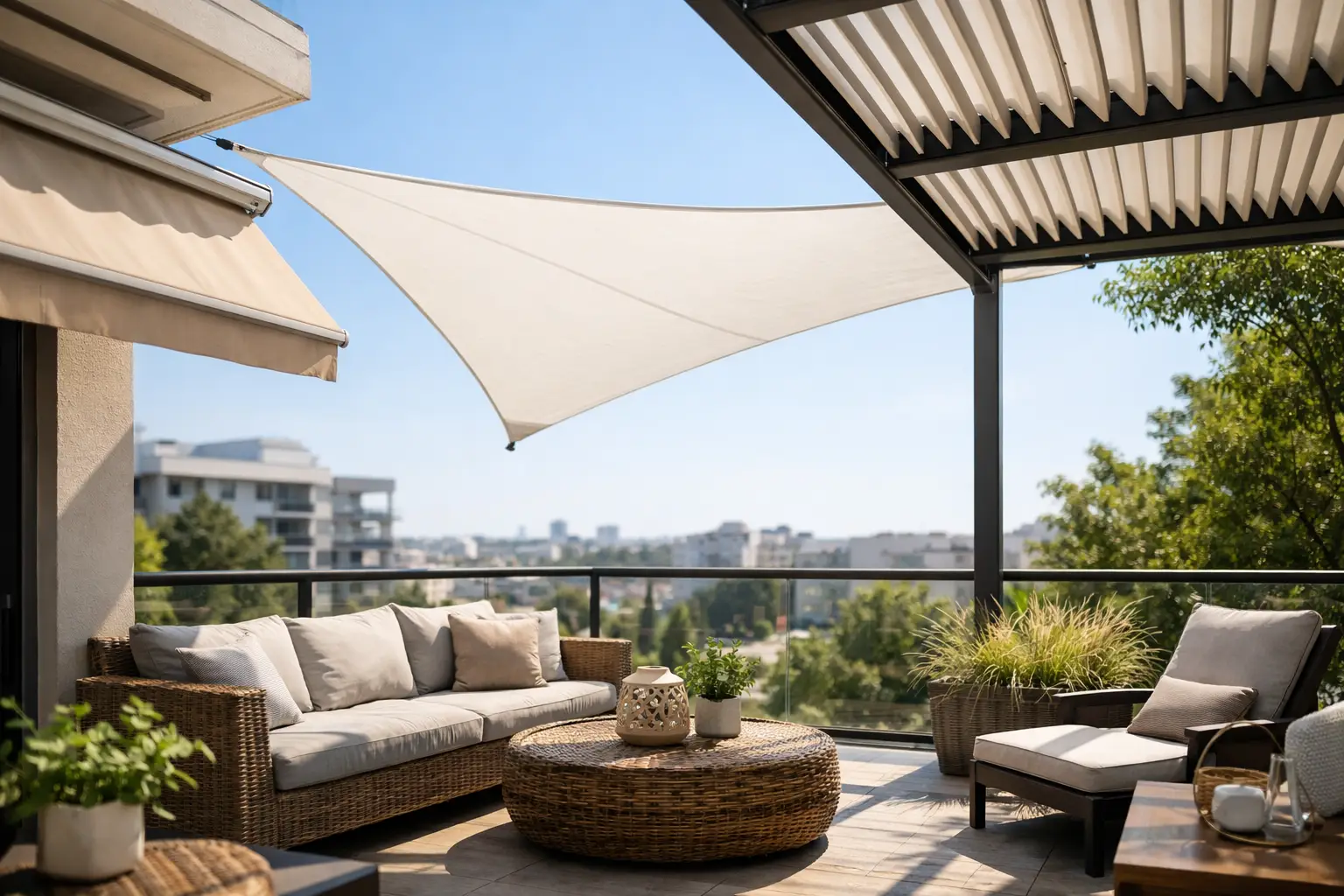
That said, retractable awnings are not always the only right answer. A pergola may make more sense for a larger terrace-style balcony. A drop shade system can be better when privacy and low-angle sun are the main problems. The best result usually comes from matching the product to the actual exposure, not just choosing what looks good in a photo.
Why balconies need a different kind of shade
Balconies are more demanding than patios in a few important ways. They often have tighter dimensions, more wind exposure, and less room for posts or freestanding structures. In condos and upper-level homes, attachment points and building rules can also affect what is possible.
That is why light-duty, off-the-shelf products often disappoint. Small umbrellas tip easily, fabric canopies sag, and basic shade sails may not fit the space properly. A balcony shade system needs to be sized correctly, mounted securely, and built for daily use. If it rattles, flaps, or blocks too much of the view, it becomes annoying fast.
The better approach is to think in terms of coverage, movement, and longevity. Do you need overhead shade only, or do you also need side protection from harsh western sun? Do you want manual operation, or would a motorized system make more sense for convenience? These details affect performance more than style alone.
The most practical balcony shade options
Retractable awnings
For many homes, this is the strongest all-around choice. A retractable awning extends when you need relief from heat and UV exposure, then retracts when you want open sky. It keeps the balcony feeling lighter than a fixed roof and avoids turning a compact outdoor space into something closed in.
Motorized awnings are especially useful on balconies because they are easy to adjust quickly. If the sun shifts or wind picks up, you can respond immediately. Full-cassette models add another benefit by protecting the fabric and arms when the unit is closed, which helps with long-term appearance and durability.
The trade-off is that not every balcony has the same mounting conditions. Proper installation matters. A strong, clean-looking result depends on the wall structure, projection needs, and angle of coverage.
Drop shade systems
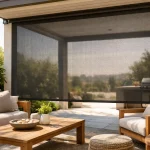
If your biggest issue is low sun from the side, overhead shade alone may not solve the problem. That is where drop shades make sense. They work like vertical screens and help block glare, improve privacy, and reduce heat without fully closing off the space.
This option is popular for balconies that face neighboring buildings or busy streets. You still get airflow and a more open feel than solid walls, but the space becomes noticeably more comfortable. In many cases, a drop shade works best as part of a layered setup with an awning or pergola above.
Pergolas for larger balconies or terraces
A pergola is usually better for larger elevated outdoor areas rather than small balconies, but when the footprint allows it, it creates a more defined outdoor room. Aluminum louvered pergolas are especially appealing for owners who want a modern look and more complete weather control.
With adjustable louvers, you can manage sun, shade, and ventilation more precisely than with a fixed cover. Some systems can also include lighting, heaters, privacy screens, or insect protection. The trade-off is cost and structural complexity. A pergola is more of a built feature than a simple shade upgrade, so it makes the most sense when you want a premium long-term solution.
Fixed canopies and simpler covers
These can work in certain cases, especially when budget is the top concern, but they tend to offer less flexibility. If the balcony gets seasonal sun changes or mixed weather, fixed coverage can feel limiting. You may end up blocking light you actually want during cooler months.
This category also varies widely in quality. A well-built fixed canopy can perform well, but lower-cost versions often show wear quickly. On a balcony, where the structure is highly visible from inside and outside, appearance matters just as much as basic function.
How to choose the best shade solution for balcony comfort
Start with the sun pattern, not the product. A south-facing balcony with constant overhead sun needs a different solution than a west-facing one that gets intense late-day glare. If heat is your main problem, broad projection overhead matters. If the issue is direct sun in your eyes at dinner time, you may need side screening.
Then think about how you actually use the space. If you only want occasional shade for sitting outside, a manual retractable system may be enough. If the balcony is part of your daily routine, motorization is usually worth it. Convenience sounds like a bonus feature until you live with the system every day.
Weather exposure matters too. Wind, rain, and temperature swings put pressure on materials and hardware. That is one reason custom systems built for North American conditions usually outperform generic imports. Better frame strength, better fabric protection, and professional installation all add up over time.
Finally, be realistic about the look you want. A balcony shade system is part of the exterior appearance of your home or building. It should feel integrated, not added on as an afterthought. Frame finish, fabric color, cassette style, and overall scale make a big difference.
Why custom fit usually beats off-the-shelf
Balconies are rarely standard. Width, railing height, wall clearance, overhead obstructions, and access points vary from one property to the next. A product that almost fits often creates the biggest problems, from poor coverage to awkward installation angles.
Custom sizing solves that. It lets you maximize usable shade without crowding the space or leaving major sun gaps. It also gives you more options on operation, fabric, frame finish, and added features. If you are investing in a balcony upgrade that should last for years, exact fit is one of the smartest parts of the purchase.
This is also where professional guidance adds real value. A showroom consultation or site review can quickly narrow down what will work structurally and visually. Instead of guessing from product photos, you get a solution matched to your space, your exposure, and your budget.
When professional installation matters most
A balcony shade system is not just a décor item. It has to perform safely and reliably above ground level, often in exposed conditions. That makes installation quality part of the product itself.
This is especially true for retractable and motorized systems. Alignment, bracket placement, pitch adjustment, and electrical planning all affect how the unit performs. A poorly installed awning may extend unevenly, collect water, or wear out faster than it should.
For homeowners and property owners who want a clean result without trial and error, working with an experienced installer is usually the faster and more cost-effective move. Companies like Welda Solar Shading Systems focus on custom sizing, product selection, and professional installation, which is exactly what high-use balcony spaces need.
The right balcony shade should do more than block sun. It should make the space easier to use, more comfortable to sit in, and more attractive from every angle. If you choose based on real conditions instead of guesswork, your balcony stops being seasonal and starts becoming part of how you live.