Manual vs Motorized Awning: Which Fits?
If you use your patio once in a while, a manual awning can make perfect sense. If you open and close it constantly, deal with strong sun exposure, or want a cleaner daily routine, a motorized system usually pays off fast.
That is the real manual vs motorized awning decision. It is less about which option is “better” in general and more about how you actually use your outdoor space.
For homeowners, that might mean deciding whether convenience is worth the extra upfront cost. For restaurants, cafes, and commercial patios, it often comes down to speed, consistency, and how easy it is for staff to manage coverage during service hours. Awnings are not just decorative. They affect comfort, shade control, curb appeal, and how often a patio gets used.
Manual vs motorized awning: the core difference
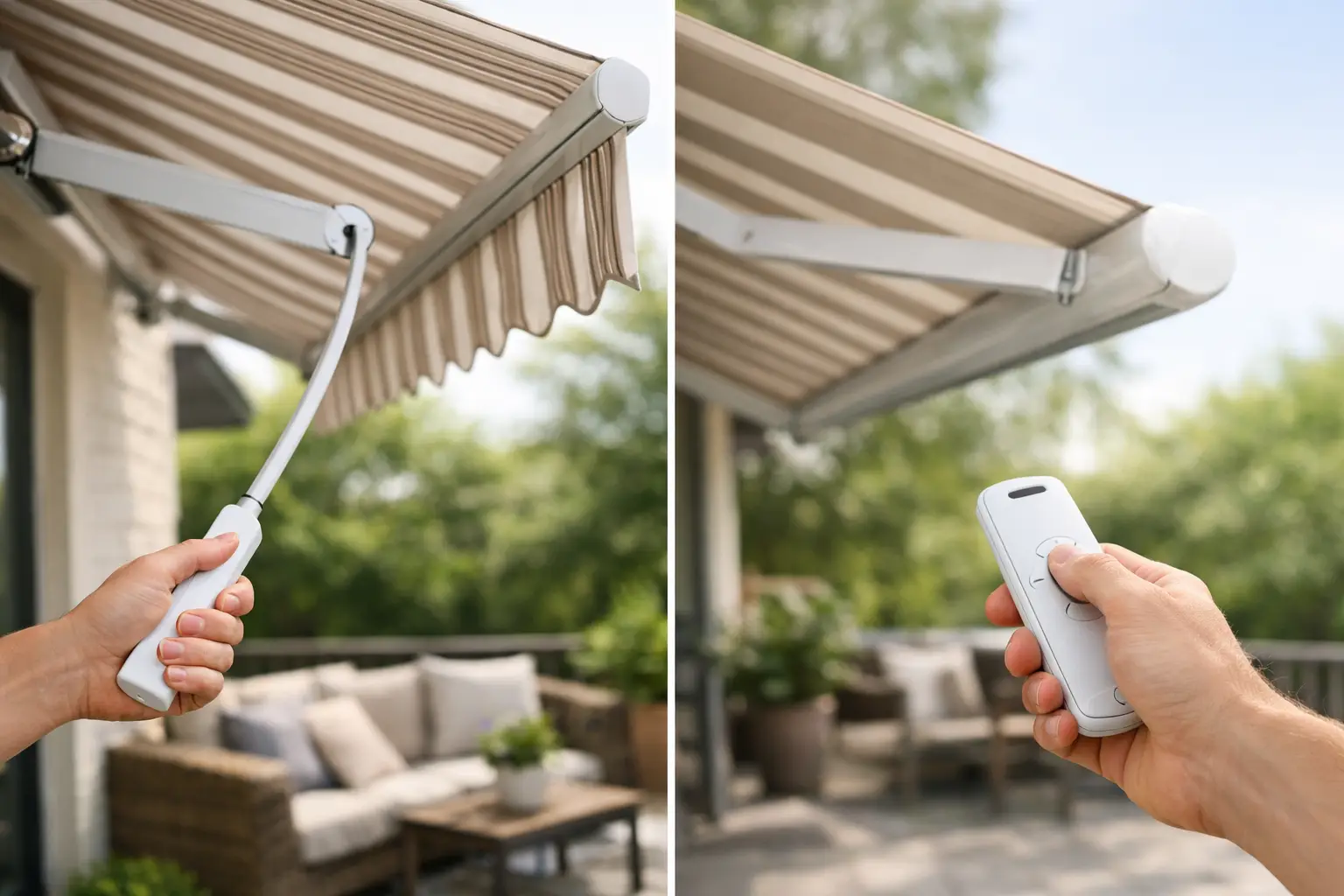
A manual awning opens and closes with a hand crank. It gives you retractable shade without requiring electrical connections, switches, or remote controls. The appeal is simple – lower initial cost, fewer powered components, and straightforward operation.
A motorized awning uses an electric motor to extend and retract the system. Depending on the setup, it can be controlled by wall switch, remote, or integrated automation. Some systems can also be paired with wind or sun sensors for more responsive operation.
Both options can provide strong shade coverage and a clean finished look. The biggest difference is how much effort, speed, and convenience you want built into the system.
When a manual awning makes more sense
Manual awnings are often the right fit for smaller residential spaces, occasional use, and buyers who want a more budget-conscious solution. If you are covering a modest deck, balcony, or patio and you do not mind using a crank, manual operation can be a very practical choice.
It also appeals to buyers who prefer mechanical simplicity. Fewer electrical components can mean fewer variables in the installation process. In some homes, especially where power access is less convenient, that can make planning easier.
There is also a value argument. If your goal is to improve outdoor comfort without moving too far up in price, a manual retractable awning can deliver a lot of function for the investment. You still get shade on demand, better heat control near windows and doors, and a more usable outdoor area.
That said, ease of use matters more than many buyers expect. A manual system works well when it is used occasionally. It can become less appealing if the awning is large, if different family members will operate it, or if you expect to open and close it multiple times a day.
When a motorized awning is worth the upgrade
Motorized awnings are built for convenience, but that convenience has practical value beyond comfort. With the push of a button, you can extend coverage quickly, retract it just as easily, and manage the awning more consistently.
For larger awnings, the difference is noticeable. A motor helps the system operate smoothly without the physical effort of cranking. That is especially useful for wide patio coverage, restaurant seating areas, or homeowners who simply want a system that feels easier to live with.
Motorization also tends to improve day-to-day use. People are more likely to use an awning when it takes seconds instead of effort. That means better sun protection, more comfortable outdoor meals, and less hesitation when the weather shifts.
For commercial properties, speed matters even more. Staff can adjust the awning quickly during service, and that helps maintain guest comfort without interrupting operations. On busy patios, that kind of simplicity is not a luxury. It is part of running the space efficiently.
If you want upgrades like remote control, integrated lighting coordination, or sensor-based automation, motorization is the obvious path. Those features add real function, particularly in climates where sun, wind, and changing conditions affect outdoor use throughout the day.
Cost is not just the purchase price
The manual vs motorized awning conversation usually starts with budget, and that is fair. Manual systems generally cost less upfront. Motorized systems cost more because of the motor, controls, electrical setup, and added features.
But price should be measured against use. A lower-cost manual awning is a smart purchase if it matches the way you plan to use it. A motorized awning is a better value if it gets used more often, protects a larger area, or helps support commercial revenue from outdoor seating.
There is also the customization factor. Frame size, fabric selection, cassette style, mounting conditions, and optional features can affect the final price on either side. That is why side-by-side comparison only works when the systems being quoted are truly comparable.
For many buyers, the better question is not “Which one is cheaper?” It is “Which one will I actually use the right way for the next several years?”
Durability, maintenance, and long-term performance
Some buyers assume manual means more durable and motorized means more delicate. In practice, the answer depends on product quality, installation, and whether the system is suited to the environment.
A well-built motorized awning is designed for regular operation and can perform very reliably when properly installed. A quality manual awning can also last well, but it still depends on the strength of the frame, the fabric, the arms, and the overall construction.
Weather matters too. In North American conditions, awnings need to handle strong sun, temperature changes, and seasonal use patterns. Retraction is part of protecting the system, whether manual or motorized. The easier it is to retract when conditions change, the better your chances of extending the life of the awning.
Maintenance is usually manageable with either option. Fabric care, occasional inspections, and proper seasonal handling are important across the board. With motorized systems, the motor and controls add another layer, but on quality installations, that trade-off is often minor compared to the convenience gained.
Which option is better for homes?
For residential projects, the best choice often comes down to lifestyle. If you want affordable retractable shade for occasional use, manual can be the right answer. It keeps the system simple and avoids paying for features you may not need.
If you use your patio as a real extension of the home, motorization becomes much more attractive. Homeowners who entertain often, spend long hours outside, or want quick shade during peak afternoon sun usually appreciate the upgrade. It is also a strong fit for larger patios, higher-end backyard designs, and spaces where convenience is part of the overall plan.
Aesthetics can play a role as well. Motorized systems often align with more premium outdoor setups, especially when paired with full-cassette styles, integrated lighting, or a cleaner architectural look.
Which option is better for restaurants and commercial patios?
Commercial spaces usually benefit more from motorization. When staff need to adjust coverage quickly, a motorized awning reduces hassle and improves consistency. That matters during lunch rushes, evening service, and unpredictable weather.
It also supports a better guest experience. Customers notice when a patio feels comfortable and well-managed. If sun glare, heat, or light rain drives people away from outdoor seating, the awning stops being a feature and starts becoming a missed opportunity.
Manual systems can still work for some smaller storefronts or limited-use areas, especially where budget is tight. But for most active restaurant or hospitality settings, motorization is usually the more practical business decision.
How to make the right choice
The easiest way to choose between manual and motorized is to look at four things: how often you will use the awning, how large the coverage area is, who will operate it, and how important convenience is in daily use.
If use is occasional, the awning is modest in size, and budget is the priority, manual is often enough. If the awning is large, use is frequent, or multiple people will rely on it, motorization usually makes the better long-term fit.
This is also where professional guidance matters. The right awning is not just about operation type. It is about matching the system to the mounting surface, exposure, dimensions, and intended use. A custom-fit solution tends to outperform a generic one, especially when the goal is long-term value.
If you are comparing options for a home or commercial patio, a showroom consultation can help narrow down the decision quickly. Welda Solar Shading Systems works with property owners who want practical answers, custom sizing, and installation support instead of guesswork.
A good awning should feel easy to live with. When the operation matches the way you use your space, the investment starts making sense the first time you need shade and get it without a second thought.