How to Shade Large Patio Spaces Effectively
A large patio sounds ideal until the afternoon sun makes half of it unusable. If you are figuring out how to shade large patio spaces without turning the area into a dark, boxed-in structure, the right answer usually comes down to coverage, flexibility, and how you actually use the space day to day.
Some patios need full sun control for dining and entertaining. Others need partial shade near doors, windows, or seating areas while still keeping an open feel. The mistake most property owners make is choosing a shade product based on appearance alone, then finding out it does not cover enough area, handle wind well, or fit the layout of the home or business.
How to shade large patio areas without wasting space
When the patio is oversized, one small umbrella or basic canopy will not solve the problem for long. Large outdoor spaces need a system that matches the dimensions of the patio and the way the sun moves across it.
Start with the patio itself. A wide, shallow patio has different shading needs than a deep patio that gets direct western exposure. If the area is attached to the house, a retractable awning may offer excellent projection and clean wall-mounted coverage. If the patio sits farther from the structure or needs more all-weather performance, a pergola system may make more sense.
You also need to think beyond square footage. A shade solution should support traffic flow, furniture layout, sightlines, and seasonal use. For a homeowner, that may mean keeping the grilling area open while shading the dining set. For a restaurant or commercial patio, it may mean covering customer seating while preserving access points and a polished storefront appearance.
Retractable awnings for wide patio coverage
For many attached patios, retractable awnings are the most practical place to start. They provide broad shade, reduce heat on doors and windows, and keep the patio usable without adding permanent posts across the space.
A large retractable awning works especially well when you want strong sun protection with the option to open the area back up. That flexibility matters. Early spring and fall often call for more sunlight, while peak summer conditions demand full coverage. With a motorized system, adjusting the shade takes seconds rather than becoming a chore.
The big advantage is clean coverage over a large section of patio with minimal visual weight. Full-cassette and folding arm systems are especially appealing for homeowners who want function without making the back of the house look heavy or cluttered.
That said, awnings are not a one-size-fits-all answer. Projection limits, mounting conditions, and wind exposure all matter. If the patio is extremely deep, one awning may not cover the full usable zone. In some cases, a custom configuration or multiple units is the better solution.
When motorization makes more sense
On a large patio, manual operation can become inconvenient. The bigger the unit, the more valuable motorization becomes. Motorized awnings are easier to use, easier to adjust throughout the day, and better suited for households or businesses that want regular use instead of occasional use.
For commercial properties, that convenience is even more important. Staff should not have to struggle with shade equipment during service hours. A smooth motorized setup helps maintain comfort and presentation with less effort.
Pergolas for structure, coverage, and upgrades
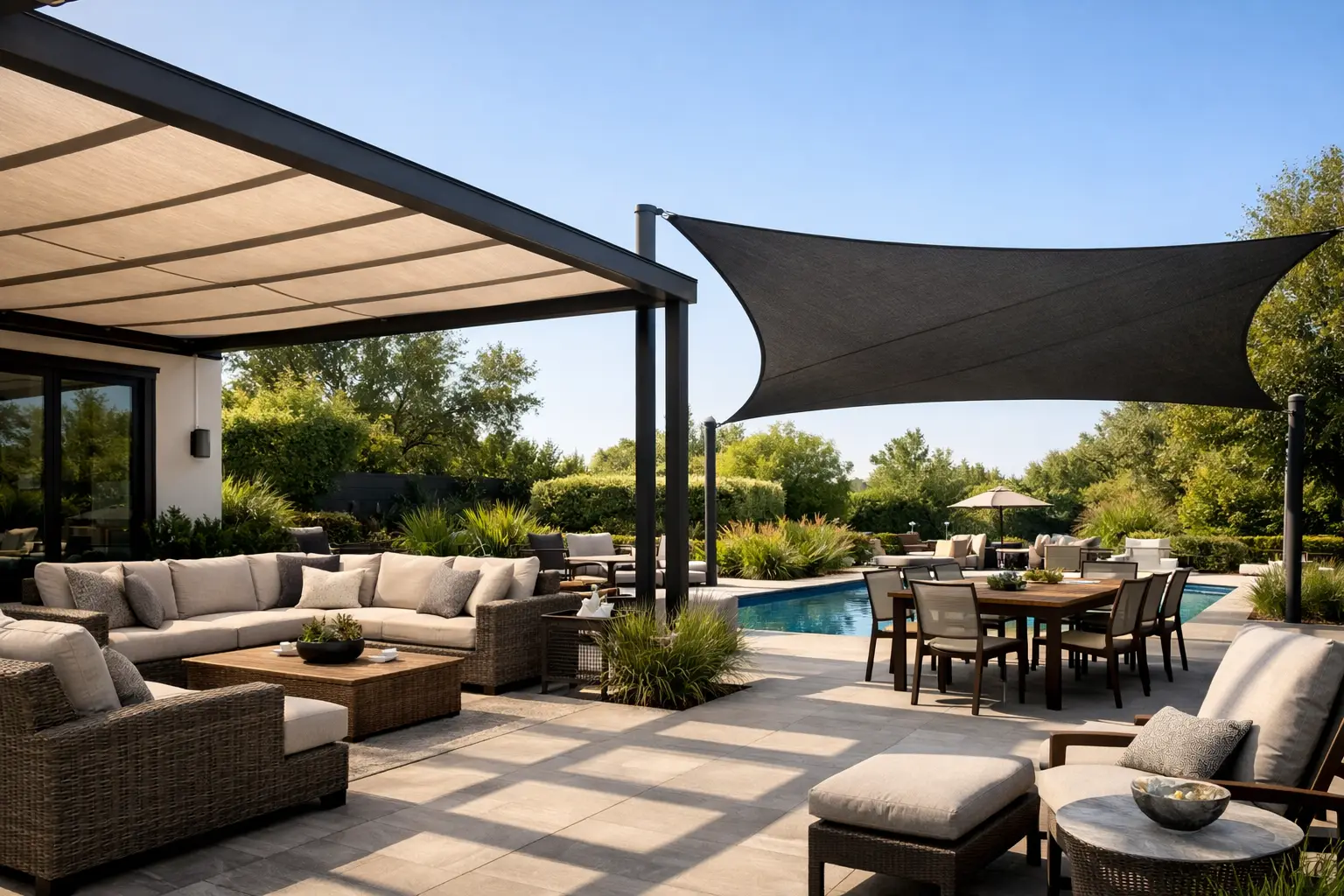
If you want a more architectural solution, pergolas are one of the strongest answers to how to shade large patio layouts. They create a defined outdoor room and generally offer more design flexibility for oversized spaces.
An aluminum pergola is especially useful when the goal is long-term durability and a more permanent shaded environment. Louvered roof systems add even more control by letting you adjust sun, airflow, and light rain protection throughout the day.
This option tends to suit buyers who want more than shade alone. Integrated lighting, heaters, privacy screens, and insect protection can turn a patio into a space that works from day to night and across more of the year. For restaurants, hospitality patios, and upscale residential projects, that added function often justifies the investment.
There is a trade-off, though. Pergolas are typically a larger commitment in both budget and footprint. They also create a stronger visual presence than an awning. Some homeowners love that defined look. Others prefer a lighter, retractable system that disappears when not in use.
Drop shades and side protection matter more than most people think
Overhead shade solves only part of the problem. On many large patios, the late-day sun comes in from the side, especially on western exposures. That is where drop shade systems become valuable.
Vertical screens can block glare, reduce heat, add privacy, and improve comfort without closing the patio off completely. They are particularly effective when paired with an awning or pergola, creating a more complete shading strategy instead of leaving the sides exposed.
For commercial patios, side shades can improve customer comfort and make the seating area feel more intentional. For homes, they help with privacy from neighboring yards while also cutting down on low-angle sun that overhead systems cannot fully stop.
What works best for homes versus businesses
The right solution often depends on who is using the patio and how often. A residential backyard usually prioritizes comfort, appearance, and ease of use. A commercial patio has to think about customer flow, durability, and maximizing usable seating.
For homes, retractable awnings are often the simplest upgrade with the fastest day-to-day payoff. They keep patios cooler, protect outdoor furniture, and make entertaining easier. Pergolas appeal more when the goal is to create a defined outdoor living area with premium features.
For restaurants and cafes, larger fixed or retractable systems often perform better because they need to cover more consistent seating zones. Weather protection becomes part of revenue, not just comfort. In that setting, custom sizing, stronger framing, and professional installation are not optional details. They directly affect performance and appearance.
The biggest buying factors to compare
Coverage should come first, but it should not be the only factor. The best patio shade system balances size, operation, weather resistance, and maintenance.
If you are comparing options, pay attention to how far the product projects, whether it is manual or motorized, and how it handles wind and rain. Also consider the installation surface. Not every wall or patio condition supports every type of system.
Materials matter too. Outdoor shading in North American conditions needs to handle strong sun, changing temperatures, and seasonal weather swings. A lower-cost product may look fine at first but wear out faster, operate poorly, or need replacement parts sooner than expected.
Customization is another major factor on larger patios. Standard sizes can leave awkward gaps or fail to cover key zones. A custom-fit system usually performs better because it is designed around the actual space rather than forced into it.
Professional installation is part of the product
Large patio shade systems are not just products you pick off a shelf. Size, pitch, mounting, clearance, drainage, and motor setup all affect the final result. That is why professional measuring and installation matter so much on larger projects.
A well-installed awning or pergola does more than look good. It operates correctly, sits securely, and provides the coverage you expected when you bought it. Poor installation can reduce lifespan, create water issues, or leave important sections of the patio exposed.
This is also where expert guidance pays off. An experienced shading company can help you decide whether one large unit, multiple systems, or a combination of overhead and side shade will work best. In many cases, that advice saves money because it prevents buying the wrong solution first.
For property owners in Toronto and the GTA, Welda Solar Shading Systems helps simplify that decision with custom options, motorized upgrades, and professional installation support for both residential and commercial patios.
A smarter way to choose your patio shade
If you are serious about solving sun exposure on a large patio, think in terms of function first and product second. Ask how much of the patio needs shade, what time of day it gets the worst sun, and whether you want flexible coverage or a more permanent outdoor structure.
That approach usually leads to a better result than shopping by appearance alone. A large retractable awning may be the right answer if you want wide attached coverage with a cleaner look. A pergola may be worth it if you want structure, upgrades, and a more defined outdoor room. Drop shades may be the missing piece if side sun and privacy are part of the problem.
The best patio shade is the one that makes the space more usable on ordinary days, not just the one that photographs well. When the system fits the patio properly, you stop planning around the weather and start using the space the way you intended.