Are Retractable Awnings Worth It?
If your patio is too hot to use by noon, or your outdoor seating sits empty every time the sun hits hard, the question becomes pretty simple: are retractable awnings worth it? For many homeowners and business owners, the answer is yes – but only when the awning is sized correctly, built for the space, and installed as a long-term solution rather than a quick add-on.
A retractable awning is not just about shade. It changes how often you actually use your deck, patio, balcony, or storefront seating area. It can cut glare, reduce heat, protect furniture, and make an outdoor area feel finished instead of exposed. At the same time, it is still an investment, and it is not the right fit for every property.
Are Retractable Awnings Worth It for Most Properties?
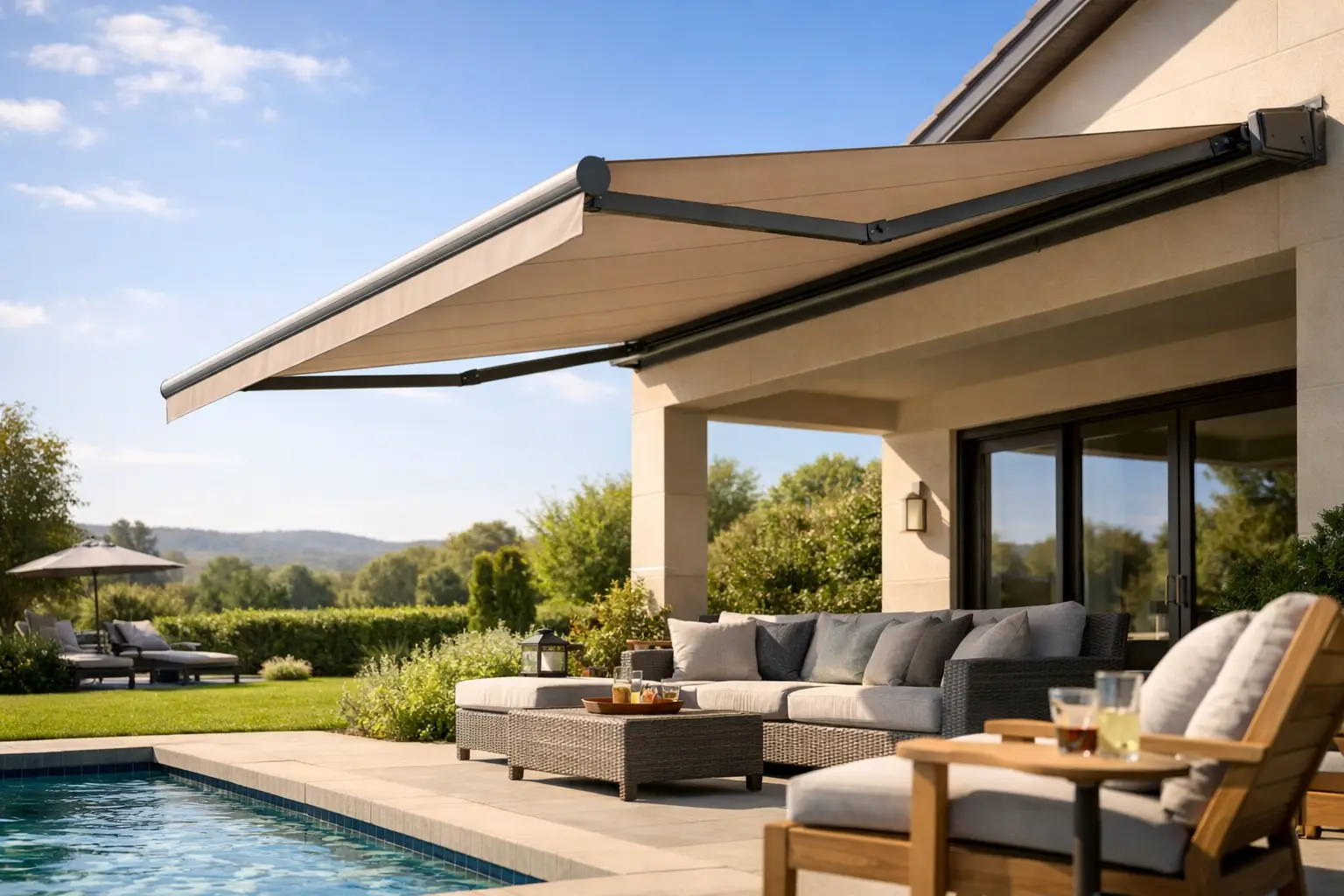
In practical terms, retractable awnings are worth it when you want flexible coverage instead of permanent overhead construction. That flexibility is the main advantage. You extend the awning when you need sun protection or light rain coverage, and retract it when you want open sky, more natural light indoors, or protection during rough weather.
For residential properties, that often means turning a hot, underused patio into a comfortable living space. For commercial spaces, especially restaurants, cafés, and hospitality patios, it can mean more usable seating and a better customer experience during peak daylight hours. If outdoor space has value to you, adding controlled shade usually has real payback.
The key word is controlled. A fixed roof gives constant coverage, but it also permanently changes the look and light levels of the property. A retractable system gives you the option to adapt to the day, the season, and the weather.
The Biggest Benefits of a Retractable Awning
The first benefit is comfort. Direct sun can make a patio unpleasant fast, especially in the middle of summer. A good awning creates a noticeably cooler area, which helps people stay outside longer. That matters whether you are hosting at home or serving customers on a commercial patio.
The second benefit is protection. Patio furniture, cushions, decking, doors, and windows all take wear from constant UV exposure. Shade helps slow fading and surface deterioration. It also cuts glare inside the home or business when installed over patio doors and large windows.
The third benefit is appearance. A custom-fit retractable awning can make an outdoor area look complete and intentional. It adds structure without the heavy visual footprint of a permanent enclosure. For design-conscious buyers, especially those looking at sleek full-cassette or European-style systems, that clean look is part of the value.
There is also the convenience factor. Manual awnings still serve a purpose, especially for smaller spaces and tighter budgets, but motorized awnings are a major upgrade in everyday use. Push-button control makes it easy to extend coverage when needed and retract it just as quickly. For busy homeowners and commercial operators, that ease matters more than people expect.
Where the Investment Makes the Most Sense
A retractable awning tends to be worth the money when the outdoor space already has clear value. If you have a patio, deck, terrace, balcony, or storefront area that gets regular use but suffers from too much sun, the return is easier to see.
For homeowners, the value often shows up as lifestyle improvement. You get more use from your backyard without committing to a full renovation. You can eat outside more often, entertain more comfortably, and enjoy the space at times of day that used to feel too hot.
For commercial properties, the equation is even more direct. If better shade helps keep tables occupied, extends patio use, or improves curb appeal, the system supports revenue as well as comfort. A restaurant patio awning is not just a visual upgrade. It can help make outdoor seating more dependable during business hours.
What Can Make Retractable Awnings Worth It – Or Not
Not every awning delivers the same result. The value depends heavily on product quality, projection, fabric, hardware, and installation.
A poorly sized awning may leave the most important part of the patio exposed. A low-quality frame may not hold up well over time. Cheap fabric can fade faster, and improper installation can create performance issues that turn a good idea into a recurring problem. That is often where buyers get disappointed – not because retractable awnings are a bad option, but because the wrong system was chosen.
This is why custom measurement matters. Sun angle, wall condition, mounting location, clearance, width, projection, and intended use all affect performance. A homeowner might need enough extension to cover a dining set, while a commercial operator may need broader frontage coverage with a stronger visual presence. One size does not fit all.
Local climate also matters. In places with changing weather patterns, the ability to retract the awning is a real advantage. A system built for North American conditions and installed professionally is far more likely to deliver lasting value than a generic off-the-shelf unit.
Cost vs Long-Term Value
Most buyers do not ask only whether retractable awnings work. They ask whether the cost makes sense.
That depends on what you are comparing it to. A retractable awning usually costs less than building a full permanent covered structure, and it gives you shade without major construction. If your goal is to improve patio use, reduce heat, and upgrade the space quickly, it can be one of the more efficient ways to do it.
The long-term value is not just resale. It is daily use. If the awning helps you use your outdoor area several times more often across the warmer months, that is a meaningful return. If it protects furniture and interior finishes from sun exposure, that adds value too. And if it improves the function of a commercial patio, the financial case gets even stronger.
Still, it is fair to say that premium systems cost more upfront. Full-cassette designs, larger projections, motorization, wind sensors, lighting, and custom fabrics all raise the investment. For many buyers, those upgrades are worth it because they improve convenience, lifespan, and appearance. But they should be chosen based on how the space will actually be used, not just on features alone.
Are There Downsides?
Yes, and serious buyers should understand them.
Retractable awnings are not meant to replace a fully engineered all-weather roof. They provide excellent shade and can offer light rain protection, but they still need to be retracted in stronger wind and more severe weather conditions. If you need constant year-round coverage, another product category may be a better fit.
They also require proper operation and occasional maintenance. Fabric needs to stay clean, moving parts should be inspected, and motorized systems should be installed correctly from the start. None of this is unusual, but buyers should know they are purchasing a functional system, not a maintenance-free decoration.
There is also the issue of expectations. If someone wants complete enclosure, insect control, heating, and all-season use, a pergola or more advanced outdoor structure may be the better answer. A retractable awning solves a specific problem very well: flexible overhead shade. It should be bought for that strength.
How to Tell if It Is the Right Choice for You
If you want more use from your patio without permanent construction, a retractable awning is usually a smart option. If you care about comfort, sun protection, and a cleaner outdoor setup, it often delivers strong value. If you own a business with outdoor seating, the decision can be even easier because better shade can directly support customer comfort and space utilization.
On the other hand, if your space gets little use, if your exposure is not severe, or if you really need a four-season covered structure, the money may be better spent elsewhere.
The best results usually come from a guided, custom-fit approach. That means looking at the space, understanding how the sun moves across it, choosing the right projection and mounting style, and deciding whether motorization or added features make sense. A showroom consultation or site visit can save a lot of guesswork.
For buyers comparing options in Toronto and the GTA, working with an experienced installer like Welda Solar Shading Systems can make the difference between a basic shade product and a system that actually performs the way you need it to.
So, are retractable awnings worth it? If your goal is to make outdoor space more usable, more comfortable, and more attractive without committing to permanent overhead construction, they usually are. The smartest move is not chasing the lowest price – it is choosing a system that fits the space, the weather, and the way you plan to use it every day.