9 Best Balcony Shade Ideas That Last
A balcony that gets blasted by afternoon sun stops being useful fast. If you are searching for the best balcony shade ideas, the right answer is not just what looks good from the street – it is what actually handles heat, glare, wind, light rain, and day-to-day use without becoming a constant maintenance job.
For most property owners, shade is really about making a balcony usable for longer hours and more months of the year. That means thinking beyond a quick fabric fix. Some shade options are affordable and simple, while others give you better durability, cleaner sightlines, and much stronger long-term value.
Best balcony shade ideas for different needs
The best option depends on how your balcony is built, how much sun it gets, and whether you want seasonal flexibility or full-feature coverage. A small condo balcony has different demands than a restaurant terrace or a deep second-floor outdoor space.
Retractable awnings
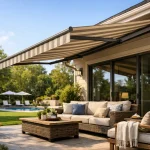
Retractable awnings are one of the strongest all-around solutions because they give you shade when you need it and open sky when you do not. That flexibility matters on balconies where sunlight changes throughout the day, or where you do not want to permanently darken the interior room behind the doors.
A quality retractable awning can reduce heat and glare while keeping the space open and clean-looking. It also gives better rain protection than many lighter decorative solutions, although performance still depends on projection, pitch, and wind conditions. If your goal is everyday comfort without committing to a fixed roof structure, this is often the most practical place to start.
Motorized awnings
If convenience matters, motorized awnings make a big difference. On upper-level balconies especially, people use the shade more often when operation is simple. Press a button and the space changes immediately. That sounds like a small upgrade, but in practice it affects how often the system gets used.
Motorization also suits larger balcony spans where manual operation can feel less convenient. For homeowners who want a cleaner experience and for commercial operators who need fast, consistent coverage, a motorized system usually feels worth the upgrade. Add weather sensors and the value improves even more.
Full-cassette awnings
For buyers who care about longevity and appearance, full-cassette awnings are one of the best balcony shade ideas available. When retracted, the fabric and arms are enclosed inside a protective casing. That helps shield key components from dirt, moisture, and weather exposure.
The visual benefit is just as important. A full-cassette design looks more finished on modern homes, condos, and commercial properties where exterior presentation matters. It is usually a higher upfront investment than basic options, but that extra protection can make sense if you want a polished system with stronger long-term performance.
Drop shade systems for sun and privacy
Some balconies do not only need overhead shade. They need side protection from low-angle sun, neighboring sightlines, and wind. That is where drop shade systems stand out.
A drop shade can be integrated with an awning or pergola setup, or used where direct front exposure is the main issue. This option works especially well on urban balconies where privacy is limited. It gives the space a more enclosed, comfortable feel without requiring a full permanent wall.
There is a trade-off, though. Drop shades improve privacy and glare control, but they can reduce openness and airflow if selected too densely. Material choice matters. The best result usually comes from balancing visibility, ventilation, and solar protection instead of choosing the heaviest screen available.
Fixed shade vs retractable shade
A lot of people start by comparing fixed canopies, umbrellas, shade sails, and retractable systems. The cheaper options can work in certain settings, but they often come with compromises that show up quickly.
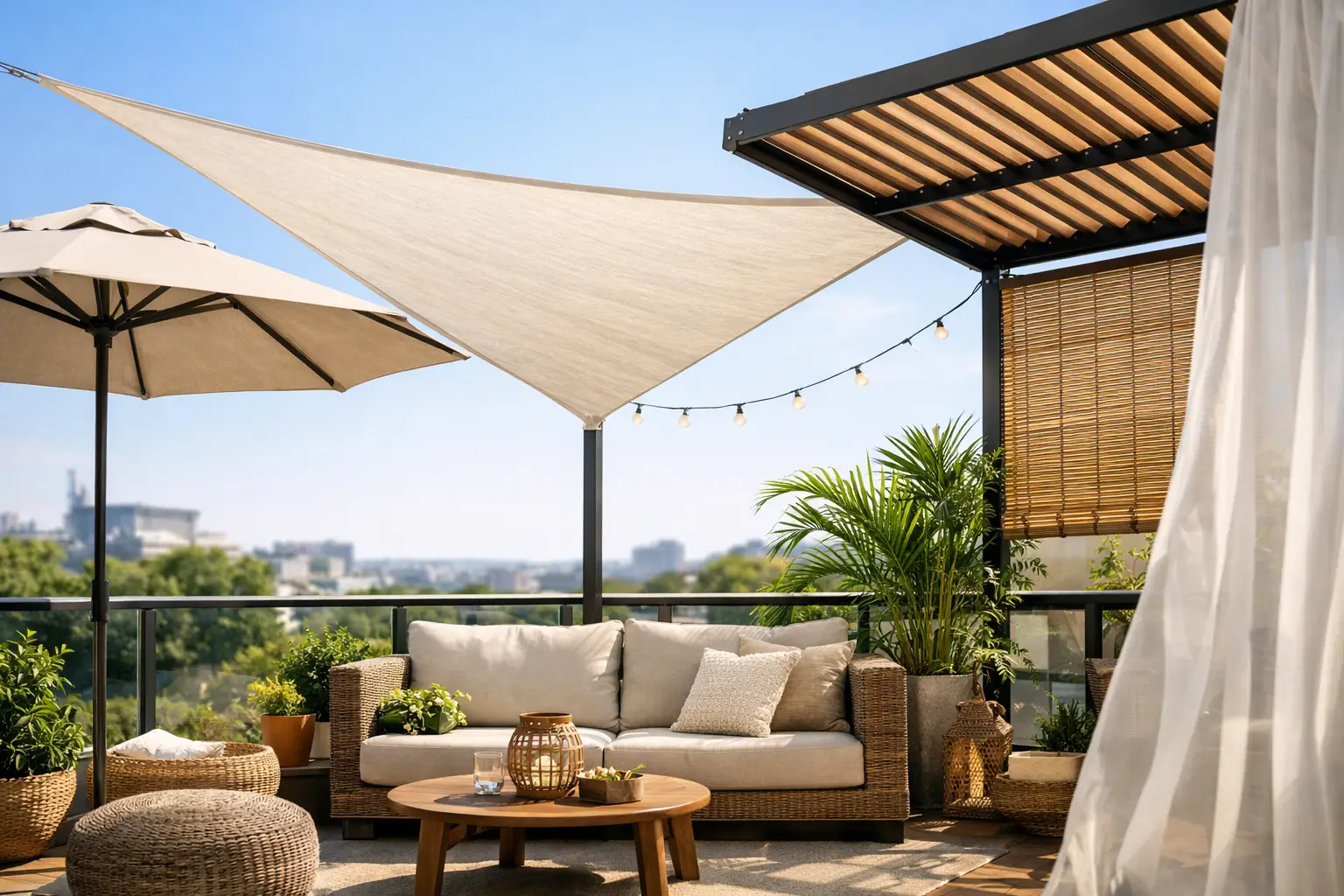
A balcony umbrella is easy to buy, but on a smaller footprint it takes up valuable floor space and may not handle wind well. A shade sail can look attractive, but installation points, drainage, and tensioning have to be right or it becomes more trouble than expected. Fixed fabric covers may provide constant protection, but they also block light all the time, even when you want the balcony open.
Retractable systems usually win when flexibility, appearance, and ease of use matter. They are especially useful for properties where the balcony connects directly to indoor living space and natural light inside the home still matters.
Best balcony shade ideas for small spaces
Small balconies need efficiency more than anything else. Every inch counts, and bulky solutions can make the area feel tighter instead of more comfortable.
Folding arm awnings
Folding arm awnings are ideal for compact balconies because they extend overhead without relying on ground posts. That keeps the floor clear for seating, planters, or dining furniture. It is a simple advantage, but on a narrow balcony it makes a major difference.
This style also creates a cleaner, less cluttered look than freestanding shade products. If your goal is to maximize usable space while keeping the balcony visually open, folding arm systems are hard to beat.
Compact pergola systems
In the right setting, a slim pergola can work beautifully on a larger balcony or terrace. Aluminum louvered pergolas are especially attractive for buyers who want stronger weather control and a more architectural finish.
They are not right for every balcony. Structural support, size, and building restrictions all matter. But where the space allows, a pergola offers more than shade alone. It can support lighting, heating, privacy screens, and insect protection, turning the balcony into a more complete outdoor room.
What matters most before you choose
The best-looking product is not always the best investment. Before selecting a system, think about how the balcony is actually used.
Sun exposure comes first. A west-facing balcony usually needs stronger afternoon protection than one that gets soft morning light. Wind exposure also matters more than many people expect, especially on elevated balconies. A product that works well in a sheltered backyard may not be ideal several stories up.
Then look at projection and coverage. Some owners want enough shade for two chairs and a table. Others want to cover a wide entertaining area or protect commercial seating. Custom sizing matters here. A standard off-the-shelf product often leaves gaps or creates awkward overhangs.
Operation is another important factor. Manual systems can be cost-effective and reliable, but motorized options add everyday convenience and often lead to more consistent use. If the shade is difficult to operate, people tend to leave it in one position and lose much of the benefit.
Finally, think about appearance. Balcony shade should complement the building, not look like an add-on. Frame finish, fabric selection, cassette style, and integration with railings or wall lines all affect the final result.
Why professional installation usually pays off
Balcony shading is not just about attaching fabric to a wall. Mounting requirements, slope, clearance, structural anchoring, and local conditions all affect safety and performance. A poorly installed system can sag, collect water, operate badly, or struggle in wind.
Professional installation helps avoid those issues early. It also helps you choose a product that suits the structure instead of forcing the structure to accept the wrong product. That is especially important for custom homes, condo balconies, mixed-use properties, and commercial spaces where looks and reliability both matter.
For buyers in Toronto and the GTA, local weather adds another layer to the decision. Heat, rain, wind, and seasonal swings make durability and proper installation more than just a nice extra.
The shade idea that gives the best long-term value
If you want the most balanced answer, retractable awnings and motorized awnings usually deliver the best combination of comfort, flexibility, and return on investment. If you want a more premium finish, full-cassette designs offer better protection and a cleaner look. If privacy and low sun are major problems, adding drop shades can make the space far more usable.
That is why the best balcony shade ideas rarely come down to one universal product. The right solution is the one that fits your balcony size, your sun exposure, and how you want to use the space week after week. A well-chosen custom system does more than block sunlight – it turns a hot, underused balcony into a space you actually want to spend time in.
If your balcony has become the part of the property nobody uses after noon, that is usually a sign the shade strategy needs to change, not that the space itself is the problem.