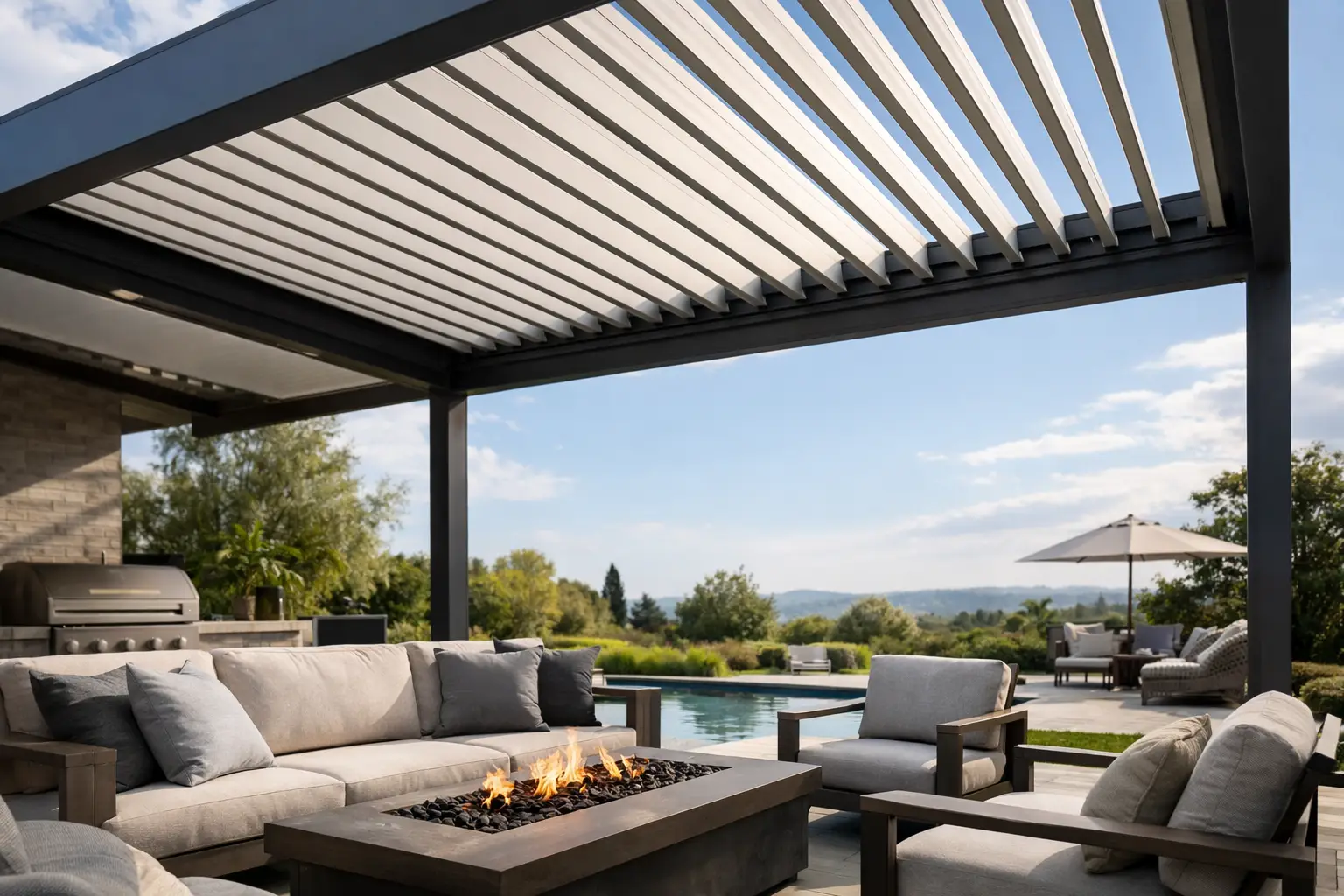
Louvered Pergola Systems Review: Worth It?
A patio that is too hot at noon, too wet during light rain, and too exposed at night usually ends up underused. That is where a louvered pergola system changes the conversation. In this louvered pergola systems review, the real question is not whether these systems look impressive. It is whether they deliver enough comfort, control, and long-term value to justify the investment.
For many homeowners and commercial property operators, the answer is yes – but only when the system is chosen for the space, the climate, and the way it will actually be used. A cheap unit with limited drainage, weak motor components, or poor installation can become an expensive disappointment. A well-built aluminum system with proper upgrades can turn a basic patio into a true extension of the property.
Louvered pergola systems review: what you are really buying
At a glance, a louvered pergola is a freestanding or attached aluminum structure with adjustable roof slats. Those louvers rotate open and closed, either manually or with a motor, to control sunlight, airflow, and rain protection. Some systems also include integrated gutters, privacy screens, lighting, heaters, and insect protection.
That means you are not just buying shade. You are buying flexibility. On a bright afternoon, the louvers can tilt to reduce glare without making the space feel closed in. When rain starts, they can shut completely and direct water into a built-in drainage system. In the evening, add lighting and heat, and the same space works for dinner, entertaining, or customer seating.
This is why louvered pergolas are often compared less to a standard patio cover and more to an outdoor room system. They sit in a different category than fabric awnings or fixed-roof structures because they offer active control instead of one-position coverage.
Where louvered pergolas perform best
The biggest strength of a louvered pergola is adaptability. That matters most in spaces where conditions change throughout the day or across seasons. A west-facing backyard, for example, may be comfortable in the morning and harsh in the late afternoon. A restaurant patio may need sun for ambiance one hour and rain coverage the next.
In those situations, fixed shade can feel limiting. Retractable awnings help with sun and light rain, but they do not create the same architectural presence or year-round usability. A louvered pergola gives more structure, more upgrades, and generally more wind stability when engineered properly.
They also work well for buyers who care about appearance. Clean aluminum framing and concealed drainage tend to complement modern homes, renovated decks, upscale condo terraces, and commercial storefront patios. If the goal is to improve both function and visual value, these systems usually score well.
The main advantages
The first major advantage is weather control. Adjustable louvers give you more precision than a fixed canopy. You can let heat escape, reduce direct sun, or close the roof during passing rain. That alone can add many more usable hours to an outdoor area.
The second is durability. Powder-coated aluminum systems generally hold up better than wood pergolas that need regular staining or fabric systems that eventually fade and wear. Not all aluminum pergolas are equal, but quality systems are built for lower maintenance and longer service life.
The third is customization. This category has expanded well beyond a roof and four posts. Integrated LED lighting, motorized privacy shades, heaters, and side screens can make the space noticeably more comfortable. For residential buyers, that means better entertaining and more everyday use. For commercial operators, it can mean a more dependable customer area and better return on patio square footage.
A final advantage is property appeal. While exact resale value always depends on the market and installation quality, a professionally installed louvered pergola often reads as a premium improvement rather than a temporary add-on.
The trade-offs buyers should understand
A fair louvered pergola systems review has to address cost first. These systems are not entry-level patio products. Between the structure, motorization, drainage, electrical work, and upgrades, pricing can rise quickly. The better question is not whether they are expensive. It is whether the added use, comfort, and finish level justify that cost for your property.
Installation is another factor. A pergola may look simple once completed, but proper anchoring, leveling, drainage alignment, and electrical integration matter. If the system is being attached to a house, connection details become even more important. Poor installation can lead to water issues, performance problems, and a shorter lifespan.
There is also a limit to what a louvered roof can do in extreme weather. These systems are excellent for sun management and light to moderate rain protection when closed properly. But buyers should not treat them like fully enclosed four-season rooms unless they are specifically designed as part of a larger enclosure strategy.
Maintenance is fairly low, not nonexistent. Louvers, drainage channels, motors, and sensors all benefit from periodic inspection and cleaning. The good news is that this is usually straightforward compared with maintaining wood structures or replacing fabric components on lower-end products.
What separates a good system from an average one
Frame construction matters. Heavier-gauge aluminum and solid engineering usually show up in rigidity, smoother operation, and long-term stability. A pergola is exposed every day, so structural quality is not a place to cut corners.
The louver mechanism matters just as much. Smooth, consistent rotation and tight closure points affect both ease of use and weather performance. Motor quality is also worth attention, especially if the roof will be used often or paired with screens and lighting.
Drainage design is one of the most overlooked details. A strong system should move water away efficiently through internal channels and downspouts. If rain management is weak, the premium appearance stops mattering fast.
Finish quality also separates premium products from low-cost imports. Powder coating should resist fading, chipping, and corrosion. In climates with real seasonal swings, this becomes even more important.
Finally, customization should feel integrated, not added on as an afterthought. Lighting, heaters, and side screens should work with the frame design rather than fight it.
Who should buy one and who may want another option
A louvered pergola is a strong fit for homeowners who want a permanent outdoor upgrade and will use the space regularly for dining, relaxing, or entertaining. It also makes sense for buyers who want a cleaner architectural look than a traditional awning can provide.
For commercial properties, the value can be even clearer. Restaurants, cafes, and hospitality spaces often need flexible patio coverage without sacrificing curb appeal. A well-designed pergola can help support more consistent outdoor use and a more polished customer experience.
But it is not always the right answer. If the main goal is basic shade at the lowest possible cost, a retractable awning may be the smarter move. If the patio is used only occasionally, the return may feel weaker. And if the space has unusual structural constraints, a customized review of the site is essential before assuming a pergola is feasible.
Louvered pergola systems review: the buying decision
The best buying decision usually comes down to three things: how often you will use the space, how much control you want over sun and rain, and how permanent you want the upgrade to feel. If you want occasional shade, there are simpler options. If you want a premium outdoor living or dining area that works harder across more conditions, a louvered pergola is in a different class.
This is also where professional guidance matters. Sizing, placement, orientation, drainage planning, and upgrade selection all affect results. Buyers who visit a showroom, compare finish options, and review installation details tend to make better long-term choices than those who shop on appearance alone. Companies such as Welda Solar Shading Systems build value here by combining product selection, customization, and installation support rather than treating the pergola as a one-size-fits-all package.
So, are louvered pergola systems worth it? For the right property and the right expectations, absolutely. They offer better control, stronger visual impact, and more usable outdoor time than many other patio cover options. The key is choosing a system built for real conditions, not just showroom appeal.
If you are considering one, focus less on the headline feature list and more on how the system will perform on your patio, in your weather, and over the next several years. That is usually where the smartest investment becomes obvious.