Awning Installation Services That Last
A good awning looks simple from the street. The reality is that long-term performance depends on measurements, mounting conditions, fabric choice, hardware quality, and installation skill. That is why awning installation services matter just as much as the product itself.
For homeowners, the goal is usually comfort, shade, and better use of a patio, deck, balcony, or backyard seating area. For commercial properties, it is often about weather protection, customer experience, and making outdoor space more usable day after day. In both cases, a poorly planned install can lead to sagging, weak coverage, water issues, or a system that never feels quite right. A properly installed awning solves those problems before they start.
What professional awning installation services actually include
Many buyers think installation starts when the crew arrives. It starts much earlier. A professional process begins with understanding the space, the exposure to sun and rain, the width and projection needed, and the structure that will carry the load.
That early planning stage is where the biggest value shows up. A retractable awning over a small residential deck has different requirements than a restaurant patio awning designed for frequent daily use. A motorized system with sensors and integrated lighting needs different preparation than a manual folding arm awning. If the installer treats every project the same, the finished result usually reflects that.
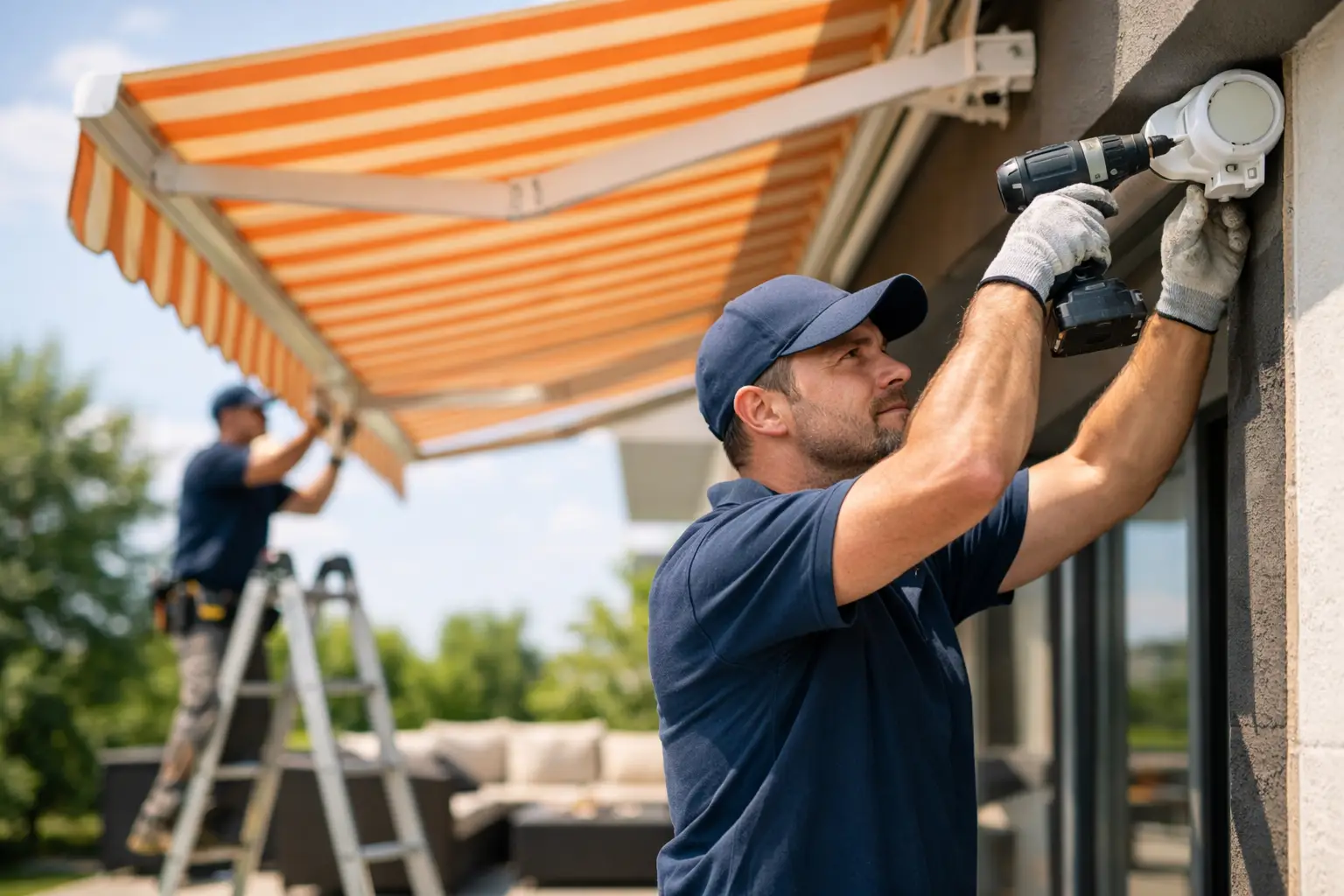
Proper awning installation services typically include site review, product selection guidance, custom sizing, mounting assessment, installation of brackets and framework, system testing, and final adjustment. If the project includes motorization, there is also setup for controls and electrical coordination where needed. The best providers also explain operation, care, and what to expect in changing weather.
Why installation quality matters more than most buyers expect
An awning is not just attached to a wall and opened. It is a structural shade system that needs to perform in sun, wind, and rain while extending and retracting smoothly. If the pitch is off, water can pool. If the brackets are misaligned, the arms can wear unevenly. If the mounting surface is not evaluated correctly, the system may never feel secure.
This is where professional installation protects your investment. Better hardware and quality fabric are important, but neither can make up for bad placement or weak attachment points. A custom-fit system installed correctly will usually last longer, operate better, and look cleaner than a lower-cost option installed without much planning.
There is also the issue of appearance. On a home, the awning should look integrated with the architecture, not added as an afterthought. On a business, it should improve the frontage, support branding, and create a comfortable customer area without blocking access or visibility. Installation affects all of that.
Choosing the right awning for the space
The best awning is the one that fits how the space is actually used. That sounds obvious, but it is where many projects go off track.
A homeowner looking to cool a sunny west-facing patio may benefit from a large retractable awning or a full-cassette model that protects the fabric and mechanism when closed. Someone upgrading a modern backyard might prefer a pergola or a motorized system with lighting and privacy shades for evening use. If the goal is flexible shade through the day, retractable options usually make more sense than fixed coverage.
Commercial buyers tend to think in terms of seating capacity, weather protection, customer comfort, and visual appeal. A cafe patio may need broad projection and dependable daily operation. A restaurant may want a more finished look with motorization, drop shades, or add-ons that help extend the season. In those cases, awning installation services should focus not only on fit but on workflow and durability.
There is no single best product for every property. It depends on sun exposure, wall condition, desired projection, traffic patterns, and how much control you want over the system.
Residential and commercial projects are not the same
The biggest difference is usage. Residential awnings are often designed around comfort, aesthetics, and weekend or seasonal living. Commercial systems usually face heavier use and higher expectations for consistency. They may also need to support larger outdoor areas or coordinate with broader exterior upgrades.
That difference affects product choice and installation planning. A homeowner may prioritize fabric style, cassette protection, and motorized convenience. A business owner may care more about wide coverage, operational reliability, and creating a patio that stays attractive during peak hours.
This is why a one-size-fits-all approach does not work. Experienced installers ask different questions for a private backyard than they do for a restaurant patio. They think about access, surrounding structures, drainage, visibility, customer movement, and how the system will be used every day.
What to expect during the consultation
A serious consultation should feel practical, not vague. You should come away with a better understanding of what size works, what type of mounting is possible, and which products make sense for your budget and goals.
This stage is also where customization matters. Fabric choice, frame finish, cassette style, manual versus motorized operation, and integrated upgrades all affect the final result. Lighting, heating, privacy shades, and insect screens can turn a basic shade system into a far more useful outdoor living or hospitality space. That does not mean every feature is necessary. It means the project should be built around how you plan to use the space.
For many buyers, seeing options in a showroom or working with an installer who can clearly explain trade-offs makes the decision much easier. A lower-priced system may be right for light-duty use. A premium retractable or European-style full-cassette model may be the better value if you want stronger weather protection and a cleaner long-term finish.
Common mistakes to avoid with awning installation services
The biggest mistake is shopping by price alone. A low quote can leave out key details such as mounting preparation, electrical coordination for motorization, or the quality level of the hardware itself. The initial savings often disappear if the awning underperforms or needs correction later.
Another mistake is underestimating exposure. The same awning will not perform the same way on a sheltered patio as it will on an open, sun-heavy, wind-exposed wall. Local conditions matter. So does the mounting surface. Brick, concrete, wood framing, and other substrates each require the right installation method.
It is also common for buyers to choose too little coverage. Awnings that are undersized may reduce some glare but fail to protect the area that people actually use. The opposite can happen too. Oversizing without proper structural planning creates its own problems. The best result comes from balancing coverage, projection, appearance, and support.
The value of custom-fit installation
Custom sizing is one of the clearest differences between a professional project and a generic purchase. Outdoor spaces are rarely perfectly standard. Door locations, soffits, light fixtures, rooflines, and patio dimensions all influence what can be installed and where.
A custom-fit awning does more than fill the space. It improves shading performance, looks more intentional, and avoids awkward gaps or interference with nearby features. It also makes add-ons more useful. Motorization, drop shades, screens, and lighting all work better when the base installation has been properly planned from the beginning.
For buyers in Toronto and the GTA, this becomes especially relevant because outdoor shading systems need to stand up to real seasonal change. A product that works on paper but is not suited to local conditions will not feel like a good investment for long. That is one reason companies such as Welda Solar Shading Systems focus on consultation, customization, and professional installation rather than selling a generic unit and leaving the rest to chance.
When it makes sense to upgrade beyond a basic awning
Sometimes a standard retractable awning is exactly right. Sometimes the better answer is a pergola, a louvered roof system, or an awning with more advanced features. If the space needs stronger all-day usability, additional privacy, or more control over weather protection, a simple fabric canopy may not be enough.
That does not mean more expensive is always better. It means the right level of system should match the way the space is used. A backyard built for entertaining may benefit from integrated lighting and motorization. A restaurant patio may gain more value from a larger commercial-grade installation with shade accessories that help extend service hours and improve guest comfort.
The point of good guidance is to help you avoid buying too little or too much.
If you are considering an awning, think beyond the fabric and frame. Think about how the space will function on a hot afternoon, during light rain, or when you want to use the patio more often than you do now. The right installation turns outdoor square footage into space you will actually use.