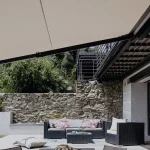
How Retractable Awnings Actually Work
A retractable awning looks simple from the ground. You press a button or turn a crank, the fabric rolls out, and your patio suddenly feels cooler and more usable. What most property owners want to know before buying is what is actually happening inside the system, and whether it will hold up in real weather.
If you have been asking how does a retractable awning work, the short answer is this: a roller tube unwinds the fabric while spring-loaded folding arms extend outward and keep the canopy under tension. In motorized models, an electric motor drives the movement. In manual models, a hand crank does the same job. The result is adjustable shade when you want it and a compact profile when you do not.
That is the basic idea. The real value is in how the parts work together and how the right system is built for your space.
How does a retractable awning work in real use?
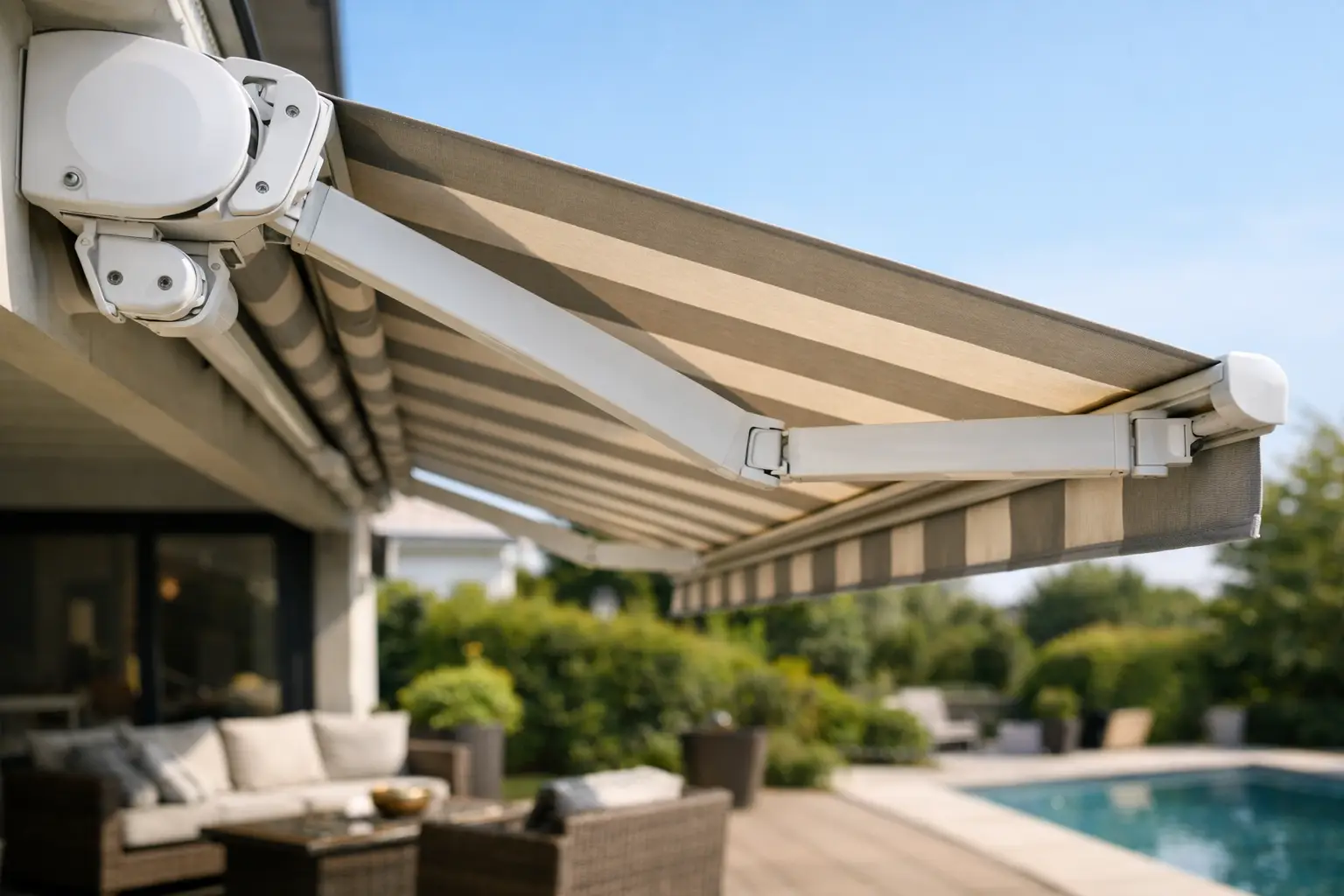
A retractable awning is mounted to a wall, soffit, roof structure, or another secure support point. The frame includes a roller tube, the awning fabric, articulated arms, brackets, and either a motor or manual gear system. When the awning opens, the fabric unrolls from the tube and the arms push outward in a controlled motion. When it closes, the arms fold back in and the fabric wraps tightly around the roller.
The reason this design is so popular is flexibility. You can extend the awning when the sun is beating down on a deck, storefront, restaurant patio, or balcony, then retract it when the weather changes or when you want a clean, open look. That adjustability is a major advantage over fixed canopies.
A quality system is not just fabric on a bar. It is an engineered structure designed to balance reach, tension, slope, and resistance to regular outdoor use. That matters in Toronto and the GTA, where sun, wind, and sudden rain can all show up in the same week.
The main parts that make it work
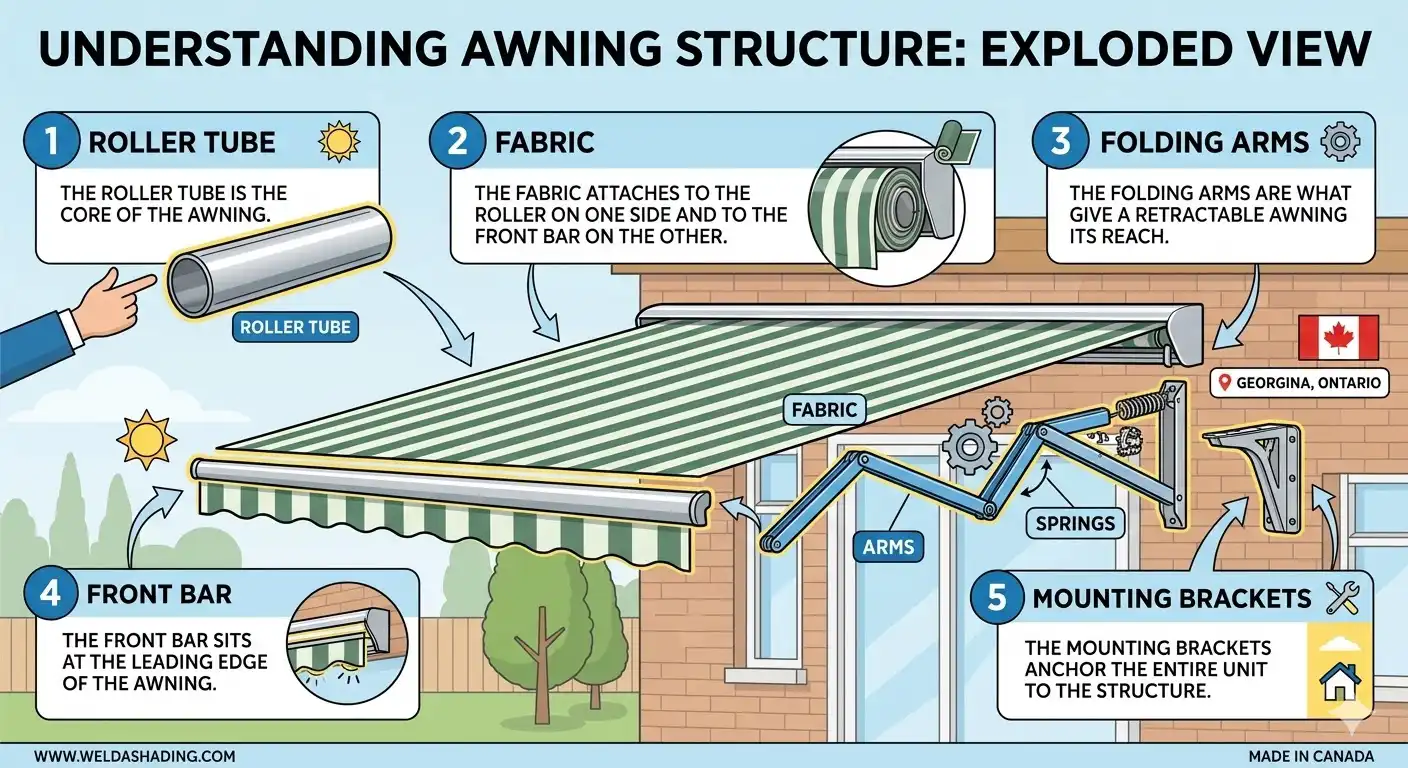
The roller tube is the core of the awning. This horizontal tube stores the fabric when the awning is closed and rotates to extend or retract the canopy. Better systems use a strong tube that resists flexing, especially on wider projections.
The fabric attaches to the roller on one side and to the front bar on the other. As the tube rotates, the fabric rolls in or out in a smooth, even motion. Outdoor awning fabrics are designed to resist fading, moisture, and wear, but performance depends on proper tension and installation.
The folding arms are what give a retractable awning its reach. These arms are mounted on each side and contain internal springs or tension mechanisms that push the front bar outward. As the awning opens, the arms extend in stages. As it closes, they fold inward neatly.
The front bar sits at the leading edge of the awning. It helps keep the fabric stretched, supports the front of the canopy, and creates a clean finished look. In many systems, this bar also plays a role in protecting the fabric when the awning is closed.
The mounting brackets anchor the entire unit to the structure. This is one of the most important parts of the system, even though it is not the most visible. A well-built awning still depends on proper structural attachment. Installation on brick, concrete, wood framing, or other surfaces requires the right hardware and the right load calculations.
Manual vs. motorized operation
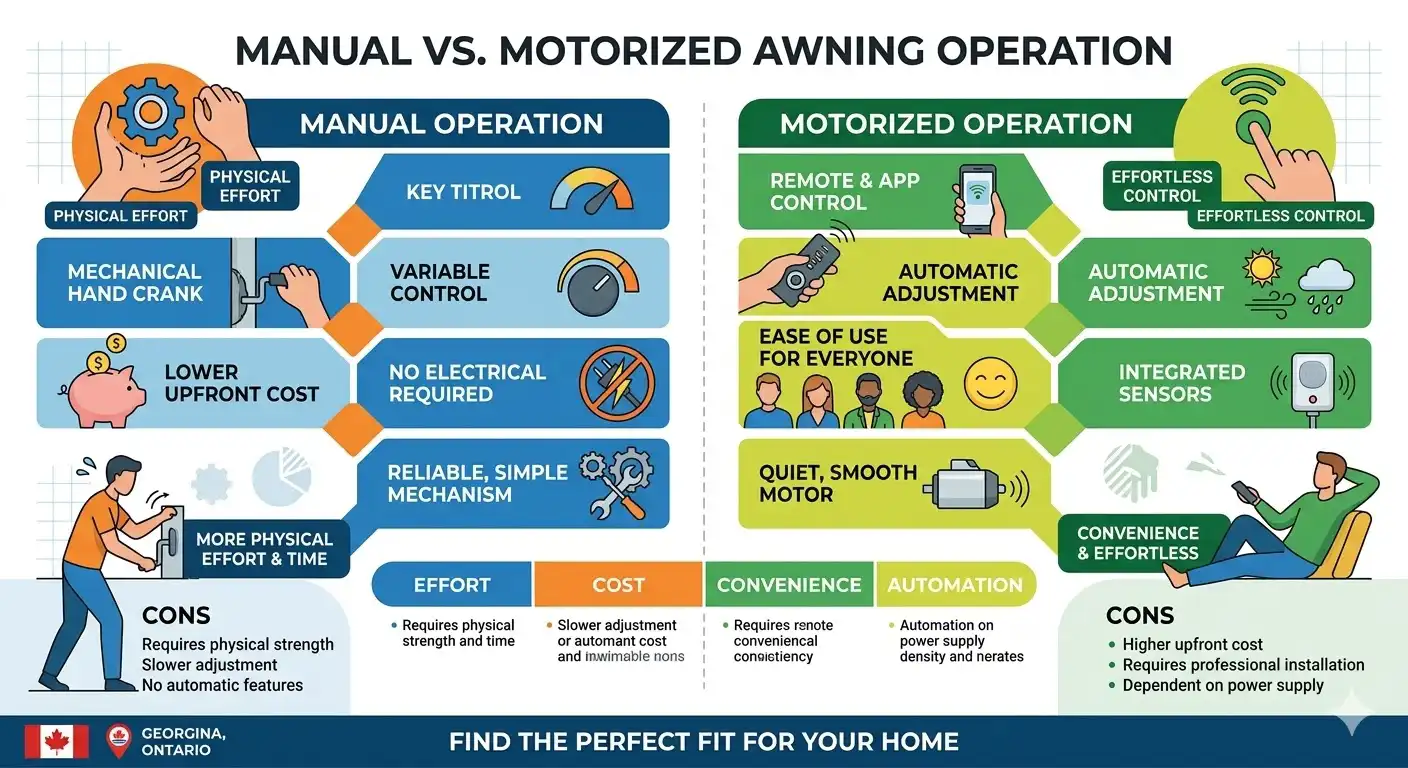
A manual retractable awning works through a hand crank connected to a gear mechanism. When you turn the crank, the gears rotate the roller tube and move the awning in or out. Manual systems are straightforward and can be a good fit for smaller residential spaces or buyers looking for a simpler setup.
A motorized awning replaces the crank with a tubular motor inside the roller tube. Press a wall switch, remote, or integrated control, and the motor turns the tube for you. This option is popular for larger awnings, hard-to-reach locations, and homeowners or business operators who want convenience.
Motorization is not just about comfort. It also helps with daily use. People tend to use adjustable shade more often when opening and closing the system is easy. For a restaurant patio or busy backyard, that matters. If the awning stays retracted because it is inconvenient, you lose much of the value.
Some motorized systems also include wind sensors, sun sensors, and timers. These features automate operation based on conditions. That can help protect the awning and improve energy efficiency, but it is still important to understand the limits of any retractable system in rough weather.
Why the arms matter so much
The folding arms do more than extend the canopy. They create the tension that keeps the fabric looking smooth instead of sagging. Inside the arms are spring assemblies that apply force as the awning opens. That pressure keeps the front bar stable and the fabric taut.
This is one area where product quality becomes obvious over time. A lower-grade arm system may lose tension, move unevenly, or struggle on wider spans. A stronger arm setup gives better performance, cleaner projection, and more reliable operation over repeated use.
For larger residential patios and commercial applications, arm strength is especially important. A wider awning places more stress on every component, so the frame, springs, and brackets all need to be sized correctly.
How pitch and water runoff work
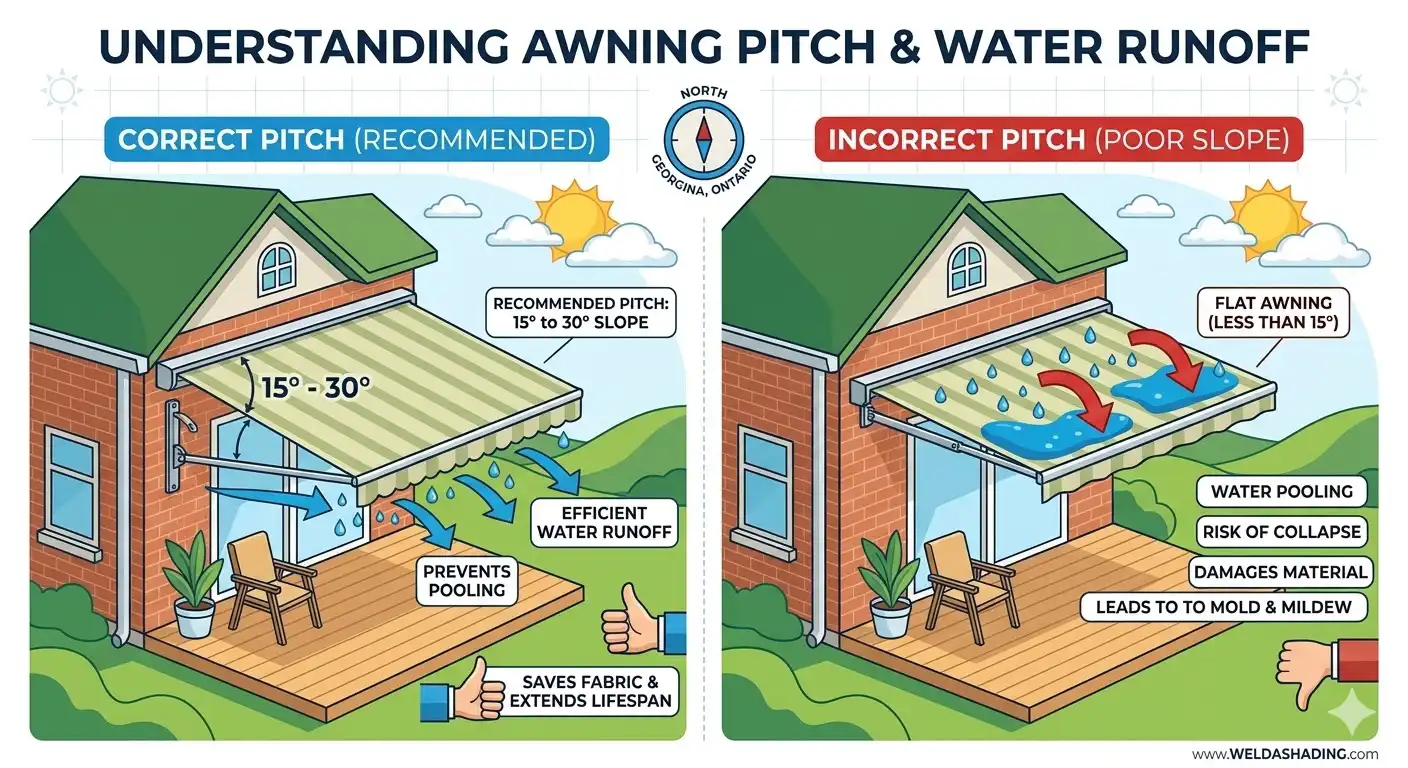 A retractable awning is usually installed with a slight slope. That slope helps with water runoff and improves shade coverage as the sun angle changes. Without enough pitch, light rain can collect on the fabric instead of draining off.
This is where many buyers need practical guidance. A retractable awning can handle light rain if the system is designed and pitched properly, but it is not the same as a permanent all-weather roof. Heavy rain, pooling water, strong gusts, and snow loads are different conditions entirely.
That is why product selection should match the job. For occasional shade and light weather protection, a retractable awning is often an excellent solution. For customers who want more substantial rain coverage or year-round use, a pergola or a more structural covering may be the better fit.
Open, semi-cassette, and full-cassette designs
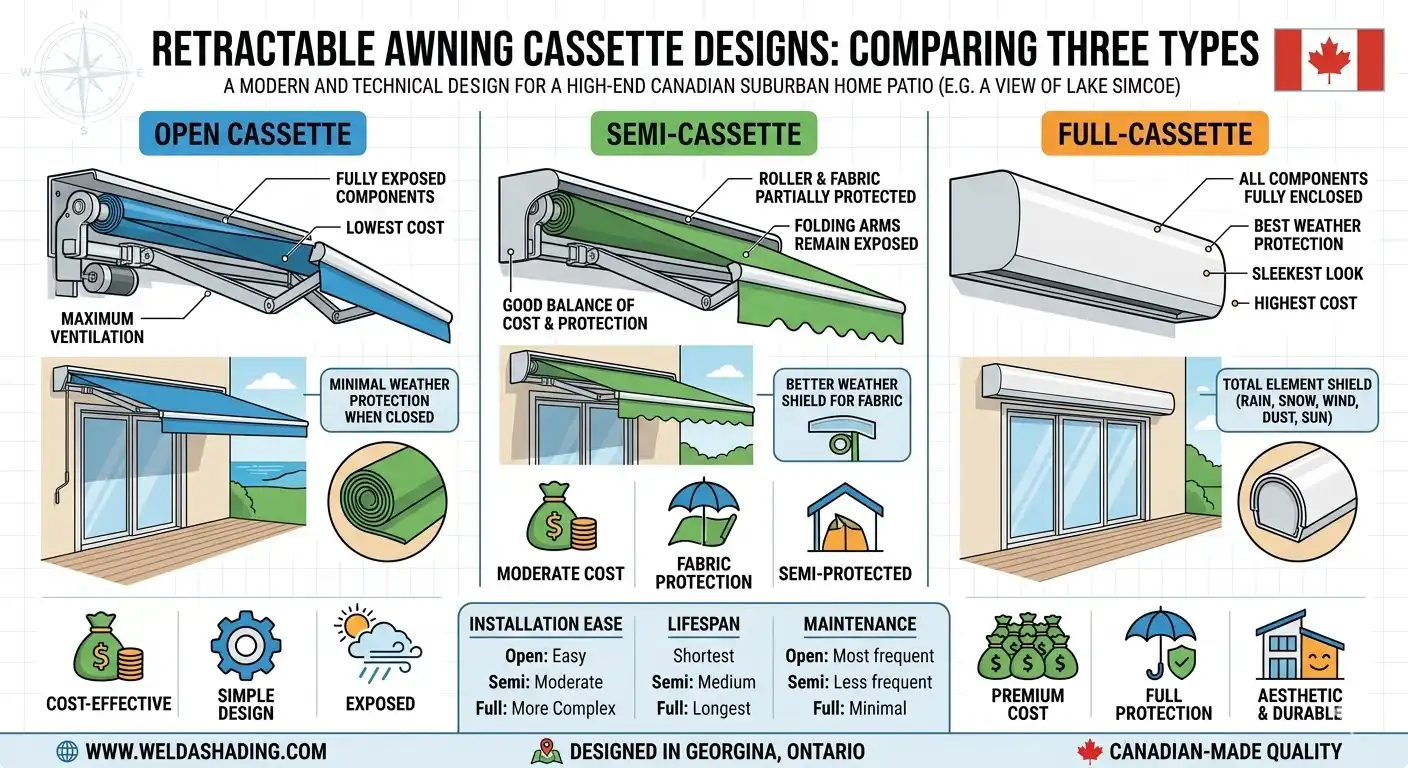
Not all retractable awnings protect themselves the same way when closed. An open awning leaves more of the roller and fabric exposed. This can work well in protected locations or for budget-conscious projects.
A semi-cassette design offers more cover around the main components. A full-cassette awning encloses the roller, fabric, and arms more completely when retracted. That extra protection can help preserve the appearance and condition of the system over time, especially in exposed environments.
For design-conscious homeowners and commercial storefronts, full-cassette European-style awnings are often the preferred option because they combine clean lines with better component protection.
What affects performance and lifespan?
The biggest factors are build quality, correct sizing, installation, and how the awning is used. A good awning should be custom-fit to the width, projection, and mounting conditions of the property. Oversimplified off-the-shelf sizing can create problems with coverage, pitch, and structural support.
Fabric quality matters, but the hardware matters just as much. The motor, springs, brackets, frame finish, and fasteners all influence long-term performance. The same is true for maintenance. Keeping the fabric clean, retracting the awning during bad weather, and addressing small issues early can extend service life.
Commercial operators should be especially realistic about use patterns. A restaurant patio awning may be opened and closed far more often than a backyard awning, so the operating system and frame need to match that demand.
Why professional installation makes a difference
Even the best awning will underperform if it is installed poorly. Mounting position affects headroom, projection, drainage, and sun coverage. Structural attachment affects safety and stability. Motor setup affects smooth operation and limit settings.
That is why many buyers prefer working with an experienced local supplier that can assess the site, recommend the right model, and handle installation properly. At Welda Solar Shading Systems, that process starts with understanding how you actually plan to use the space, then matching you with a manual or motorized solution that fits the property and the weather conditions.
Is a retractable awning right for you?
If you want flexible shade, better comfort, and a cleaner alternative to fixed overhead coverage, a retractable awning is one of the most practical upgrades you can make. It works through a simple idea – controlled extension, spring-arm support, and fabric tension – but the quality of the result depends on the design and installation behind it.
For some properties, a compact manual unit is enough. For others, a large motorized or full-cassette system makes more sense. The right answer depends on your space, how often you will use it, and how much weather protection you expect from it.
A good awning should not just open and close. It should make your patio, deck, balcony, or commercial frontage easier to use every day, while still looking sharp years after installation.