How to Winterize Patio Awning Properly
One heavy snowfall is all it takes to turn a good awning into an expensive repair. If you are wondering how to winterize patio awning systems before freezing weather arrives, the goal is simple: keep moisture out, reduce strain on the frame, and make sure the unit goes into storage or closed position clean, dry, and secure.
That sounds straightforward, but the right approach depends on the type of awning you have. A retractable folding arm awning, a motorized full-cassette system, and a fixed commercial patio cover do not all face winter the same way. The best results come from matching your winter prep to the product, not just rolling it in and hoping for the best.
How to winterize patio awning systems by type
For most residential retractable awnings, winterizing means a full inspection, careful cleaning, complete drying, and proper retraction. If the unit has a cassette, that casing adds protection, but it does not replace maintenance. Dirt, trapped moisture, and minor mechanical issues can still cause trouble over the winter.
Manual awnings need attention to the crank, arms, joints, and pitch settings. Motorized awnings add another layer – the motor, remote controls, sensors, and power connection should all be checked before the system sits unused for months. If your awning has integrated lights, heaters, or drop shades, those accessories should also be inspected and shut down properly.
Commercial patio awnings often need a stricter winter plan. Restaurants and hospitality spaces may keep some exterior structures in service longer into the season, but retractable fabric systems should not be treated like permanent roofs. Snow load, ice buildup, and winter wind can exceed what many shade systems are designed to handle.
Start with a full inspection before winter
Before you clean anything, open the awning fully and look at the entire system in daylight. Small issues are easier and cheaper to handle in fall than in spring.
Check the fabric for tears, seam separation, sagging areas, mildew spots, and worn stitching. Look at the frame for bent arms, loose fasteners, corrosion, or signs that the awning no longer closes evenly. If the front bar does not align properly when retracting, that is worth fixing before winter storage because misalignment can let water and debris into the roll.
Pay attention to mounting points. The brackets attaching the awning to the wall or soffit should feel secure and show no signs of shifting. Freeze-thaw cycles can make existing weaknesses worse, especially if the awning already moves under load.
If your system is motorized, test the controls and listen to the motor while extending and retracting. Sluggish movement, jerking, unusual noise, or hesitation usually means the unit needs service. Winter is not the time to ignore performance issues.
Clean the awning fabric the right way
A dirty awning stored for winter is far more likely to develop stains, odor, and mold. Leaves, pollen, bird droppings, and urban grime hold moisture against the fabric. That becomes a bigger problem once temperatures swing and ventilation drops.
Brush off loose debris first with a soft brush. Then wash the fabric using mild soap and lukewarm water. Avoid harsh chemicals, bleach, and aggressive pressure washing, especially on acrylic and specialty-coated fabrics. Those can damage protective finishes or weaken fibers.
Work gently and rinse thoroughly. Soap residue can attract more dirt later, and leftover contaminants can leave water marks when the awning dries. If your awning valance is removable, inspect that area closely because dirt and mildew often collect there first.
The most important part of cleaning is what happens next.
Never retract an awning while it is still damp
If there is one rule that matters more than any other, this is it. Do not close the awning for winter until the fabric is completely dry.
Even slight moisture trapped inside a rolled awning can lead to mildew growth, staining, fabric odor, and in some cases damage to stitching or edges. With a cassette awning, owners sometimes assume the sealed housing will protect everything. It protects the awning from exterior exposure, but it also means damp fabric has less chance to air out if it was closed wet.
Choose a dry day with some airflow. After washing, leave the awning extended until both the top and underside are dry. If weather is not cooperating, it may be better to delay winterizing by a day or two than rush the job and store moisture inside.
Protect the frame and moving parts
Fabric gets most of the attention, but the hardware matters just as much. Hinges, arm joints, fasteners, and moving points should be checked for wear and cleaned of dirt buildup.
For manual systems, make sure the crank mechanism operates smoothly. For motorized models, inspect visible wiring and confirm the power source is stable. Follow manufacturer guidance on lubrication because some components benefit from light treatment while others should not be greased at all. Using the wrong product can attract grime or interfere with operation.
If you notice rust on fasteners or oxidation on metal parts, address it before winter exposure makes it worse. In colder climates like Toronto and the GTA, repeated moisture and freezing conditions can accelerate deterioration, especially on older systems or awnings installed in exposed backyard or commercial patio locations.
Secure sensors, power, and accessories
Many newer awnings include wind sensors, sun sensors, LED lighting, heaters, or motorized drop screens. These features improve comfort during the season, but they also add components that need proper winter shutdown.
Test sensors before the season ends so you are not carrying hidden faults into spring. If removable remotes, batteries, or accessory controls are part of the system, store them properly. If your awning includes exterior heating or lighting elements that will not be used in winter, switch them off and inspect their mounts and connections.
This is also a good time to confirm your retractable system is parked in its correct closed position. A partially closed awning is more vulnerable to wind-driven moisture and winter debris.
Should you use an awning cover?
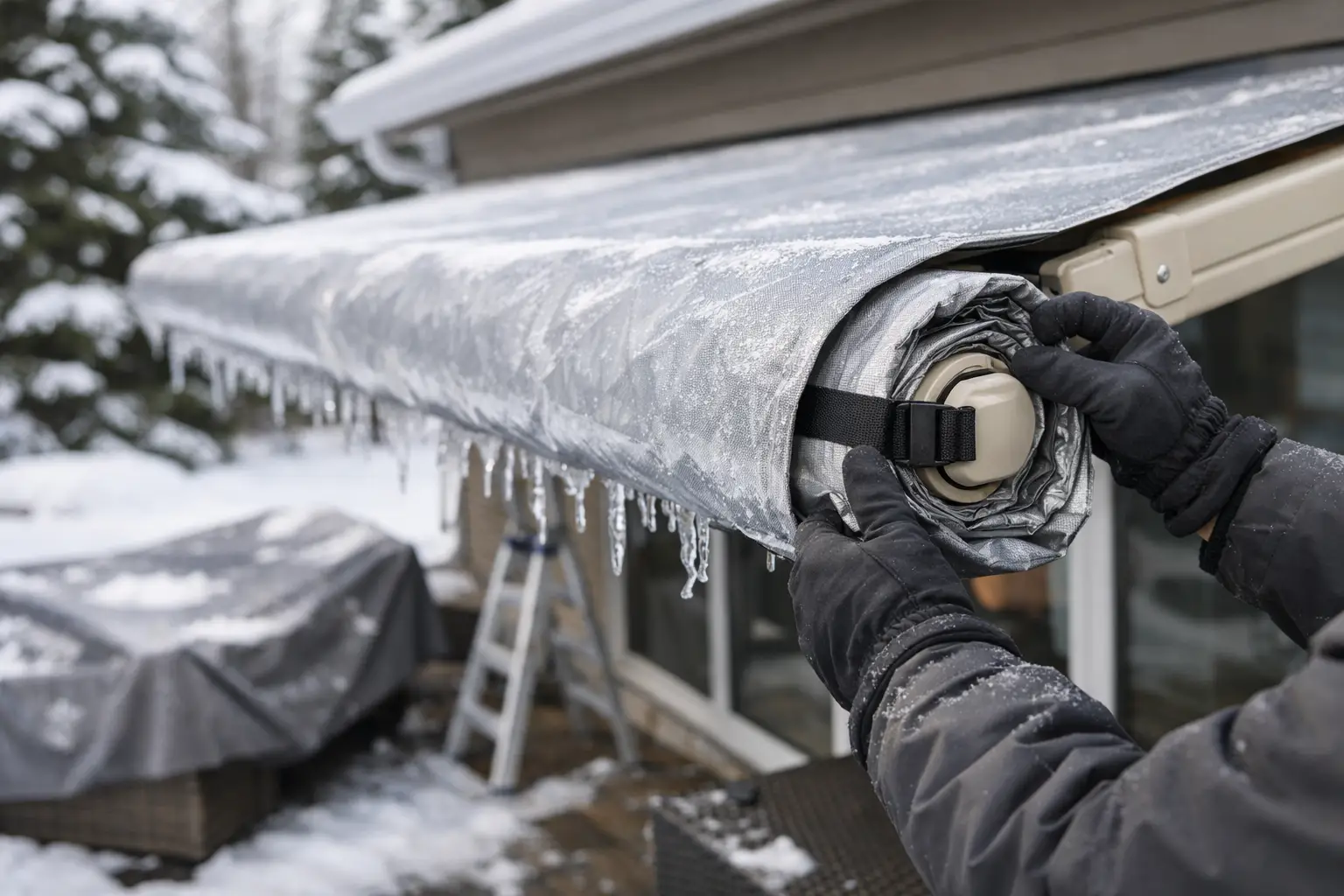
It depends on the awning design. A full-cassette awning already encloses the fabric and arms when retracted, so an extra exterior cover is often unnecessary. A semi-cassette or open-roll awning may benefit from additional protection if the cover is designed for the unit and does not trap condensation.
That trade-off matters. A poorly fitted cover can rub against the fabric, hold moisture, or collect ice. More protection is not always better if it reduces ventilation or adds stress points. If you are considering a cover, it should fit the awning correctly and be suited to winter conditions, not just summer dust protection.
What not to do when winterizing
Most avoidable awning damage comes from a few common mistakes. Homeowners and business owners often wait until the first freeze, close the awning while damp, or assume a retractable system can handle snow because the frame looks strong. It cannot be judged that way.
Retractable awnings are shade products first. Many offer light rain protection during the season, but they are generally not designed for snow accumulation, ice weight, or repeated winter wind events. Using them outside their intended conditions shortens fabric life, strains the arms, and can affect mounting stability.
It is also a mistake to postpone repairs until spring. A small tear, loose bracket, or motor issue can become a larger service call after months of cold exposure and inactivity.
When professional service makes sense
If the awning is hard to reach, extra wide, motorized, or showing signs of wear, professional winter service is often the smarter option. The same goes for restaurant patios, multi-unit properties, and custom installations with integrated screens, lighting, or heaters.
A professional inspection can catch bracket movement, fabric tension issues, sensor faults, and alignment problems that are easy to miss from ground level. That helps protect the investment and reduces the chance of opening the season with repairs already waiting.
For custom systems, especially larger retractable awnings and European-style cassette models, proper seasonal service is part of long-term performance. Companies like Welda Solar Shading Systems typically see the difference between awnings that are simply closed for winter and awnings that are actually prepared for it.
A better spring starts in the fall
Knowing how to winterize patio awning systems is really about avoiding preventable wear. Clean it well, let it dry fully, inspect the hardware, and deal with small issues before cold weather locks them in place. A little attention now is cheaper than fabric replacement, motor repair, or frame service later.
If your awning has been through a few seasons, this is also the right moment to decide whether it needs maintenance, replacement fabric, or a more weather-protective design before next year. The best outdoor setups are not just attractive in summer – they are easier to protect when winter shows up.