Motorized Awnings vs Manual: Which Fits?
A retractable awning usually looks simple from the street. Then you start shopping, and the real question shows up fast: motorized awnings vs manual. That choice affects daily convenience, long-term value, installation details, and how often you actually use your patio, deck, storefront, or restaurant seating area.
For some buyers, manual is the smart, budget-conscious answer. For others, motorization is the feature that turns an awning from something nice to have into something they use every day. The right decision depends on your space, your budget, and how you expect the system to perform through hot sun, light rain, and regular seasonal use.
Motorized awnings vs manual: the real difference
At the most basic level, both options do the same job. They extend to provide shade and retract when you want a clear sky or need to protect the fabric and frame.
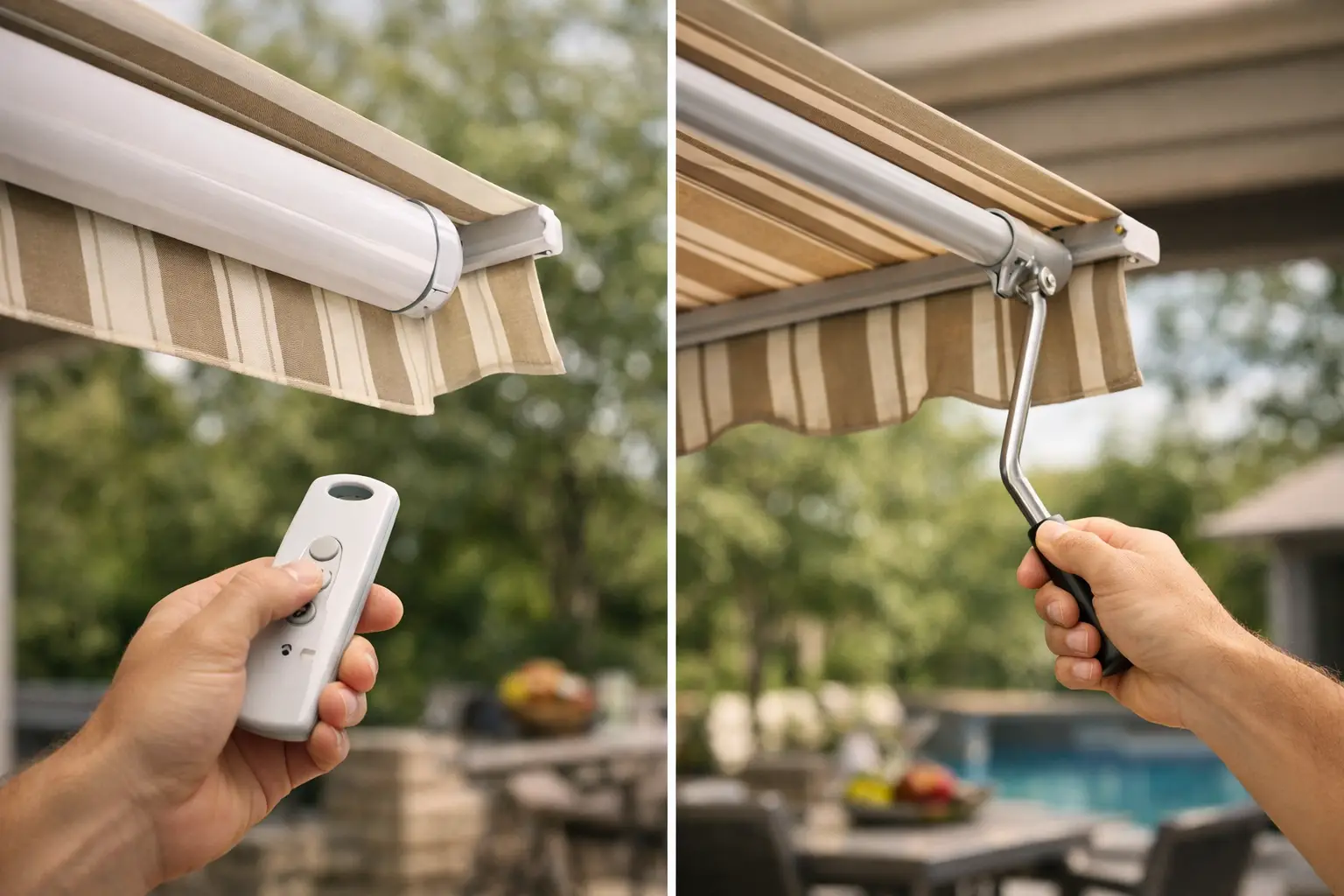
The difference is how that movement happens. A manual awning uses a hand crank. A motorized awning operates with a wall switch, remote, or smart control setup, depending on the model and upgrades selected.
That sounds like a small distinction, but in practice it changes the ownership experience. With manual operation, you are physically involved every time the awning opens or closes. With motorization, shade becomes quicker and easier to use, especially on larger systems or in commercial settings where staff need fast control throughout the day.
When manual awnings make more sense
Manual awnings still have a strong place in the market, especially when simplicity matters most. If you want reliable shade without adding electrical components, a hand-crank system can be an excellent fit.
For smaller patios, balconies, and residential spaces used occasionally, manual operation is often enough. The mechanism is straightforward, and some homeowners prefer that simplicity. There are fewer powered components involved, which can make the purchase price more approachable.
Manual systems can also work well when the awning is adjusted only once or twice during use. If you typically extend it for a weekend afternoon and retract it later in the evening, the crank may not feel like a drawback.
Budget is another major factor. If your priority is maximizing coverage while keeping initial costs under control, choosing manual operation may let you invest more in awning size, fabric quality, or cassette protection rather than automation.
That said, manual is not automatically the better value. It depends on how often you plan to use the system and how convenient you need that process to be.
Why motorized awnings are often worth the upgrade
Motorized awnings are popular for a reason. They make shade easier to use, and easier use usually means more actual use.
If your awning covers a large deck, restaurant patio, customer seating area, or backyard entertaining space, motorization removes the effort from adjusting it. Press a button and the system extends smoothly. When the weather changes or the day ends, it retracts just as easily.
That convenience matters more than many buyers expect. People are far more likely to use an awning regularly when operation feels immediate. On very sunny days, during quick weather changes, or when guests are already outside, a motorized system is simply more practical.
Motorization also pairs well with premium outdoor living upgrades. If you are building a more finished patio environment with lighting, heaters, privacy screens, or a modern pergola-style design, powered controls feel consistent with the rest of the investment.
For commercial properties, the case gets even stronger. Staff can respond quickly to shifting sun angles, improve guest comfort, and maintain a more polished appearance without manually cranking a large system in front of customers.
Cost: upfront savings vs long-term satisfaction
Cost is usually the first comparison point in motorized awnings vs manual, and it should be. Manual awnings generally cost less upfront. Motorized systems add the expense of the motor, electrical setup, and any upgraded controls or automation features.
But purchase price is only one part of the equation. The better question is whether the lower initial cost will still feel like the right choice after a few seasons.
If you have a wide awning, a higher mounting point, or a space used almost daily, manual operation can become inconvenient over time. What saves money at installation can feel limiting later, especially if the awning is left closed more often simply because operating it takes more effort.
Motorization tends to offer stronger lifestyle value. It may not be the least expensive option on day one, but it often delivers better satisfaction for buyers who want easy, frequent use. In many projects, that difference matters more than the gap in starting price.
Size and usage matter more than most people think
A small residential awning over a modest sitting area is one thing. A large retractable awning covering a broad patio or commercial frontage is another.
As size increases, manual operation becomes less appealing. Larger systems involve more effort to extend and retract, and daily adjustments can start to feel like a chore. That is where motorized systems earn their keep.
Usage patterns matter just as much. If you use your outdoor space occasionally, manual may be perfectly reasonable. If you use it for family meals, entertaining, customer service, or all-day sun management, motorization usually makes more sense.
This is where a showroom consultation or on-site assessment becomes valuable. The right recommendation should reflect the actual width, projection, mounting conditions, and daily habits tied to the space.
Reliability and maintenance
Some buyers assume manual awnings are always more dependable because they are simpler. There is some truth to that. Fewer powered parts can mean fewer things to troubleshoot.
At the same time, modern motorized awnings are built for regular use and can be very dependable when properly specified and professionally installed. A quality system with the right motor, correct mounting, and weather-appropriate construction is designed to perform consistently.
The bigger reliability issue is usually not manual versus motorized. It is product quality and installation quality. An awning that is undersized for the application, poorly mounted, or not suited to local weather conditions will create problems regardless of how it opens.
Maintenance for either option is fairly manageable. The fabric, frame, and moving arms still need routine care. Motorized systems may require occasional attention to controls or electrical components, but that trade-off is often acceptable for the convenience they provide.
Weather, wind, and smart control features
Weather adds another layer to the decision. In areas with strong seasonal changes, good retraction habits matter. Retractable awnings should be pulled in during unsuitable weather conditions to help protect the system.
Motorized units can offer an advantage here, especially when paired with sensors or automated controls. Depending on the setup, features like wind detection can help the awning respond faster than a user who is not home or not paying attention. That does not replace proper care, but it does add another level of protection and convenience.
Manual systems do not offer that kind of automation. You have to notice the weather and act on it yourself. For some homeowners, that is fine. For busy households and commercial operators, automatic response can be a meaningful benefit.
Which option looks more premium?
Both manual and motorized awnings can look excellent when the product is well designed and properly fitted. The frame style, fabric selection, cassette design, and installation finish usually matter more visually than the operating method alone.
Still, motorization often aligns with a more premium overall package. If you are choosing a full-cassette awning, a sleek contemporary frame, or a larger custom installation, powered operation tends to complement that higher-end feel.
For property owners focused on curb appeal, ease of use and appearance often go hand in hand. The awning should not just look good. It should feel easy to live with.
How to choose between motorized and manual
If your priority is lower upfront cost, basic functionality, and simple operation for a smaller space, manual may be the right call. It gives you shade protection without adding automation you may not need.
If your priority is convenience, frequent use, larger coverage, or a more polished residential or commercial setup, motorized is usually the better investment. The benefit shows up in daily use, not just in the feature list.
That is why the best awning decision is rarely about the mechanism alone. It is about matching the system to the space, the user, and the level of comfort you want from the project. Welda Solar Shading Systems helps property owners sort through those details with custom-fit options, professional installation, and practical guidance based on how the awning will actually be used.
The smartest choice is the one you will be happy to use every time the sun gets intense, the patio fills up, or the weather changes faster than expected.