Toronto Patio Awnings That Actually Last
A patio that looks great at 10 a.m. can be unusable by 2 p.m. if the sun is beating down, the deck is overheating, or a light rain sends everyone back inside. That is why Toronto patio awnings are less of a luxury purchase and more of a practical upgrade for homeowners and commercial property owners who want to use outdoor space more often.
The right awning does three jobs at once. It adds shade, protects furniture and finishes, and makes the patio feel like a real extension of the property instead of a space that only works when the weather cooperates. For restaurants, cafes, and hospitality spaces, it can also help protect guests and support more usable seating during the season.
Why Toronto patio awnings make sense
Toronto weather is not gentle on outdoor spaces. Summer heat, intense UV exposure, sudden rain, and seasonal wear all put pressure on any exterior product. That is why awning selection should start with performance, not just appearance.
A well-made retractable awning gives you flexibility. You can extend it when you need shade and pull it back when you want more light or when conditions change. That sounds simple, but it matters. Fixed shade structures can work well in some settings, yet they do not offer the same control. If your patio gets partial sun, changing wind, or different usage throughout the day, a retractable system often makes more sense.
For residential properties, this usually means better comfort over decks, terraces, balconies, and backyard patios. For commercial spaces, it often means a more usable frontage and a better customer experience. In both cases, the right system helps turn square footage you already have into space you can use more consistently.
What to look for in Toronto patio awnings
Not all awnings are built for the same expectations. Some are basic seasonal shade products. Others are custom systems designed for regular use, cleaner appearance, and stronger long-term value. The difference shows up in the frame, fabric, hardware, operation, and installation quality.
The first issue is size and projection. An awning that is too small leaves the space exposed during peak sun hours. One that is oversized for the wall or mounting surface can create structural and visual problems. This is where custom fitting matters. The awning should match the dimensions of the patio and the property, not force the space to adapt to a standard product.
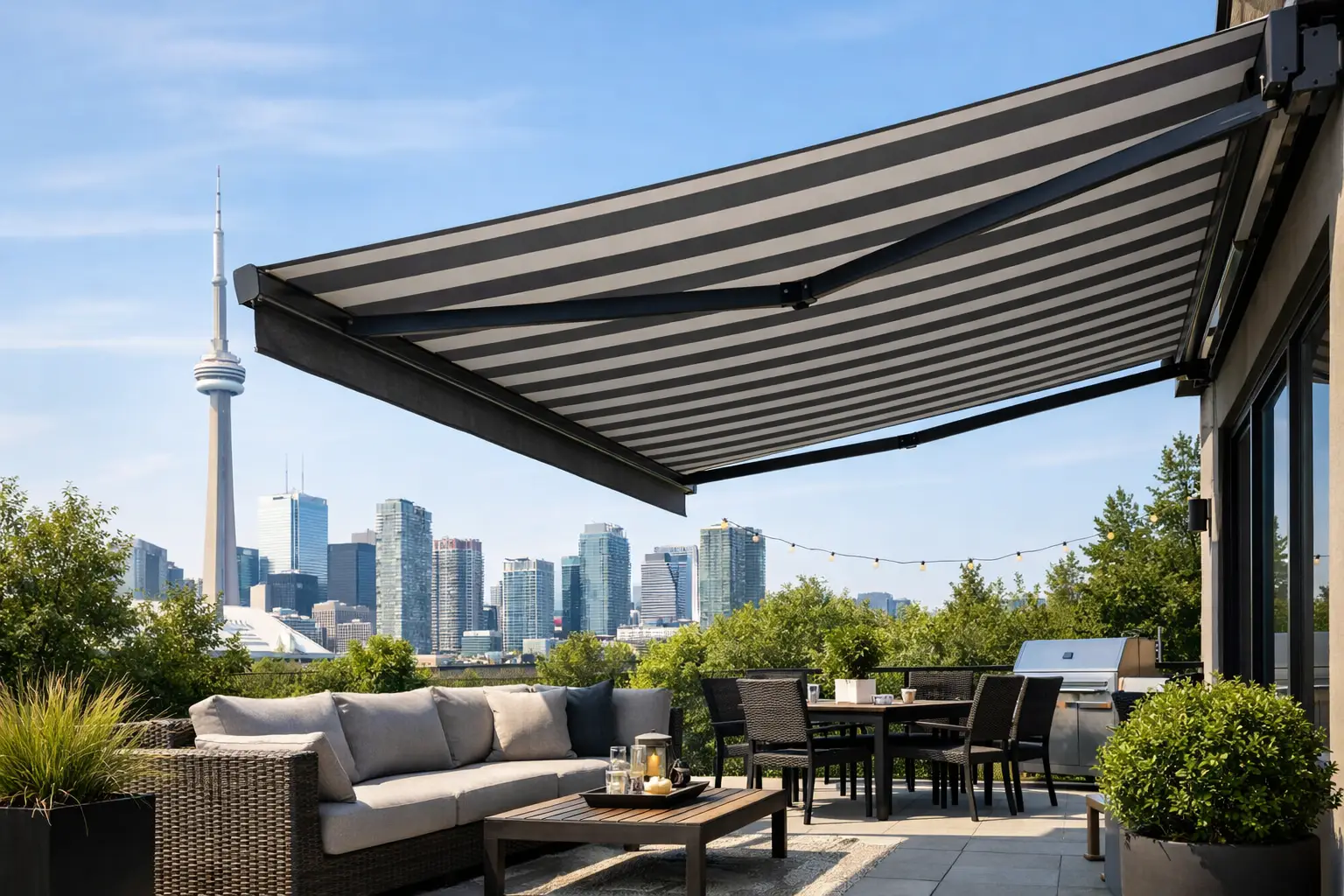
The second issue is frame design. Folding arm awnings remain popular because they provide broad coverage without posts interrupting the open area below. Full-cassette models add another level of protection by enclosing the fabric and moving parts when the awning is retracted. That usually means a cleaner look and better long-term protection from dirt, moisture, and wear.
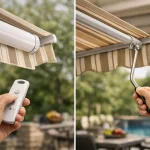
The third issue is operation. Manual awnings still have a place, especially for smaller installations or budget-conscious buyers. Motorized awnings, however, are often the better fit for larger systems or frequent use. They are easier to operate, more convenient for homeowners, and highly practical for commercial locations where staff need a quick, consistent solution.
Choosing between manual and motorized awnings
This is one of the most common buying decisions, and the answer depends on the space, the size of the system, and how often it will be used.
Manual awnings can be a solid option when simplicity and cost control are the main priorities. They work well for smaller patios and for users who do not mind occasional physical operation. The upside is lower upfront cost. The trade-off is convenience, especially if the awning is large or needs frequent adjustment.
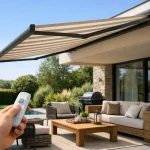
Motorized systems cost more, but the day-to-day experience is better. With the touch of a button, the awning extends or retracts smoothly. That convenience becomes even more valuable for second-story installations, larger patio areas, or commercial settings where time matters. Many property owners find that once they compare the effort and practicality, motorization is worth it.
Some projects also benefit from upgrades such as lighting, heating integration, privacy shades, or sensors. These features are not necessary for every space, but when the goal is to create a more complete outdoor living or customer area, they can make a noticeable difference.
Residential awnings and commercial awnings are not the same
The basic goal is similar – create a more comfortable outdoor space – but the demands can be very different.
For homeowners, the focus is often comfort, appearance, and flexibility. The awning needs to complement the home, reduce direct sun, and support everyday use without looking bulky or out of place. Design-conscious buyers often prefer streamlined European-style systems, while others want straightforward coverage with dependable value.
For commercial operators, performance and presentation carry equal weight. A restaurant patio awning, for example, has to provide shade and weather protection while also supporting the look of the business. It may need to cover a larger area, coordinate with branding, and stand up to heavier use. If the patio supports revenue, downtime and poor performance are expensive.
That is why commercial installations usually require a more detailed review of span, traffic flow, clearance, and access. A product that works beautifully on a backyard deck may not be the right answer for a restaurant frontage or hospitality patio.
Installation matters more than most buyers expect
An awning can have excellent materials and still disappoint if the installation is rushed or poorly planned. Mounting position, structural support, pitch, and extension all affect how the system performs.
A professional site review helps catch issues that are easy to miss early on. Wall conditions, soffits, drainage concerns, electrical needs for motorization, and sun direction all affect the final result. This is also where local experience adds value. A team that regularly installs shading systems on Toronto and GTA properties understands the building styles, weather expectations, and practical constraints that can shape the job.
Buyers sometimes focus only on fabric color or frame style and leave installation as an afterthought. That usually leads to compromises later. If the awning is not aligned properly or sized for the actual space, you notice it every time you use it.
Weather resistance and durability are worth paying for
One of the biggest mistakes in this category is shopping only by price. A lower-cost product may seem attractive at first, but if the frame flexes, the fabric fades quickly, or the mechanism wears down early, it stops being a value.
For this market, durability should be part of the buying decision from the start. That means looking at frame strength, corrosion resistance, fabric quality, and whether the system is designed for North American conditions. It also means asking practical questions about service, replacement parts, and warranty support.
There is always a balance between budget and features. Not every project needs a premium full-cassette motorized system with integrated upgrades. But most buyers benefit from choosing the best-performing option they can reasonably justify, especially if the awning will be used often.
The showroom and consultation advantage
Shading products are easier to evaluate in person than on a screen. Fabric samples, arm construction, cassette design, and motorized operation all make more sense when you can see them up close. A proper consultation also helps narrow the field quickly.
That matters because many buyers begin with a general idea – more shade, better rain protection, a cleaner patio look – but are not sure which product category fits. A good consultation turns that broad goal into a practical recommendation based on width, projection, sun exposure, use frequency, and budget.
Welda Solar Shading Systems approaches this process the way it should be handled: custom fit first, product match second, installation support throughout. For customers making a high-consideration investment, that kind of guidance removes guesswork and shortens the path to a solution that actually works.
When an awning is the right choice and when it is not
Awnings are versatile, but they are not the answer for every outdoor project. If you need a freestanding structure, year-round enclosure, or a more architectural feature with integrated louvers and screens, a pergola or another patio covering may be a better fit.
That does not reduce the value of awnings. It simply means the best solution depends on how the space is used. If your priority is adjustable shade, cleaner aesthetics, and efficient coverage attached to the building, an awning is often the strongest option. If you need a more enclosed or permanent-feeling structure, it may be worth comparing alternatives.
The good news is that a well-planned shading project does not need to be complicated. The right provider will help you narrow the choices, explain the trade-offs clearly, and recommend a system that fits both the property and the way you want to use it.
If your patio is sitting empty during the best months of the year, that is usually a sign the space needs more than furniture. The right awning can make it comfortable, more functional, and far easier to enjoy day after day.