Awning vs Pergola Cost: Which Pays Off?
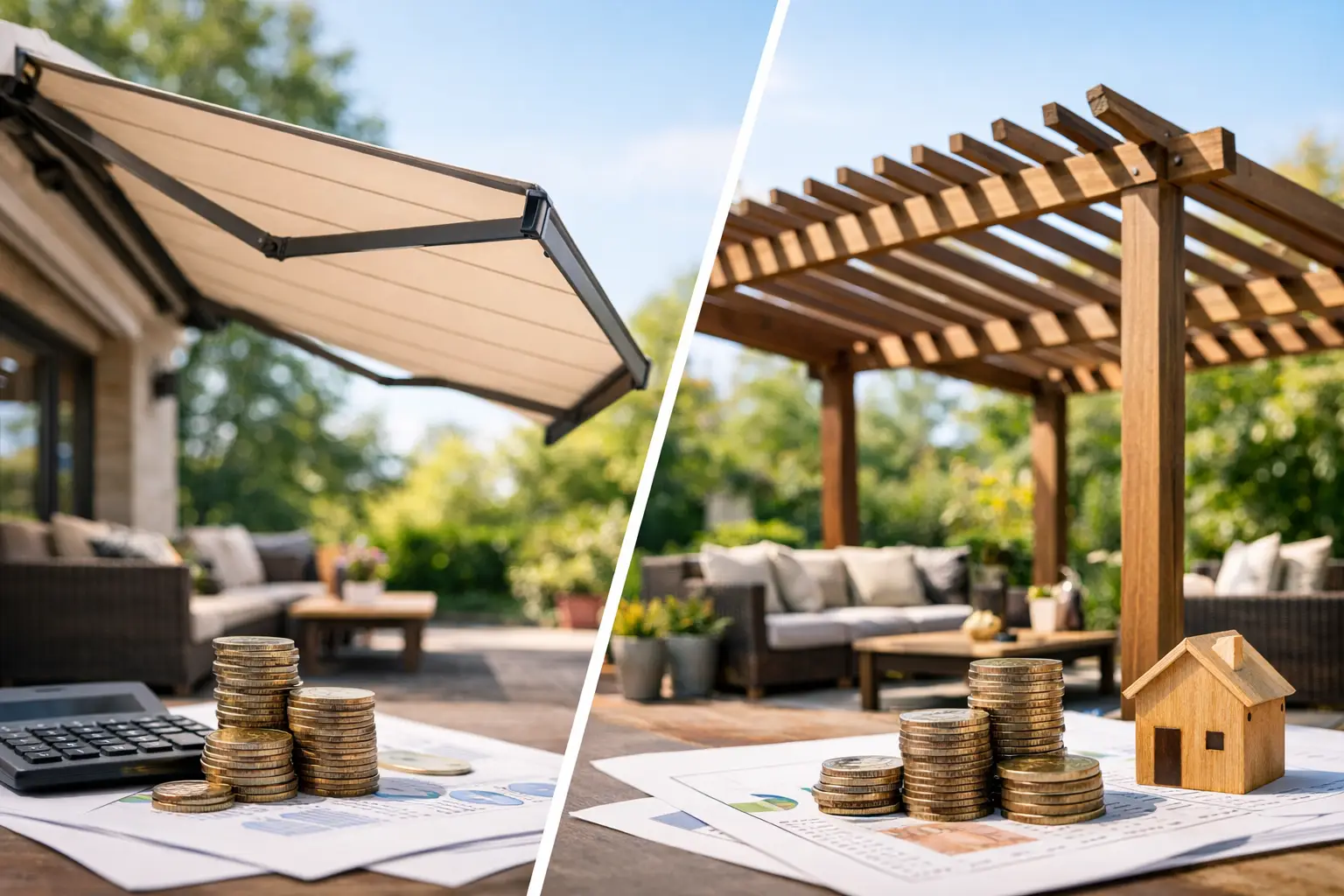
Sticker price rarely tells the full story when you are comparing awning vs pergola cost. A retractable awning may look like the lower-cost option at first glance, while a pergola can seem like the bigger long-term upgrade. The right choice depends on how much coverage you need, how permanent you want the structure to feel, and how you plan to use the space through the season.
For homeowners and business owners, this is usually not just a design decision. It is a use-of-space decision. If your patio is too hot at lunch, unusable in light rain, or underused during peak outdoor months, the better investment is the product that solves the actual problem without overspending on features you do not need.
Awning vs pergola cost at a glance
In most cases, a retractable awning costs less upfront than a pergola. That is especially true when the awning is wall-mounted and designed to cover a patio, deck, storefront, or restaurant seating area without needing posts, footings, or a more involved build.
A pergola usually costs more because it is a larger structural system. Aluminum pergolas with adjustable louvers, integrated lighting, privacy screens, heaters, or motorized controls can move well beyond the price of a standard awning. You are not just buying shade. You are buying a defined outdoor room with a stronger architectural presence.
That said, cost should be looked at in layers. The product price matters, but so do installation, site conditions, optional upgrades, maintenance, and how often the system will actually be used.
What drives awning pricing
Awning pricing is influenced by width, projection, frame quality, fabric grade, and whether the system is manual or motorized. A basic retractable model will usually be the most affordable route for shade over a patio or storefront. Once you move into larger projections, full-cassette designs, premium fabrics, wind sensors, or integrated motorization, the price climbs.
For many properties, though, even a higher-end awning remains cost-effective because installation is simpler than a pergola installation. There is less structural work, fewer materials, and usually less disruption to the space. If your goal is to block sun, reduce heat, and make an existing patio more comfortable, an awning can deliver a strong result without the larger footprint of a pergola.
Commercial buyers often see another benefit here. A retractable awning can add coverage and visual appeal while keeping more of the patio open and flexible. For restaurants and cafes, that can be a practical way to improve guest comfort without committing to a more permanent structure.
Features that can increase awning cost
Motorization is one of the most common upgrades. It adds convenience and can make a large awning much easier to use daily. Full-cassette construction also raises the price, but it protects the fabric and moving parts when retracted, which can help with long-term performance.
Custom sizing, premium fabric selections, larger commercial-grade arms, and weather sensors also affect pricing. These upgrades are worthwhile when they match how the space will be used. They are less worthwhile when they are chosen for novelty rather than function.
What drives pergola pricing
Pergolas start higher because they involve more material, more engineering, and more installation time. Aluminum louvered pergolas are especially popular because they offer a cleaner look, stronger weather resistance, and better control over sun and airflow than a basic fixed-roof structure.
The price rises with size, span, freestanding versus attached design, and the number of integrated features. Motorized louvers, built-in LED lighting, heaters, privacy shades, and insect screens all increase the total investment. These features can also turn a pergola into a much more usable space, which is where the higher price can start to make sense.
A pergola is often the better fit when you want the patio to feel like a true outdoor extension of the home or business. It creates presence. It can define a lounge area, dining zone, poolside setup, or restaurant seating section in a way an awning usually does not.
The hidden cost factor with pergolas
Site preparation matters. If the pergola needs concrete work, footings, special anchoring, or adjustments around existing landscaping, that can add meaningful cost. On some properties, the installation conditions are simple. On others, they are the reason the quote moves up quickly.
This is why two pergolas of similar size can end up with very different final prices. The structure itself is only part of the equation.
Installation costs and project complexity
If you are strictly comparing installation cost, awnings usually come out ahead. A professional awning install is typically faster and less invasive, particularly when the mounting surface is suitable and the dimensions are straightforward.
Pergolas usually require a more involved process. There may be more planning, more assembly, and more coordination around the site. That does not make pergolas a poor value. It just means they belong in a different cost category.
For buyers who want faster turnaround and a cleaner install process, awnings often have the edge. For buyers who are planning a more complete outdoor upgrade, pergolas can justify the extra complexity.
Which gives better long-term value?
This is where awning vs pergola cost becomes more nuanced. The lower-cost option is not automatically the better value, and the higher-cost option is not automatically overpriced.
An awning often gives better value when the main goal is practical shade and heat reduction. It is especially effective over patios, decks, balconies, and storefronts where you already have the right mounting area and do not need a freestanding structure. Retractable models also let you open the space when you want more sun, which many homeowners appreciate.
A pergola often gives better value when you want multi-function use and a more finished outdoor setting. If the space will be used for dining, entertaining, hosting, or extending business seating capacity, the larger investment can pay off in comfort, appearance, and frequency of use.
For commercial properties, value often comes down to revenue and usability. If a pergola lets a restaurant seat more guests more consistently, the economics can work in its favor. If a retractable awning solves midday sun and improves curb appeal at a lower project cost, that may be the smarter move.
Maintenance and ownership costs
Awnings and pergolas both need care, but not in the same way. Fabric awnings may need occasional cleaning and should be used properly in changing weather conditions. Motorized units also benefit from professional service if adjustments or repairs are needed over time.
Pergolas, especially aluminum systems, are generally built for durability and can be a strong fit for buyers who want a more permanent low-maintenance setup. But more integrated features also mean more components. Lighting, motorized louvers, screens, and heaters all add convenience, yet they can also add service considerations later.
The better question is not which product has zero maintenance. It is which product fits your expectations for use, upkeep, and lifespan.
How to choose based on your space
If your main issue is direct sun over a patio door, deck, or seating area, a retractable awning is often the most efficient answer. It gives targeted protection, can be customized to the space, and usually keeps the project budget under tighter control.
If you want a more defined outdoor living area with stronger visual impact and more all-day flexibility, a pergola may be worth the extra spend. This is often true for larger backyards, pool areas, rooftop spaces, and hospitality settings where appearance and structure matter as much as shade.
If you are torn between the two, start with the way you will use the space on a normal week, not on an ideal summer weekend. Daily function is what makes the investment feel worthwhile.
For many buyers in Toronto and the GTA, weather is part of the decision too. A professionally specified system built for North American conditions is worth more than a cheaper option that looks good on paper but struggles with real seasonal use.
Welda Solar Shading Systems helps customers sort through these decisions with product guidance, customization, and installation support, which is often the fastest way to understand what makes sense for your layout and budget.
The smartest purchase is usually the one that fits your space without forcing it. If you want shade with flexibility, an awning often wins on cost. If you want a more complete outdoor room, a pergola can earn the higher price by changing how the space works every day.