Patio Cover vs Awning: Which Makes Sense?
When homeowners start comparing patio cover vs awning options, the question usually comes up after one frustrating summer afternoon – too much glare, too much heat, and a patio that looks better on paper than it feels in real life. For some properties, a fixed structure is the right move. For others, a retractable system gives you more control, better value, and a patio you will actually use more often.
The right choice depends on how you use the space, how much flexibility you want, and what kind of weather protection you expect. If you are trying to create a more comfortable backyard, balcony, restaurant patio, or outdoor seating area, it helps to look past the broad labels and focus on how each option performs day to day.
Patio cover vs awning: the basic difference
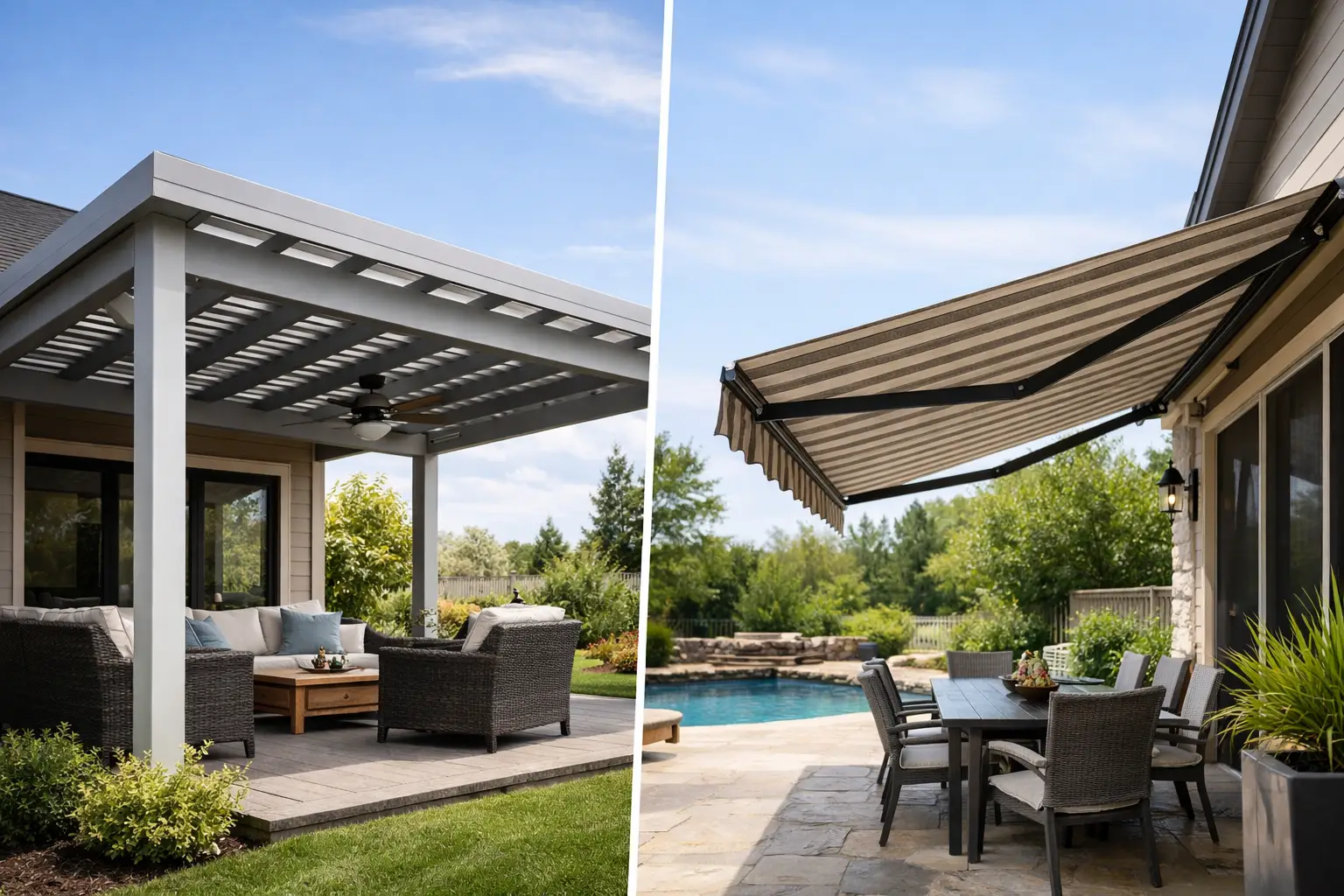
A patio cover is typically a permanent structure attached to the home or built as a freestanding system. It usually has posts, a fixed roof, and a more architectural presence. Depending on the design, it can be made from aluminum, insulated panels, wood, or other durable materials.
An awning is usually a lighter overhead shading system mounted to a wall, soffit, or roofline. It can be fixed, but in many cases the better investment is a retractable awning that opens when you want shade and closes when you want open sky. Motorized options make that even easier, especially for larger spans or commercial settings.
That distinction matters because these products solve slightly different problems. A patio cover behaves more like an outdoor room structure. An awning is a flexible shading solution that improves comfort without the same level of permanence or construction impact.
When a patio cover makes more sense
A patio cover is often the better fit when your priority is constant coverage. If you want your outdoor area protected every day, in every season, and you are not concerned about losing direct sun overhead, a fixed cover has clear advantages.
For example, if your patio furniture stays outside year-round, or if you want a more defined extension of the home, a patio cover can create that effect. It also works well when the space needs a stronger frame for extras like lighting, fans, or privacy elements. In some commercial applications, a more permanent covered area can also support a branded, built-out look that feels substantial.
That said, fixed coverage comes with trade-offs. A patio cover can reduce natural light indoors, especially on homes with rear-facing windows and doors. It can also be a larger construction project with more planning, more cost, and sometimes more permitting complexity depending on the structure and municipality.
If your goal is not just shade, but a permanent outdoor extension with a solid visual presence, a patio cover may justify that investment.
When an awning is the smarter buy
An awning makes more sense when flexibility is high on your list. That is especially true for homeowners who want shade during hot afternoons but still want sunlight in the morning, evening, or cooler months.
A retractable awning gives you control that a fixed structure cannot. Open it when the patio is too hot. Retract it when you want more daylight inside the house or when you want to enjoy open-air entertaining. That flexibility is one of the biggest reasons many buyers choose an awning over a permanent cover.
There is also the issue of appearance. Modern awnings, especially full-cassette and European-style systems, tend to look cleaner and less bulky than many people expect. They can protect a large area without filling the patio with posts or making the yard feel boxed in.
For restaurants, cafes, and retail storefronts, awnings can also add practical customer comfort without the footprint of a heavier built structure. When space is limited, that matters.
Cost, installation, and long-term value
For most buyers, patio cover vs awning becomes a budget question pretty quickly. In general, a patio cover costs more. There is more material, more labor, and usually more structural work involved. If you are building posts, roof panels, drainage elements, or a freestanding frame, the project naturally becomes more expensive.
A retractable awning is often the more affordable way to get significant shade coverage. It usually installs faster, creates less disruption, and delivers immediate comfort without turning into a major renovation. That can make it a very strong value option for homeowners who want real function without taking on a full construction project.
Long-term value depends on product quality and installation. A well-built awning designed for North American conditions can perform extremely well, especially when it is properly sized, installed, and used as intended. A poorly chosen system, on the other hand, can disappoint no matter what category it falls into.
This is where custom sizing and professional guidance matter. The cheapest option on paper is not always the one that performs best after a few seasons of sun, wind, and rain.
Weather protection is not exactly the same
Many buyers assume both products offer the same weather performance. They do not.
A patio cover generally provides more constant protection from light rain and overhead exposure because the roof is fixed. If your goal is to sit outside during variable weather without needing to adjust anything, that fixed protection is useful.
An awning can provide excellent sun protection and can also help with light rain, but it is still a retractable fabric-based system in many cases. That means it should be treated like a shading product first, not a substitute for a fully enclosed structure. Wind resistance, pitch, drainage, and usage guidelines all matter.
This is why the product specification matters more than the generic label. Some premium retractable systems are engineered for large projections, motorization, and stronger weather performance than entry-level models. If weather is a major concern, the right awning can still be the right answer, but it needs to be selected properly.
Style and impact on your property
From a design standpoint, patio cover vs awning is also about how visible you want the system to be.
A patio cover creates a permanent architectural statement. That can be a plus if you want the outdoor area to feel built-in and substantial. It can also be the better fit for modern pergola-style layouts where structure is part of the design goal.
An awning is usually more understated. When retracted, it preserves a cleaner facade and a more open patio feel. For many homeowners, that is a major advantage. You improve comfort without making the house feel darker or heavier.
If you are working with a smaller deck, balcony, or townhouse patio, that lighter visual footprint can be the difference between a space that feels polished and one that feels crowded.
How to choose the right option for your space
The smartest way to decide is to think about your daily use, not just the broad product category. Ask yourself what problem you are really trying to solve.
If the main issue is afternoon heat, glare through the back windows, and a patio that is too hot to enjoy, a retractable awning is often the most efficient solution. You get shade when you need it, and you keep your flexibility.
If the goal is a more permanent covered outdoor zone that acts like a structural extension of the property, a patio cover is usually the better path. You are paying for permanence, stronger overhead presence, and a more built-in result.
There is also a middle ground. Some buyers start by thinking they need a patio cover, then realize a motorized awning gives them the comfort they want with less cost and less visual weight. Others begin with awnings in mind but move toward pergola or louvered systems because they want a more defined outdoor room with integrated upgrades like lighting, heaters, privacy screens, or insect protection.
That is why a one-size-fits-all answer does not work here. The best product is the one that matches the way you actually live or operate your business.
Patio cover vs awning for homes and businesses
For residential properties, awnings tend to be especially appealing when homeowners want usable shade without committing to a fixed roofline change. They are practical, attractive, and easy to enjoy on a daily basis. Motorized operation adds another level of convenience that quickly becomes hard to give up.
For commercial spaces, the choice often depends on layout, branding, and seating goals. A restaurant may prefer a retractable awning for seasonal flexibility and customer comfort. Another business may need a more permanent patio cover or pergola system to support a larger outdoor service area. The right answer depends on traffic, exposure, and how the patio contributes to revenue.
If you are comparing options in the Toronto and GTA market, it also helps to work with a company that understands local weather demands and can recommend products built for real use, not just showroom appeal. Welda Solar Shading Systems works with both homeowners and commercial buyers looking for custom-fit outdoor shading that balances performance, style, and installation support.
The best outdoor upgrade is not always the biggest one. Sometimes the right move is a permanent structure. Sometimes it is a retractable system that gives you shade exactly when you want it and disappears when you do not. A good consultation should make that decision clearer, not more complicated.