Are Retractable Awnings Waterproof?
A light summer shower starts, and the first question most patio owners ask is simple: are retractable awnings waterproof? The short answer is not always. Some retractable awnings are highly water-resistant and can handle light rain well, while others are designed mainly for shade and should not be treated like a permanent roof.
That distinction matters more than most buyers expect. If you want an awning to block harsh sun, reduce heat, and make your patio more comfortable, many systems will do that well. If you also want dependable rain protection, the fabric, frame pitch, size, and installation all need to be right.
Are retractable awnings waterproof or just water-resistant?
Most retractable awnings are better described as water-resistant rather than fully waterproof. That means the canopy fabric can repel water for a period of time, especially during light rain, but it is not meant to hold standing water or perform like a solid roof system.
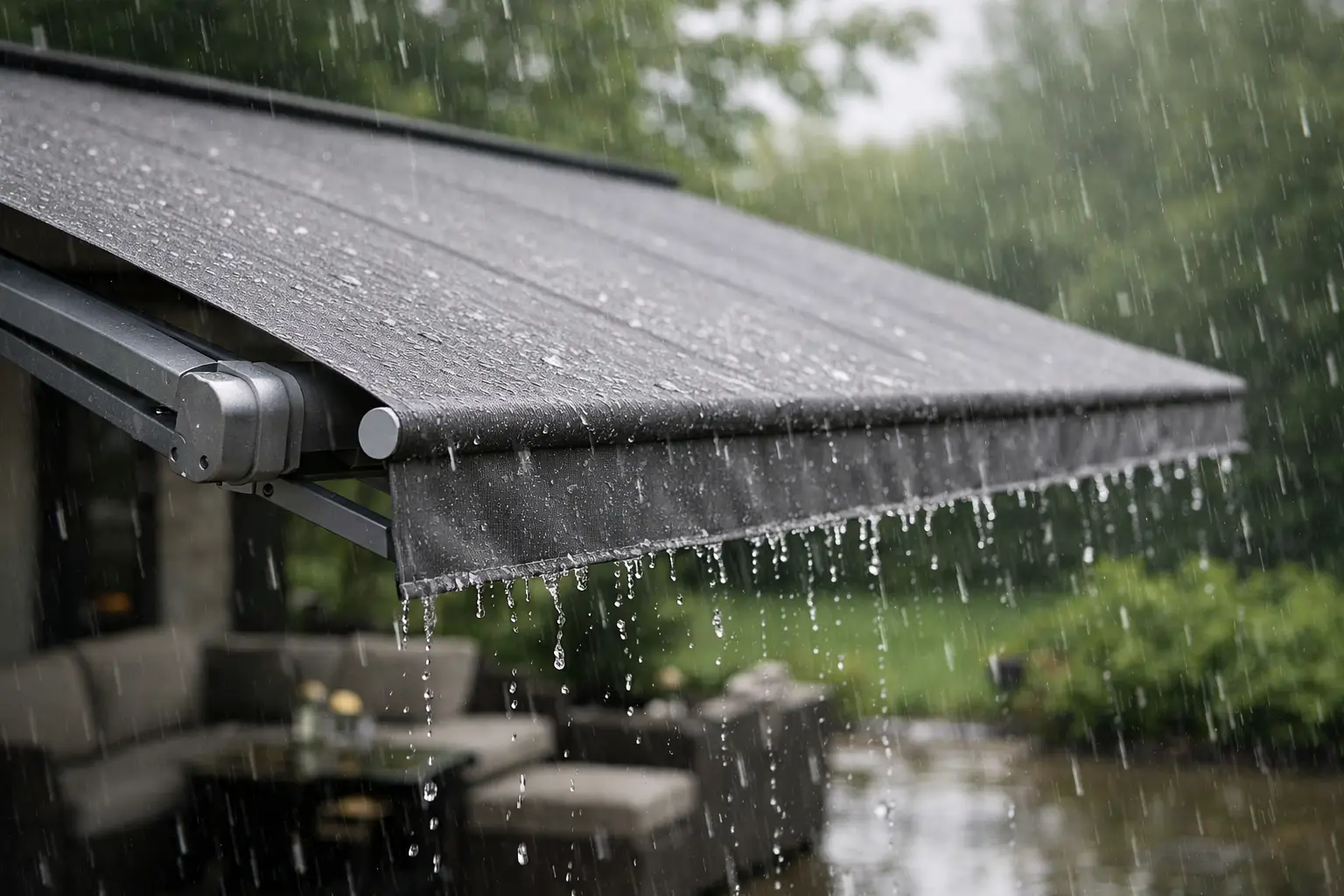
Many quality awning fabrics are treated to resist moisture, mildew, and fading. In real-world use, that gives homeowners and business owners useful protection during brief showers. But water resistance has limits. Once rain becomes heavy, prolonged, or wind-driven, the awning may no longer shed water effectively.
A true waterproof result depends on the complete system, not just the fabric. Even if the material itself resists water, poor slope, oversized projection, weak tension, or incorrect installation can still allow water to pool. That is where problems begin.
What makes one retractable awning perform better in rain?
The biggest factor is pitch. A retractable awning needs enough angle for rainwater to run off instead of collecting in the middle. If the awning is installed too flat, water can pond across the fabric, adding weight and strain to the arms and mounting points.
Fabric quality matters too. Solution-dyed acrylic fabrics are popular because they offer strong UV resistance and good water repellency, but not every acrylic fabric performs the same way. Some vinyl-coated options offer better water protection, though the look and feel may be different from woven fabric.
Frame strength also plays a major role. A well-built retractable system with properly engineered arms and secure mounting hardware will handle occasional wet conditions far better than a lighter-duty model. Larger awnings especially need the right structural support because rain load increases quickly.
Motorization can help as well. If weather changes fast, a motorized awning with wind or weather sensors can retract automatically before conditions become risky. That is a practical upgrade for homes, and it is even more valuable for restaurants and commercial patios where staff may not react in time.
Why pooling water is the real issue
When people ask if an awning is waterproof, what they are often really asking is whether they can leave it out in the rain without worry. The answer depends less on the word waterproof and more on whether the awning can shed water consistently.
Pooling is the main threat. Water is heavy, and a sagging section of fabric can collect far more weight than the frame was designed to support. That can stretch the fabric, damage the arms, twist the frame, or in severe cases pull at the wall connection. Even a premium awning can fail if it is used like a flat rain cover.
This is why professional sizing and installation matter. A custom-fit awning designed for the space and mounted at the correct angle will perform much better than a generic unit chosen by width alone.
When can you use retractable awnings in the rain?
For most quality systems, light rain is usually fine if the awning is extended at the proper pitch and the fabric is in good condition. This is often enough for homeowners who want to keep patio furniture drier or for a café owner who wants to protect guests during a passing shower.
Moderate rain is where caution should start. If water runoff slows down, if the awning looks flat, or if wind picks up, it is better to retract it. Heavy rain is generally not the condition retractable awnings are meant for, especially when combined with gusts.
Wind changes everything. Even an awning that handles light rain can become vulnerable when wind pushes water upward, shakes the frame, or creates uneven pressure. That is why retractable systems are best thought of as flexible weather protection, not all-weather structures.
Residential and commercial expectations are different
At home, many buyers want a retractable awning for comfort and occasional rain coverage. That is realistic, as long as expectations stay practical. You get shade when you want it and temporary protection when the weather stays mild.
For commercial properties, especially restaurants and hospitality spaces, the standard is usually higher. If outdoor seating needs more reliable rain protection for daily operation, a retractable awning may still work, but the system should be selected with more care. In some cases, a pergola, fixed canopy, or integrated side shade system may be the better solution.
How to choose a better rain-ready retractable awning
If rain protection matters, do not shop by appearance alone. Ask how the fabric performs in wet weather, what pitch is recommended, how far the awning can project safely, and whether the frame is designed for your intended use.
Look closely at customization. A custom awning gives you more control over slope, projection, mounting height, and motorization. Those details make a noticeable difference in day-to-day performance. A sleek full-cassette system can also help protect the fabric and moving parts when the awning is retracted, which supports longer-term durability.
It also helps to be honest about how you will use the space. If your goal is mainly shade with occasional shower protection, a retractable awning is often a strong choice. If you want to sit outside through steady rain, keep a dining area operating during uncertain weather, or cover a space with limited drainage options, you may need something more substantial.
Common misconceptions about waterproof awnings
One common mistake is assuming that thicker fabric means complete waterproofing. Thickness can help, but runoff and support matter just as much. A heavy fabric on a poorly pitched frame can still collect water.
Another misconception is that all retractable awnings are built for the same weather conditions. They are not. Entry-level models and premium custom systems can differ significantly in fabric performance, arm strength, cassette protection, and mounting security.
Some buyers also assume that if an awning survives one storm, it will handle every storm. Weather is unpredictable, and repeated exposure to rain and wind can shorten the life of the fabric and hardware. Good operation habits matter as much as product quality.
Maintenance affects water performance too
Even a well-made awning loses performance if it is neglected. Dirt, debris, and mildew can interfere with water runoff and shorten fabric life. Regular cleaning helps preserve the protective finish and keeps the canopy looking sharp.
It is also smart to let the fabric dry before retracting it for long periods whenever possible. Storing a wet awning repeatedly can encourage mildew, odors, and fabric wear. This does not mean a brief wet retraction will ruin the system, but routine care makes a difference.
Periodic inspections are worth it too. Check for fabric sag, loose mounting hardware, and arm tension issues. Small problems often show up before bigger failures, especially after a season of sun, rain, and wind.
So, are retractable awnings waterproof enough for your patio?
For many patios, the answer is yes, with limits. A quality retractable awning can offer very good protection against light rain while delivering the shade, temperature control, and clean appearance most buyers want. But it is not a permanent roof, and it should not be treated like one.
The best result comes from matching the product to the job. If you want flexible coverage that improves comfort and adds value to your outdoor space, a professionally selected retractable awning is a smart investment. If your patio needs dependable protection through frequent rain, it is worth comparing heavier-duty options before you buy.
That is where experienced guidance pays off. A system chosen for your space, installed at the right pitch, and built for real weather conditions will always outperform a one-size-fits-all solution. If you are planning a patio upgrade, start with how you actually use the space, and the right cover becomes much easier to choose.