Commercial Patio Shade Guide for Smart Buyers
A busy patio looks great until guests start dragging chairs away from direct sun, servers struggle with glare, and a light rain sends half the tables inside. That is where a commercial patio shade guide becomes useful. The right system does more than add cover – it helps protect revenue, improve guest comfort, and make outdoor space easier to use across more hours of the day.
For restaurants, cafes, hospitality properties, and retail storefronts, shade is not a decorative extra. It affects how long customers stay, how often a patio can operate, and how polished the business looks from the street. The best option depends on your layout, wind exposure, level of weather protection you need, and whether flexibility matters more than permanent coverage.
What a commercial patio shade guide should help you decide
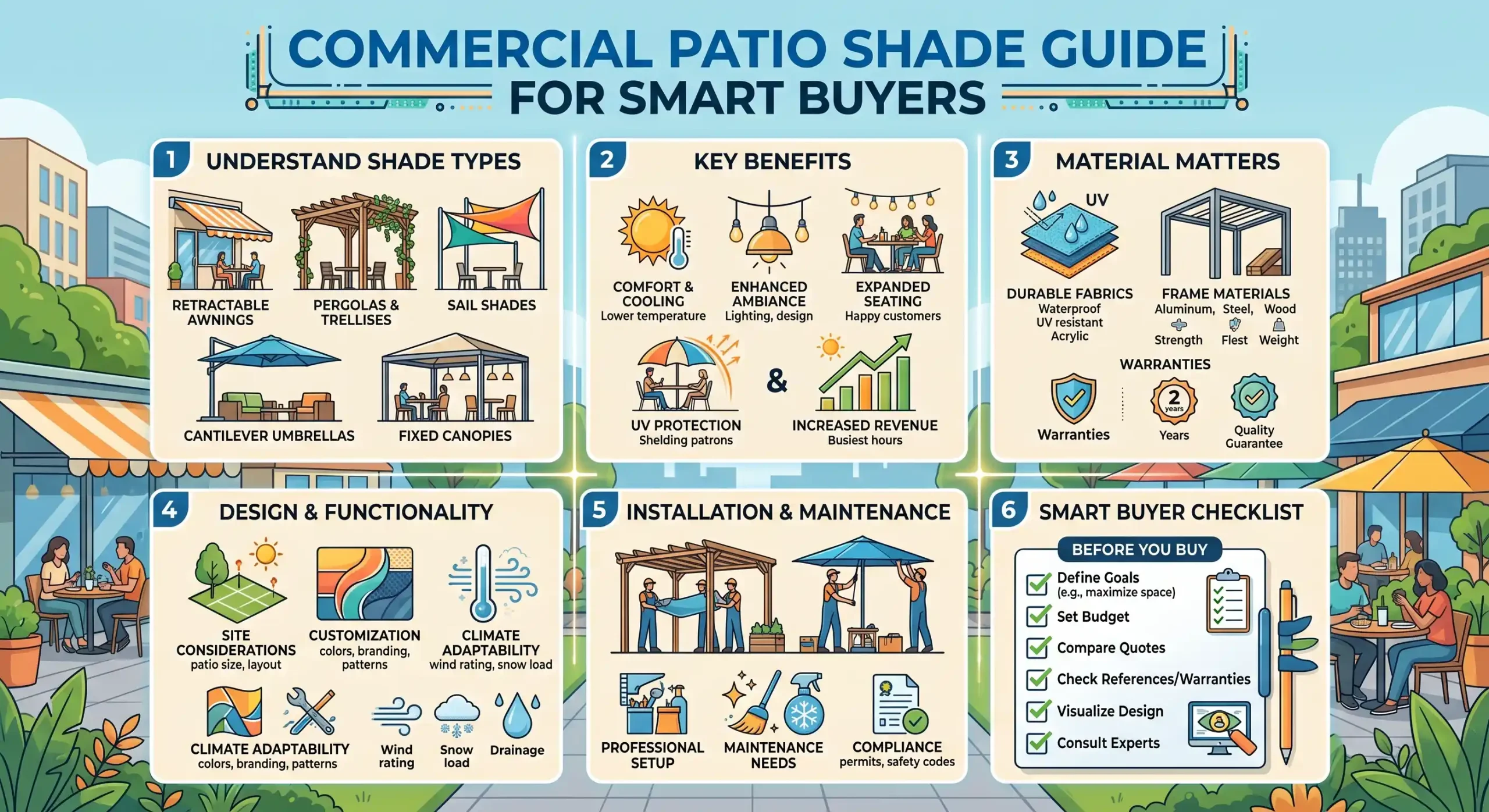
Most buyers start by asking which product is best. A better question is which product fits the way your patio actually operates. A small sidewalk cafe has different needs than a large restaurant patio or a rooftop lounge. Some businesses need quick retractable coverage for lunch and dinner rushes. Others need stronger structure, integrated lighting, and privacy features that support evening service and shoulder-season use.
A good shade system should solve at least three problems at once. It should reduce heat and glare, create a more comfortable guest experience, and support the look and function of the property. If it also helps staff work more efficiently and makes the patio usable in light weather changes, the return is usually much stronger.
 Retractable awnings: flexible coverage with strong value
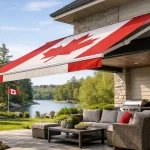
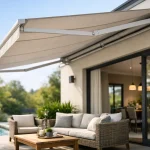
Retractable awnings are often the first place to look because they offer a strong balance of affordability, coverage, and operational flexibility. For many commercial spaces, especially restaurants and cafes, they can create immediate shade without the complexity of a full structural build.
The biggest advantage is control. You can extend the awning during peak sun and retract it when you want more open sky, less wind resistance, or a cleaner nighttime appearance. That matters for businesses that want outdoor seating to feel adaptable rather than permanently enclosed.
Motorized awnings are especially useful in commercial settings. Staff can adjust coverage quickly, and larger systems are easier to manage than manual units. Full-cassette designs also help protect the fabric and moving parts when retracted, which can support longer-term appearance and performance.
The trade-off is that retractable awnings are not the answer for every patio. They work best when mounted properly to a suitable structure and when the site conditions are a good match. Wind exposure, projection requirements, and overall patio width all need to be reviewed before specifying a system.
Pergolas: stronger structure and more upgrade potential
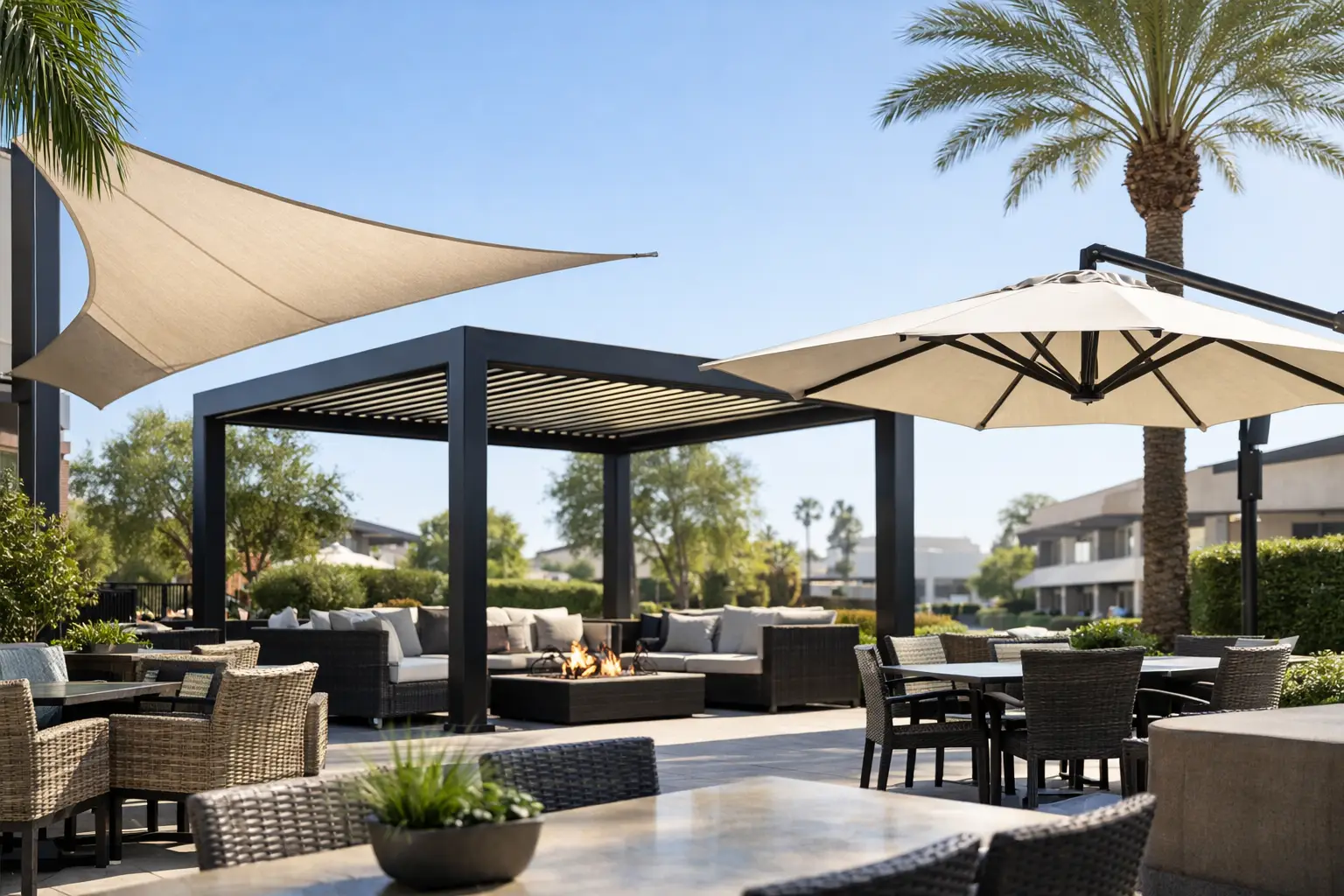
If your business wants a more architectural outdoor area, pergolas deserve serious consideration. Aluminum pergola systems create a defined commercial space that can feel more premium than a standard shade solution. They also open the door to integrated upgrades such as lighting, heaters, privacy shades, and insect screens.
For hospitality operators, that can translate into longer patio hours and a more controlled customer experience. Instead of simply blocking sun, a pergola can help shape the environment. That becomes important when the patio is part of your brand presentation, not just overflow seating.
Louvered pergolas add another layer of flexibility. Adjustable louvers let you control sunlight and ventilation more precisely than fixed-roof designs. In some applications, they also improve rain management, though performance depends on the product, installation quality, and how exposed the site is.
Pergolas usually require a larger budget than retractable awnings, so they make the most sense when the patio is a major revenue area or a long-term property investment. If you want a permanent-looking outdoor room with add-on features, they can be worth the extra cost.
Drop shades and side protection
Overhead shade solves only part of the comfort problem. Many commercial patios also deal with low-angle sun, crosswinds, privacy concerns, and exposure from the sides. That is where drop shade systems come in.
These vertical screens can be added to pergolas or other patio structures to reduce glare, improve privacy, and make the space feel more sheltered. For restaurants near busy streets, they can also create a more comfortable edge between diners and traffic. In cooler months, they help hold warmth more effectively when used with heaters and a properly planned layout.
This is one of the most overlooked parts of patio design. Businesses often focus on top coverage and then realize later that side exposure still limits usable seating. If the goal is consistent comfort, not just partial shade, side protection should be part of the plan from the start.
Key buying factors that matter more than style alone
Looks matter, especially for customer-facing spaces, but commercial buyers should be cautious about choosing a system based on appearance alone. The real decision comes down to how the product performs at your site.
Coverage size is one of the first practical issues. You need to know not only how much area you want shaded, but how the coverage interacts with table spacing, walking paths, doors, signage, and neighboring properties. A system that looks large on paper may leave key seating areas exposed if the projection or placement is off.
Weather conditions are just as important. Toronto and the GTA see strong sun, wind shifts, rain, and seasonal changes that can punish low-quality systems. Commercial shade products should be selected for North American conditions, not just showroom appeal. Frame strength, mounting method, fabric quality, and drainage details all affect long-term value.
Automation can be a smart investment, especially for larger patios. Motorized operation saves time, improves ease of use, and encourages staff to use the system properly. Manual systems can still work well in some applications, but convenience matters in busy service environments.
Customization also plays a bigger role in commercial projects than many owners expect. Width, projection, fabric color, branding goals, lighting needs, privacy concerns, and structural constraints all affect what will work best. Off-the-shelf thinking often leads to a result that is close, but not right.
Why installation is part of the product decision
Commercial shade is not just about picking a model. The installation approach affects safety, performance, and lifespan. That is why experienced site review matters.
The right installer should assess mounting surfaces, structural support, drainage patterns, clearance, and operating needs before recommending a solution. This is especially important for larger retractable awnings, motorized systems, and pergolas. A poor install can lead to operational issues, uneven performance, and avoidable wear.
For business owners, this also affects project timing. You want a provider that can handle consultation, customization, delivery, and installation in a coordinated way. That keeps the process simpler and reduces the chances of costly revisions mid-project.
Choosing the right system for your business type
A cafe or quick-service patio often benefits most from retractable awnings. They provide strong visual impact, practical sun control, and a lower barrier to entry than a full pergola build. For many operators, that is the fastest way to improve outdoor seating.
A full-service restaurant or hospitality venue may benefit more from a pergola system with lighting, heaters, and side screens. The higher upfront cost can make sense when the patio supports evening traffic, premium guest experience, or seasonal extension.
Retail and storefront businesses may not need full dining-style coverage, but they can still gain value from shade. Awnings can improve curb appeal, reduce glare at the entry, and make outdoor waiting or display areas more comfortable. The best choice depends on whether the patio is primarily functional, promotional, or hospitality-driven.
If you are not sure where your project fits, that usually means you need a site-specific recommendation, not a generic product pitch. Welda Solar Shading Systems works with commercial buyers who need practical guidance, custom-fit solutions, and professional installation support rather than guesswork.
The best shade system is the one that fits how your patio earns its keep. When coverage, comfort, durability, and appearance are aligned, outdoor space stops being weather-dependent square footage and starts working like a real business asset.