9 Restaurant Patio Awning Examples That Work
A patio that sits half-empty at noon and closes at the first sign of light rain is leaving money on the table. The best restaurant patio awning examples solve that problem fast. They add usable seats, reduce guest discomfort, and make outdoor service more predictable without forcing you into a full structural rebuild.
For restaurant owners, the right awning is not just about shade. It affects table turnover, staff comfort, branding, and how long your patio stays open through changing weather. Some setups are better for narrow sidewalks. Others are built for larger dining terraces, rooftop layouts, or patios that need flexible coverage through lunch, dinner, and private events. The smart choice depends on your footprint, sun exposure, wind conditions, and how permanent you want the installation to feel.
Restaurant patio awning examples by patio type
The most effective systems usually match the way the patio is used, not just the way the building looks. A busy café with morning traffic has different needs than a full-service restaurant trying to protect evening reservations from passing showers.
1. Retractable awnings for flexible front patios
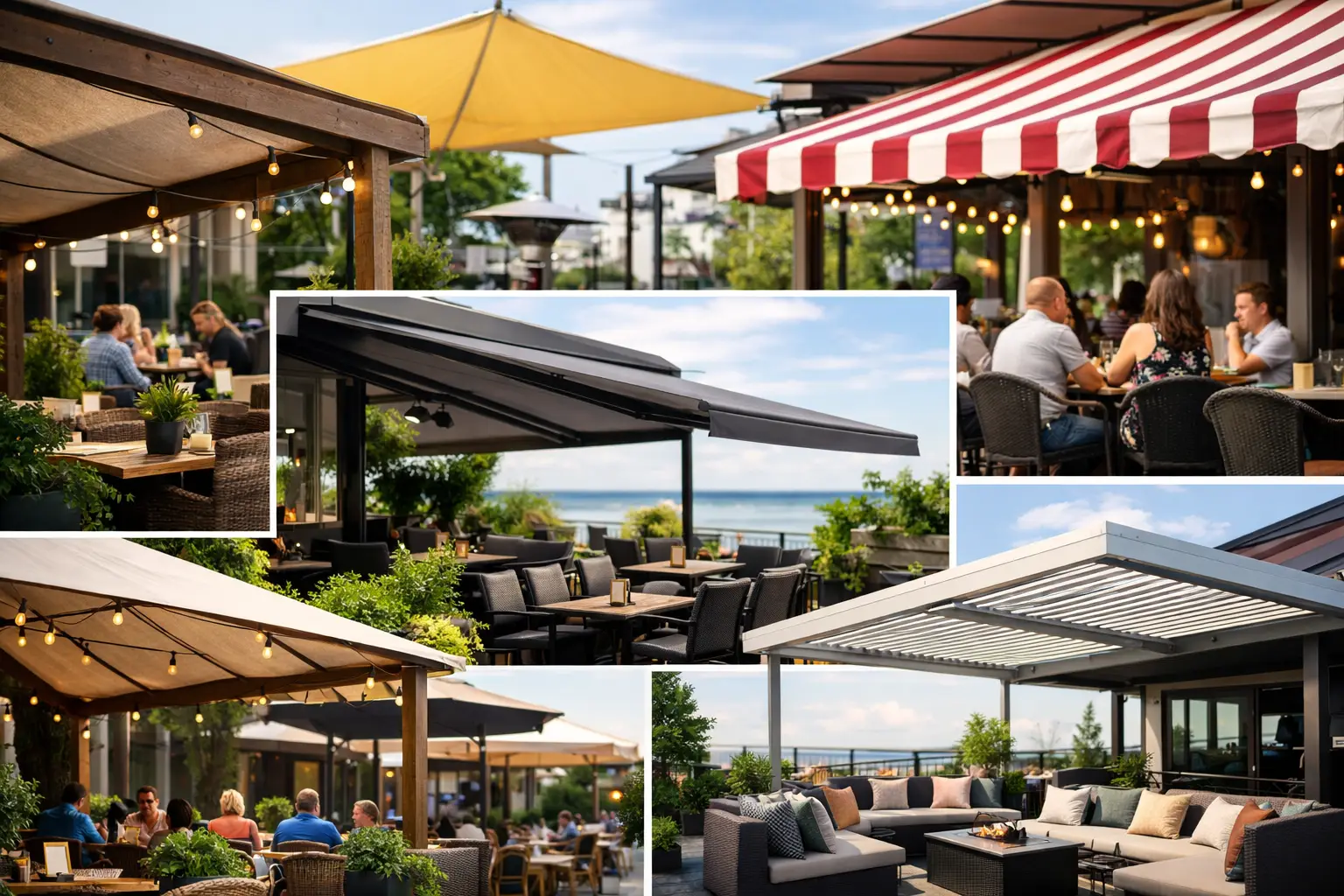
This is one of the most practical restaurant patio awning examples because it gives operators control. A retractable awning can open when the sun is strong and pull back when you want more natural light or a cleaner street-facing appearance.
For smaller storefront patios, this setup keeps the footprint simple. You get overhead coverage without adding fixed posts that interfere with tables, servers, or pedestrian flow. It also works well when municipal rules or landlord preferences favor systems that look less permanent.
The trade-off is that not every retractable system is equal. Large commercial spans need proper engineering, strong arms, quality fabric, and installation that accounts for wind load. A bargain unit may look fine on day one and become a maintenance issue by mid-season.
2. Full-cassette awnings for image-conscious restaurants
Restaurants that care about appearance as much as performance often lean toward full-cassette designs. When closed, the arms and fabric are enclosed inside the housing, which helps protect the system from dirt, moisture, and wear.
This option suits upscale patios, boutique cafés, and properties where visual presentation matters from the street. The clean profile gives the patio a more finished look, especially on newer buildings or renovated facades. It is also a smart fit for operators who want a more durable system with less exposure when not in use.
The downside is cost. Full-cassette systems usually come at a higher price than more basic open designs. But for many businesses, better protection and a polished appearance justify that step up.
3. Motorized awnings for high-volume service
If your team is busy managing guests, orders, and patio turnover, manual operation can become one more task that gets delayed. Motorized awnings remove that friction. With a wall switch, remote, or integrated controls, coverage can be adjusted quickly as weather changes.
This is one of the best restaurant patio awning examples for patios that open early, run late, or need fast transitions during unpredictable conditions. It is especially useful for larger spaces where extending a wide awning manually is less practical.
Automation can also improve consistency. Staff do not need to guess when to open or close the system. With wind and sun sensors, the awning can respond more intelligently, though the value depends on the site and the operator’s preferences. Some owners want full control. Others prefer a more automated setup that protects the investment.
4. Side-by-side awnings for wide dining areas
One oversized system is not always the best answer. On broad patios, two or more awnings installed side by side can provide better coverage and easier control over different seating zones.
This approach works well for restaurants with long frontage or patios divided into sections. One side can stay open while another remains shaded. That helps when the sun hits unevenly throughout the day or when only part of the patio is in use during slower hours.
From a service standpoint, zoning matters. It lets operators adapt the space without committing to an all-or-nothing setup. The planning is more detailed, though. Alignment, pitch, drainage, and visual balance all need to be handled properly for the finished result to feel intentional.
5. Pergola-style patio covers for semi-permanent outdoor dining
Some restaurant owners need more than an awning can deliver on its own. If the goal is a stronger sense of enclosure, longer seasonal use, or support for added features, a pergola-style system is often the better fit.
This is one of the restaurant patio awning examples that works best for larger commercial patios, rooftop dining areas, and hospitality spaces that want a destination feel. Aluminum pergola systems can support lighting, heaters, privacy screens, and side shades, turning an exposed patio into a more controlled dining environment.
The benefit is obvious – more comfort, more visual impact, and often a longer operating season. The trade-off is that it becomes a bigger project. Budget, approvals, and layout planning matter more here than with a wall-mounted retractable awning.
Examples that solve specific restaurant problems
Not every patio challenge starts overhead. Sometimes the issue is low-angle sun, street exposure, or a wind pattern that makes guests uncomfortable even with top coverage in place.
6. Awnings with drop shades for west-facing patios
Late afternoon sun can make a patio hard to use, even if the top is covered. Guests squint, tables heat up, and staff end up moving people around to chase small pockets of shade.
A retractable awning paired with vertical drop shades handles that problem better than an awning alone. The top blocks overhead exposure while the front or side shade cuts glare and heat from the angle where the sun is actually coming in.
This setup works particularly well for restaurants with open western exposure or patio edges that face reflective streets and glass buildings. It is a more complete comfort solution, especially in hot stretches when diners expect relief, not just partial cover.
7. Branded awnings for cafés and street visibility
Some patio systems do double duty as signage and shade. A branded awning with custom valance details, colors, or printed graphics can make a storefront more visible while still improving guest comfort.
This is a strong option for cafés, bakeries, casual dining spots, and corner locations that depend on walk-by traffic. The right design can make the business easier to spot and give the patio a stronger identity.
That said, branding should not override function. If the awning projects too little, sits at the wrong angle, or uses fabric that does not hold up well, the visual benefit fades quickly. The best results come from balancing curb appeal with real weather performance.
8. Freestanding systems for patios away from the building
Not every restaurant patio sits directly against a wall. Some are located in courtyards, parking lot conversions, garden spaces, or detached seating zones where wall mounting is not possible.
In these cases, freestanding shading structures make more sense. Depending on the site, that might mean a pergola-based solution or another engineered canopy system designed for open-area coverage. These setups can define the dining space clearly and create a more intentional layout where the building itself offers no support.
The big advantage is freedom in placement. The challenge is infrastructure. Footings, drainage, lighting, and service flow need more attention because the system is acting as a true outdoor room element, not just an extension of the facade.
9. Heated, lit awning zones for evening revenue
Some of the best-performing patios are designed for more than daytime shade. By pairing the right overhead coverage with integrated lighting and heaters, restaurants can make outdoor seating viable and attractive after sunset and into colder months.
This example is less about a single awning style and more about how the system is specified. A retractable or pergola-based installation can become far more valuable when it supports evening service, private bookings, and shoulder-season traffic.
If your patio revenue depends on dinner service, this upgrade can matter more than fabric pattern or frame color. Guests remember comfort. So do the people deciding whether to stay for dessert or another round.
How to choose the right example for your restaurant
The best patio setup starts with a realistic look at your space. Measure where the sun actually hits, not where you assume it hits. Think about whether your main problem is heat, light rain, wind, branding, or limited usable hours.
Then look at how your team works. If opening and closing the patio needs to happen quickly, motorization may be worth it. If the patio is a major revenue center, a larger custom system with side protection and integrated features may deliver a better return than a simple entry-level awning.
It also pays to think long term. A restaurant patio awning should not just get you through one summer. It should support daily service, match the building, and hold up under real commercial use. In a climate like Toronto and the GTA, durability and proper installation are not extras. They are part of the buying decision.
Welda Solar Shading Systems works with commercial operators who need that kind of practical fit, not a one-size-fits-all answer. Whether the goal is a sleek retractable system or a more built-out patio cover, the strongest results come from matching the product to the way the restaurant actually operates.
If you are comparing options, start with the problem you need to solve first. More shade, more seats, better weather protection, or a stronger street presence will each point you toward a different solution, and that is usually where a good patio investment starts to pay off.