How to Shade Apartment Balcony Spaces
That late afternoon sun can turn a good balcony into a space you avoid. If you are figuring out how to shade apartment balcony areas without wasting money or fighting building rules, the right answer usually comes down to three things: how much sun you get, what your condo or landlord allows, and whether you want a temporary fix or a cleaner long-term setup.
Apartment balconies are different from backyards. You are working with limited square footage, shared sightlines, wind exposure, and often strict property guidelines. That means the best shading solution is not always the biggest one. It is the one that fits the structure, handles local weather, and still lets you use the space comfortably.
How to shade apartment balcony based on sun and layout
Before you choose any product, look at when the balcony gets the most heat. A west-facing balcony usually needs stronger protection because the afternoon sun is more intense and tends to make the space unusable right when people want to sit outside. A south-facing balcony gets longer exposure throughout the day, so broader overhead coverage often makes more sense.
The shape of the balcony matters too. A deep covered balcony may only need side protection to block low-angle sun. A shallow open balcony often needs overhead shade first, then privacy screening if glare is still an issue. If wind is common on higher floors, lightweight fabric options can become a problem fast.
This is where many people buy the wrong thing. They shop by appearance first, then realize the sun still cuts across the seating area or the fabric moves too much in wind. A quick site assessment saves money. Measure width, projection, railing height, clearance to doors, and any mounting surfaces before you commit.
The most practical balcony shade options
For most apartment balconies, there are four realistic categories: umbrellas, shade sails, privacy screens, and retractable systems. Each can work, but not in the same conditions.
An umbrella is the fastest and cheapest option. It works best on larger balconies where you have room for a weighted base and enough clearance to open it safely. The drawback is obvious – umbrellas eat floor space, shift in wind, and rarely provide full coverage when the sun angle changes.
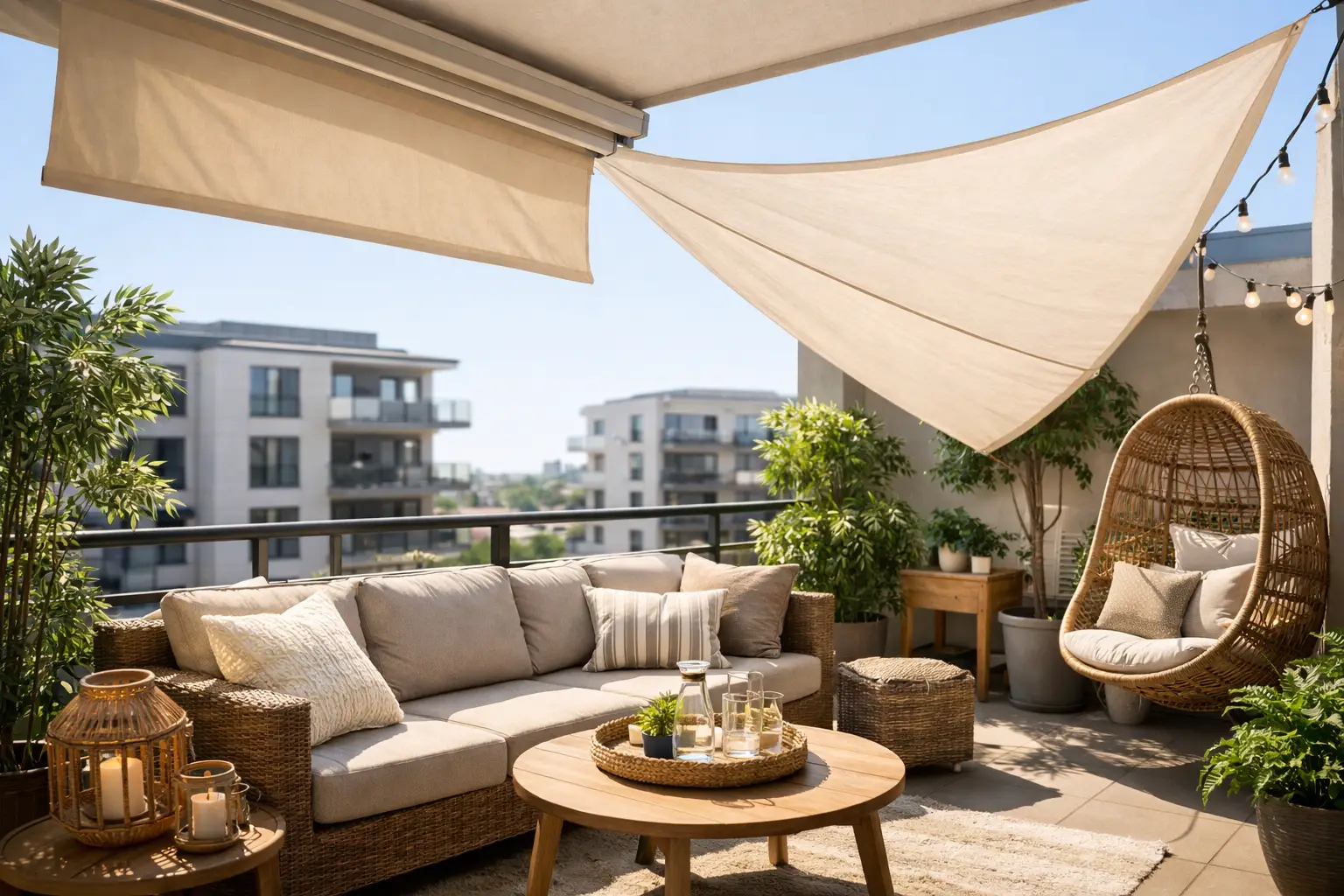
Shade sails can look clean and modern, but they need proper anchor points and tension. On an apartment balcony, those anchor points are often the weak link. If you cannot mount them securely to approved structural surfaces, they become more trouble than they are worth. They also do not retract easily, which matters if building management wants seasonal removal.
Privacy screens attached to railings are a smart partial solution. They reduce glare, add privacy, and block some wind. They are especially useful when the main problem is side sun rather than direct overhead exposure. The limitation is that they will not cool the full space on their own.
Retractable awnings and drop shade systems are usually the most effective option when you want real usability instead of a temporary patch. A retractable system gives you shade when you need it and open sky when you do not. That flexibility matters on a balcony where light levels, weather, and building aesthetics all come into play.
Why retractable shading works better than fixed DIY fixes
A lot of apartment shade attempts start with zip ties, outdoor curtains, or low-cost fabric stretched across the railing. It may work for a week or a season, but it often looks improvised, wears out quickly, and can create issues with wind load or property compliance.
A retractable shade system is built to solve the actual use case. You want heat reduction, glare control, and a more comfortable sitting area without permanently closing off the balcony. Retractable awnings handle overhead sun well, and drop shades help with low-angle sun and privacy. Together, they can turn a hot balcony into a usable outdoor room.
There is also a visual difference. On apartments and condos, appearance matters because everything is on display. A properly fitted system looks intentional and adds value to the space rather than making it feel cluttered.
What renters should know before installing anything
If you rent, assume nothing is approved until it is. That includes railing attachments, ceiling mounts, wall anchors, and anything visible from the exterior. Some buildings allow non-permanent privacy screens but prohibit overhead fixtures. Others allow professionally installed systems if they meet appearance standards and do not affect the structure.
The safest move is to ask for written approval before purchasing. It is also smart to choose options that can be removed cleanly or installed by a professional who understands building restrictions. This is especially important in multi-unit properties where a bad installation can lead to water intrusion, facade damage, or liability issues.
If approval is limited, focus on tension-mounted or freestanding options that do not require structural alteration. Just remember that renter-friendly usually means less stable in wind and less polished overall. That trade-off may be fine for a short-term setup, but not for someone who wants daily use through the warmer months.
Permanent vs temporary shading
If you own the unit or have approval for upgrades, it makes sense to think beyond a seasonal fix. A temporary setup is cheaper up front, but it often needs replacement sooner and delivers less coverage. A permanent or semi-permanent shading system costs more initially, yet it tends to perform better, look better, and create a more usable balcony over time.
Motorized options are especially appealing for balconies because they make adjustment easy. You can extend shade during peak sun, retract it in bad weather, and keep the space flexible. For homeowners and property owners who care about comfort and finish, this is often the point where a basic idea turns into a real improvement project.
For a commercial balcony or upper-level patio, durability and appearance become even more important. Restaurants, cafes, and hospitality spaces need shade that supports customer comfort without looking temporary. That is where custom-fitted systems usually outperform off-the-shelf products.
Features worth paying for
Not every upgrade is necessary, but some are worth it. Better fabric quality matters because UV exposure fades cheap materials fast. Wind resistance matters because balconies often experience stronger gusts than ground-level patios. Smooth retraction matters because a hard-to-use system tends to stay open too long or stay closed when you actually need it.
If your balcony gets harsh afternoon sun, a drop shade can be more valuable than extra projection on the awning. If you use the space in the evening, integrated lighting may be worth considering. If convenience matters, motorization is not just a luxury feature – it makes frequent use more likely.
This is also where custom sizing earns its keep. Apartment balconies rarely match standard dimensions perfectly. A system that is too small leaves hot spots. One that is too large can interfere with doors, railings, or neighboring sightlines.
Common mistakes when shading a balcony
The biggest mistake is underestimating the sun angle. People think overhead coverage will solve everything, then find the late-day sun still hits their chairs directly. The second mistake is ignoring wind. What feels stable at ground level may not perform well several stories up.
Another common issue is choosing by price alone. A bargain product can be expensive if it fails early, looks out of place, or has to be removed because it violates building policy. It is better to buy once with the right dimensions and installation plan than to keep replacing short-term fixes.
And finally, many people forget the balcony still needs to function. You need room to walk, open the door fully, and use furniture without fighting poles, bases, or hanging fabric. Good shading should make the space feel bigger, not more crowded.
When professional help makes sense
If your balcony is exposed, high up, unusually shaped, or subject to condo rules, expert guidance can save you a lot of frustration. A professional can help assess mounting options, recommend the right projection and fabric, and make sure the final setup matches the building and the way you actually use the space.
For homeowners and property managers who want a cleaner result, this is often the smarter path. Companies like Welda Solar Shading Systems work with custom-fit awnings, drop shade systems, and motorized options designed for real-world weather and day-to-day use. That matters when you want shade that performs well, looks sharp, and does not become a maintenance issue after one season.
A shaded balcony should not feel like a compromise. With the right solution, even a small apartment balcony can become the spot you use for coffee, dinner, remote work, or a quiet break at the end of the day.