Commercial Storefront Awnings That Work
A storefront has a few seconds to make its case. If the entrance looks exposed, faded, or forgettable, people keep walking. Commercial storefront awnings change that fast by adding shade, visibility, and a more finished appearance while doing real work for the business behind the glass.
For retailers, restaurants, cafes, and service businesses, an awning is not just a decorative add-on. It can help reduce glare through front windows, protect customers at the entrance, and make the frontage easier to spot from down the block. In many cases, it also supports branding and outdoor usability in a way signage alone cannot.
Why commercial storefront awnings matter
The best storefront improvements do two jobs at once. They improve appearance and solve a practical problem. That is exactly where commercial storefront awnings tend to deliver the most value.
Sun exposure is one of the biggest issues for street-facing businesses. Harsh afternoon light can make interiors uncomfortable, raise cooling costs, and wash out product displays near the front windows. A properly sized awning helps reduce direct heat and glare without blocking the storefront entirely. That balance matters. Too much coverage can make a business look closed in, while too little leaves the entrance exposed.
Weather protection is the other obvious benefit. Rain at the doorway creates a poor first impression and can lead to slippery entry points. An awning gives customers a covered transition area and gives staff a better working environment near the entrance. For restaurants and cafes, this can also extend the comfort of adjacent outdoor space, especially when paired with side shades or larger retractable systems.
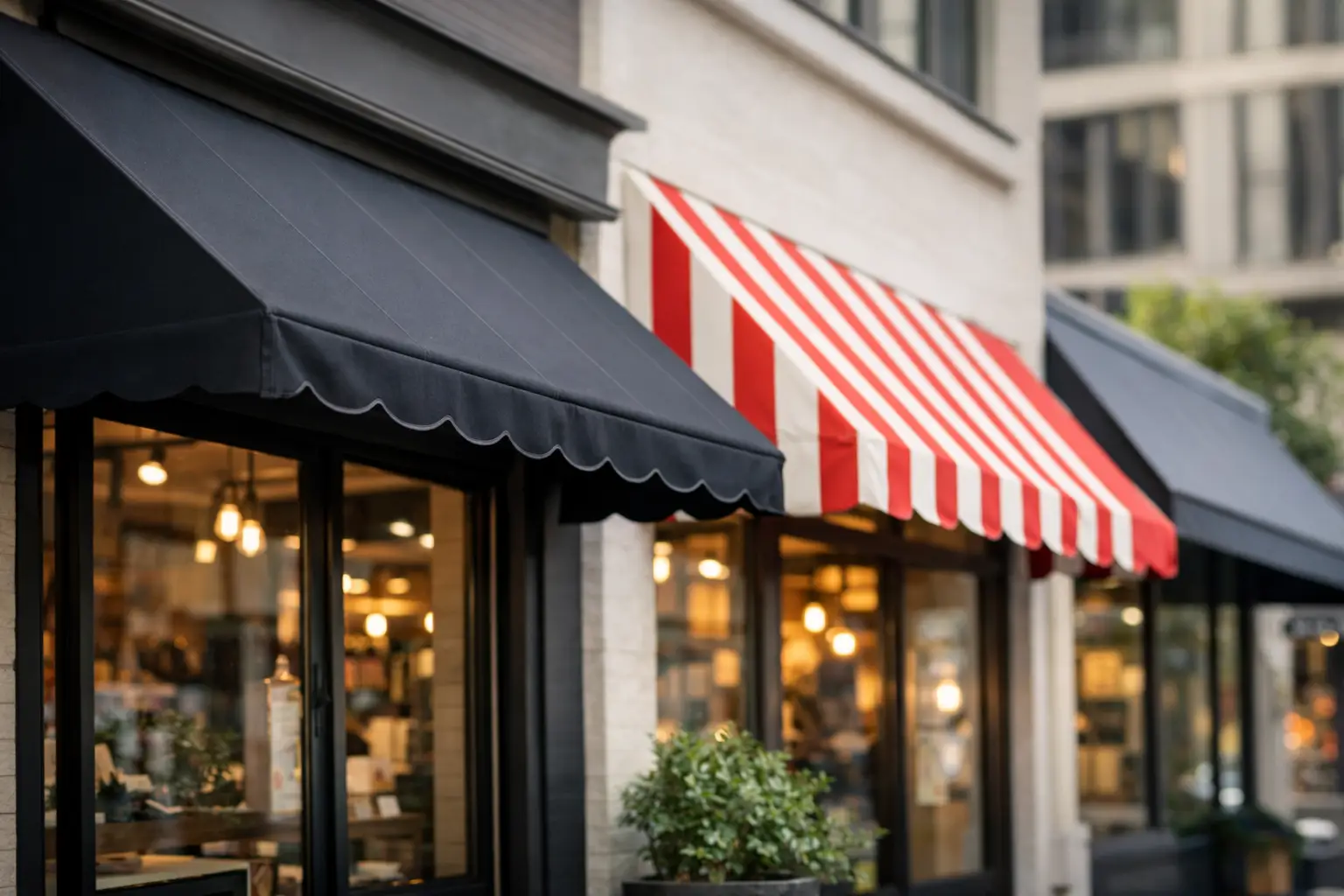
Then there is visibility. A storefront awning creates shape and depth on a flat facade. It can carry a business name, reinforce brand colors, and make the location easier to identify from the street. For high-traffic retail areas, that extra visual cue can make a real difference.
Choosing the right awning for your storefront
Not every business needs the same system. The right choice depends on the width of the frontage, sun exposure, clearance, local bylaws, and how much flexibility the owner wants.
Fixed awnings are often selected when a business wants year-round structure and a permanent branded look. They are a strong fit for storefronts that benefit from consistent coverage over the entrance or display windows. If the goal is a traditional canopy appearance with signage and steady weather protection, fixed designs make sense.
Retractable awnings are better when adaptability matters. They allow a business to extend coverage when needed and retract it during high winds, off-hours, or seasons when full sun is welcome. This is especially useful for hospitality spaces where outdoor customer use changes throughout the day or across the year.
Motorized systems are worth serious consideration for larger installations or locations where staff need quick control. Manual operation can work well on smaller setups, but once the projection gets larger or access becomes inconvenient, automation starts to look less like a luxury and more like a practical upgrade. Add-ons like wind sensors or remote controls can also help protect the investment.
Storefront awnings for retail, restaurants, and mixed-use spaces
Retail stores usually prioritize curb appeal, branding, and solar control. In that setting, the awning should complement the facade rather than overpower it. The projection needs to be deep enough to shade the glass, but not so deep that it hides merchandise visibility from the sidewalk.
Restaurants and cafes tend to need more from the system. Shade is important, but so is customer comfort at tables, weather protection during light rain, and the ability to define an outdoor service area. A storefront awning may be part of a broader setup that includes patio coverage, drop shades, heaters, or lighting. In those cases, the awning needs to work as part of a complete customer-facing environment.
Mixed-use and service businesses often sit somewhere in between. Salons, clinics, studios, and boutique offices may want the polished look of an awning mainly for visibility and entrance protection. Here, custom sizing and clean installation usually matter more than dramatic projection.
What to look for in materials and construction
A storefront awning only performs well if it is built for the climate and installed correctly. That sounds obvious, but many businesses focus first on style and price and leave performance questions until later.
Frame strength matters, especially in areas with variable weather. Fabric quality matters just as much. Commercial-grade materials should resist fading, hold their shape, and stand up to repeated sun exposure. If the awning is retractable, the hardware and arm system need to be matched to the size and use of the application. Larger systems require more than a basic residential setup scaled up for a business.
This is where customization becomes important. Width, projection, mounting height, pitch, valance style, and branding details all affect how the awning looks and functions. A system that fits the architecture properly will always perform better than a close-enough option. That is especially true for businesses dealing with shallow facades, unusual openings, or existing signage conflicts.
Installation is where good decisions pay off
Even a well-made awning can disappoint if the planning is weak. Commercial properties have more variables than residential ones, including access limitations, facade materials, tenant requirements, and coordination with property managers or landlords.
Proper mounting is critical. The installer needs to account for structural support, drainage, operational clearance, and visibility from the street. If the awning is motorized, electrical planning also needs to be handled cleanly. None of this should feel improvised on installation day.
Professional site assessment helps avoid the usual mistakes, such as mounting too low, selecting the wrong projection, or underestimating wind exposure. For businesses investing in their storefront, that guidance saves time and usually saves money as well. A cheaper system that needs rework, replacement parts, or constant adjustment is rarely the better value.
Design choices that improve business results
The visual side matters because the storefront is part of the customer experience. But design should still serve function.
Color selection should support the business identity and hold up in outdoor conditions. Darker tones can look sharp and hide some wear, but they also absorb more heat. Lighter shades may reflect more sun but can show dirt faster in high-traffic urban settings. The right answer depends on the exposure, maintenance plan, and brand look.
Shape and trim also affect perception. A more contemporary storefront often benefits from cleaner lines and a streamlined profile. Traditional retail streets may suit a classic valance or more decorative finish. Neither is universally better. The important thing is choosing a style that fits the building and does not date quickly.
Branding can be added directly to many commercial awnings, but restraint helps. A business name or logo should be legible from the street without turning the awning into clutter. Good storefront design gets noticed because it looks intentional.
When a storefront awning is not enough on its own
Some businesses start with a storefront awning and then realize the larger opportunity is outdoor space usage. Restaurants are the clearest example, but they are not the only one. If customers queue outside, if the front patio sits unused during hot afternoons, or if rain regularly disrupts service near the entrance, the storefront awning may need support from a larger shading plan.
That can include retractable patio awnings, pergolas, vertical drop screens, privacy shades, or integrated lighting and heating. The benefit is not just comfort. It is better use of square footage that already exists. For commercial operators, that can translate into more usable seating, a better customer experience, and a frontage that works harder throughout the day.
For businesses that want tailored guidance, a local provider such as Welda Solar Shading Systems can help match the right commercial setup to the space, usage pattern, and budget without overcomplicating the process.
The real question is return, not just cost
Business owners naturally ask what an awning costs. The better question is what the storefront gains from it over time. A properly selected system can support visibility, comfort, branding, weather protection, and outdoor usability all at once. That makes it one of the few exterior upgrades that affects both appearance and day-to-day operation.
The right solution is not always the biggest or most automated option. Sometimes a clean fixed awning over the entrance is enough. Other times, a retractable motorized system creates much more value because the space needs flexibility. It depends on how the frontage is used and what problem the business is really trying to solve.
If your storefront works harder when customers feel covered, comfortable, and clear about where to enter, an awning stops being a nice extra. It becomes part of how the business shows up every day.