Patio Shade for Rain Protection That Works
A patio that looks great in the sun but becomes useless the moment rain starts is only doing half the job. If you are shopping for patio shade for rain protection, the real question is not just what adds cover – it is what keeps the space usable, comfortable, and worth the investment through changing weather.
For homeowners, that usually means protecting outdoor seating, grills, dining sets, and doors from regular showers. For commercial properties, it often means keeping tables occupied, customers comfortable, and service moving even when the forecast turns. In both cases, the right system needs to do more than cast shade. It needs to handle rain in a way that matches how the space is actually used.
What patio shade for rain protection needs to do
Not every patio covering is designed for wet weather. Some products are mainly sun-control systems with light rain capability, while others are built to provide more dependable shelter. That distinction matters.
A good rain-ready shade solution should direct water away from the usable area, stay stable in changing conditions, and fit the dimensions of the patio without leaving exposed gaps at the edges. It should also suit the building. A compact townhouse deck, a backyard entertaining area, and a restaurant patio all need different levels of projection, clearance, and water management.
This is where many buyers get tripped up. They assume any awning or canopy will automatically solve rain problems. In reality, performance depends on pitch, fabric or roof material, frame strength, drainage, mounting conditions, and whether the system is fixed, retractable, or adjustable.
The best options for patio shade for rain protection
Retractable awnings
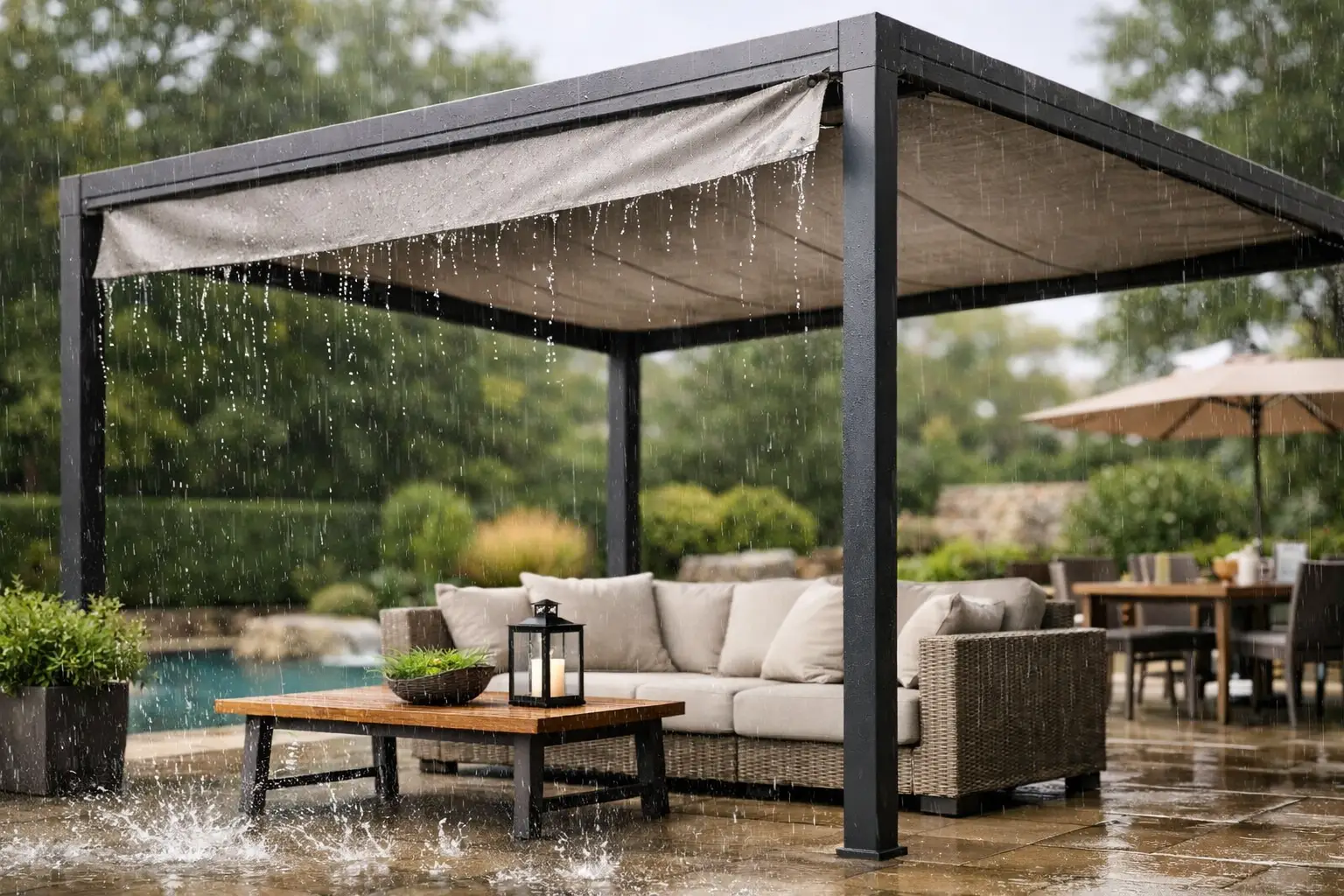
Retractable awnings are one of the most popular choices because they offer flexible coverage without permanently closing in the patio. When properly sized and installed at the correct slope, they can provide very good protection during light to moderate rain while also blocking harsh sun.
They work especially well for homeowners who want open sky when the weather is clear and coverage when they need it. Motorized models make that even easier, particularly on larger patios where manual operation becomes less convenient.
The trade-off is straightforward. A retractable awning is not the right answer for every storm condition. Heavy pooled water, strong wind, or severe weather can put stress on the system, which is why quality installation and realistic use expectations matter. If your goal is everyday comfort and practical rain coverage rather than all-weather enclosure, this is often an excellent fit.
Full-cassette and folding arm awnings
If appearance and protection for the awning itself matter, full-cassette models are worth serious consideration. When retracted, the fabric and moving parts are enclosed, helping preserve the system and keep the look clean.
Folding arm awnings also remain a strong option for patios where posts would interfere with traffic flow, furniture layout, or storefront visibility. They give broad coverage without vertical supports in front, which is a major advantage for both residential entertaining spaces and commercial seating areas.
For rain use, build quality matters more than buyers often realize. Better hardware, stronger arms, and professional pitch adjustment make a real difference in how the awning performs over time.
Pergolas with adjustable louvers
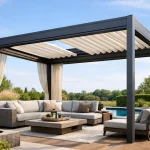
For customers who want a more permanent structure, an aluminum louvered pergola is one of the strongest choices. This type of system can provide shade in open position and rain protection when the louvers close, creating a cleaner, more architectural look than a standard fabric cover.
It is a smart option for larger patios, upscale backyard projects, and commercial properties that need a more substantial outdoor solution. Integrated features such as lighting, heaters, privacy shades, and insect screens can also turn a basic patio into a much more usable outdoor room.
The main consideration is budget. Pergolas generally cost more than retractable awnings, but they also deliver a different level of structure, durability, and long-term use. For buyers who want a premium finish and more dependable wet-weather performance, the added investment often makes sense.
Drop shade systems and side protection
Rain does not always fall straight down. Wind-driven rain can enter from the sides, which is why overhead cover alone may not fully protect the patio. Drop shade systems can help shield open edges, improve privacy, and reduce the amount of mist or runoff reaching seating areas.
This matters even more on exposed decks, rooftop patios, and commercial spaces with corner exposure. If your main complaint is that rain still reaches the furniture or guests despite having a top cover, side protection may be the missing piece.
How to choose the right system for your space
The best product depends on how you use the patio and how much weather protection you actually need. A homeowner who wants to cover a grill and dining set during occasional showers does not need the same setup as a restaurant trying to serve through variable weather.
Start with coverage. Measure not just the patio slab or deck surface, but the area where people sit, walk, and enter the home or business. Many spaces need more projection or wider coverage than expected.
Next, consider how often the patio needs to stay usable in the rain. If the answer is once in a while, a quality retractable awning may be enough. If the answer is regularly, or if the business loses revenue when outdoor seating shuts down, a pergola or a more complete covered system may be the better value.
Then think about operation. Manual systems still work well for some smaller residential applications, but motorization adds convenience and encourages people to actually use the product as intended. If opening and closing the system feels like a chore, it often stays in the wrong position at the wrong time.
Finally, be honest about the look you want. Some buyers prioritize a sleek European-style awning that disappears neatly against the wall. Others want a bold freestanding structure that defines the patio as an outdoor living area. Function comes first, but appearance still matters because this is a visible upgrade to the property.
Why professional installation matters
Rain performance is not only about the product. Installation has a huge impact on whether the system actually works the way it should.
A poorly mounted awning may sit at the wrong angle, collect water, or leave vulnerable gaps. An undersized system may protect only the middle of the patio while leaving furniture edges exposed. A structure installed without considering drainage or surrounding conditions can create new problems instead of solving them.
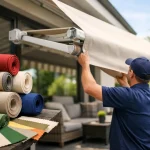
Professional guidance helps avoid those mistakes. An experienced installer will look at wall condition, mounting height, projection limits, runoff direction, and how the patio is used day to day. That is especially important in places like Toronto and the GTA, where changing seasonal weather puts more demand on exterior systems.
For many buyers, this is where working with a specialized provider makes the process easier. A company such as Welda Solar Shading Systems can help match the right awning, pergola, or drop shade setup to the property instead of forcing a one-size-fits-all product into place.
Common mistakes buyers make
One of the biggest mistakes is buying strictly for sun control and assuming rain protection will be similar. It is not. Rain creates loading, runoff, and exposure issues that require a better fit and smarter installation.
Another common issue is focusing only on width. Projection, pitch, and surrounding exposure are just as important. A wide awning that does not extend far enough often leaves the most-used part of the patio uncovered.
Buyers also underestimate how much side exposure matters. If wind regularly pushes rain across the patio, adding only an overhead cover may leave you disappointed.
And then there is durability. Lower-grade systems can look appealing on price alone, but outdoor products need to handle repeated use and changing conditions. A cheaper option that fails early is rarely the affordable choice.
What a good investment looks like
A good patio rain protection system pays you back in use. You spend more time outside, protect furniture and finishes, reduce weather disruption, and make the patio feel like part of the property rather than a fair-weather extra.
For commercial operators, the return is even easier to see. Better coverage can support more consistent service, improve guest comfort, and help outdoor space work harder across more days of the season.
The right answer is not always the biggest structure or the most advanced motorized system. It is the one that fits the space, handles the local weather you actually deal with, and gets installed properly from the start.
If you are comparing options, focus less on generic shade and more on real-world rain performance. That is usually the difference between a patio cover you admire from inside and one you actually keep using when the weather shifts.