Retractable Awning Replacement Fabric Guide
A faded awning does more than make a patio look tired. It can reduce shade performance, hold moisture longer, and make an otherwise solid system feel older than it is. If you are considering retractable awning replacement fabric, the good news is that you may not need to replace the entire awning. In many cases, a new fabric canopy gives your outdoor space a cleaner look, better sun protection, and more years of use from the frame you already have.
That option makes sense for homeowners who like their current setup and for business owners who need their patio to stay presentable without taking on the cost of a full new system. The key is knowing when a fabric replacement is enough, when it is not, and why proper measuring matters.
When retractable awning replacement fabric makes sense
Fabric usually shows its age before the hardware does. You may notice fading, frayed edges, mildew staining, seam wear, or a canopy that no longer sits with the same tension it once had. Sometimes the awning still opens and closes properly, but the fabric has simply reached the end of its service life.
That is often the ideal time to replace the fabric instead of the whole unit. If the arms, roller tube, mounting points, and motor or crank mechanism are still operating well, replacing only the canopy can be a smart investment. You refresh the appearance, improve function, and avoid paying for parts that still have useful life left.
There are limits, though. If the frame is bent, the joints are worn out, or the system was poorly installed to begin with, new fabric will not solve the underlying problem. In those cases, replacement fabric can make the awning look better for a while, but the performance issues remain.
Signs your awning fabric is ready to be replaced
Some warning signs are obvious. Others are easier to miss until the fabric starts failing under stronger sun or light rain. A canopy that looks chalky, thin, or brittle is usually telling you it has spent too many seasons exposed to UV and weather.
You should also pay attention to stitching. Even high-quality fabric can outlast the thread in some conditions. If seams are separating or the valance is tearing away, the awning may not be far from broader failure. Pooling water, sagging sections, and increased flapping in wind can also point to fabric stretch or weakened structure in the textile itself.
For commercial patios, appearance matters just as much as function. Customers notice fading, stains, and uneven edges. A fresh fabric replacement can help restore curb appeal without interrupting operations as much as a full awning replacement would.
Choosing the right retractable awning replacement fabric
Not all awning fabrics perform the same way, and this is where many buyers either save money wisely or spend it twice. The right material depends on sun exposure, how often the awning is used, local weather, and whether appearance or long-term durability is the bigger priority.
Solution-dyed acrylic is a popular choice for retractable awnings because it offers strong UV resistance, good color retention, and a softer, more refined look. It performs well in residential settings and higher-end commercial applications where style matters. Vinyl-coated fabrics can be a better fit in some commercial environments because they are easier to clean and handle moisture differently, but they may feel heavier or look less refined depending on the product.
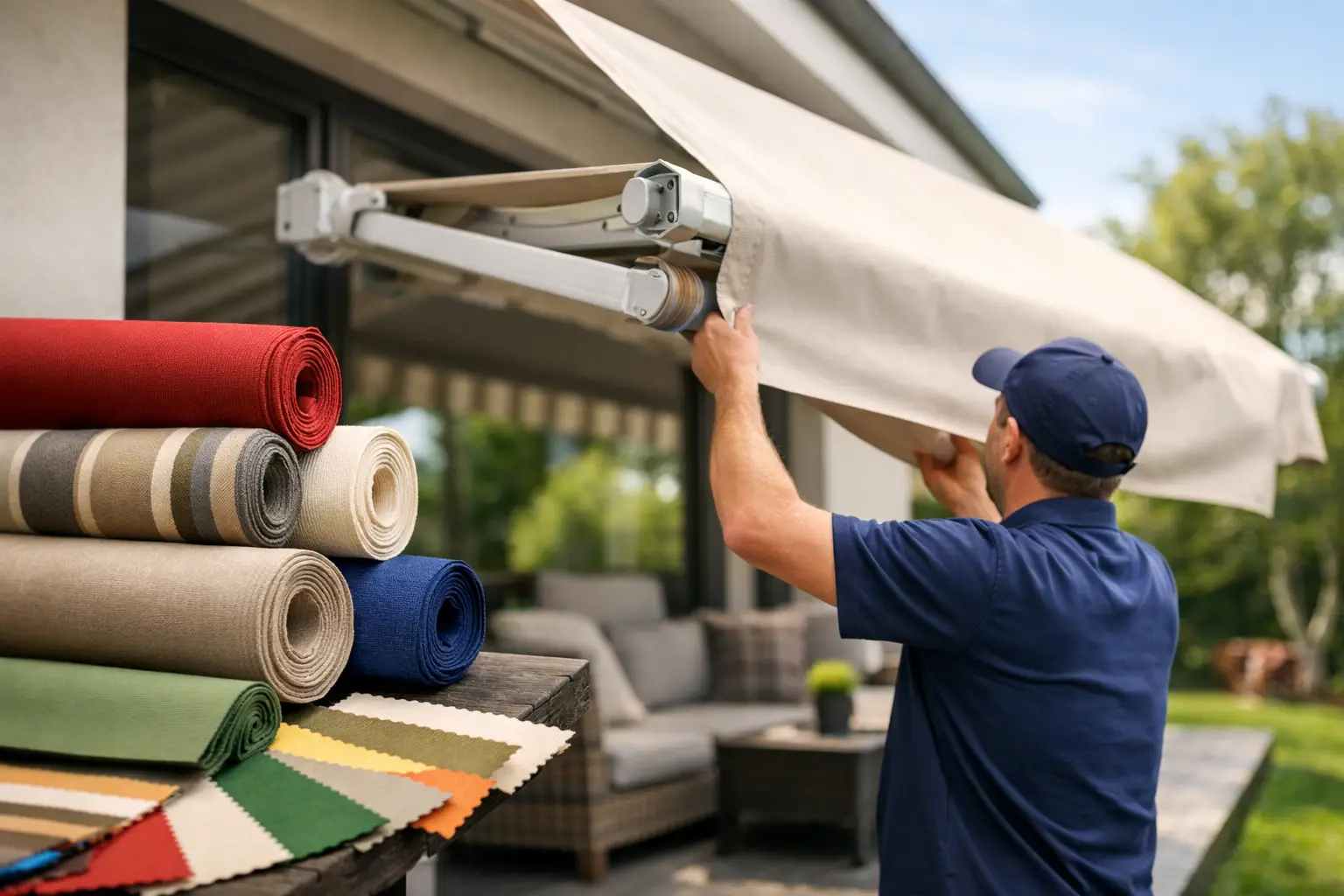
Pattern and color also deserve more attention than people think. Darker fabrics can create stronger shade and reduce glare, but they may show dust or pollen more easily in some settings. Lighter colors can keep the space feeling open and bright, though they may reveal stains faster if the awning is under trees or near a restaurant kitchen exhaust area. The best choice is rarely just about what looks good on a sample card. It has to suit the environment.
Why custom measuring matters
Retractable awning replacement fabric is not a one-size-fits-all purchase. Even awnings that look similar from the street can differ in projection, roller size, pitch, valance style, and attachment method. A small measuring error can lead to wrinkles, poor alignment, excess tension, or fabric that simply does not install correctly.
That is why professional measurement matters, especially for larger patio systems, motorized awnings, and commercial installations. The fabric has to work with the existing frame geometry, not just the rough width of the awning. Details like sleeve dimensions, hems, seam positions, and edge finishing all affect how the canopy performs once it is under tension.
For property owners, the practical benefit is simple. Accurate measuring protects the investment. It helps avoid delays, remakes, and a finished result that looks almost right but not quite.
Fabric replacement vs full awning replacement
This is the real decision point for many buyers. If the structure is still sound, replacing the fabric is usually the more budget-friendly route. You keep the original frame and hardware, update the appearance, and extend the life of the system.
If the awning is older and has recurring mechanical issues, the math changes. Replacing fabric on a worn-out frame can feel efficient at first, but it may not stay that way if motors, arms, or mounting hardware fail soon after. In that situation, a full replacement may deliver better long-term value, especially if you want upgraded features like motorization, wind sensors, integrated lighting, or a cleaner cassette design.
A professional inspection is the fastest way to sort this out. It removes guesswork and helps you avoid putting new fabric on a system that is already near the end of its useful life.
What to expect from professional installation
Fabric replacement sounds simple until you deal with spring tension, alignment, roller attachment, and safe reinstallation. On a retractable system, these details matter. If the canopy is not fitted correctly, you can end up with uneven roll-up, premature edge wear, or strain on the arms and motor.
Professional installation helps make sure the fabric is tensioned properly and the awning opens and closes as it should. It also gives technicians a chance to inspect moving parts, test operation, and spot wear that might not be obvious from the ground. That is especially valuable for larger systems over decks, restaurant patios, and hard-to-access mounting locations.
For customers in Toronto and the GTA, working with an experienced local company can also make the process smoother if your awning was custom-built for North American weather conditions and needs a precise fit. Welda Solar Shading Systems handles custom shading projects with measurement, product guidance, and installation support, which is often the difference between a quick patch and a replacement that actually lasts.
How to get more life from new awning fabric
A quality replacement fabric should not be treated like a disposable upgrade. Basic care goes a long way. Keep the canopy clean, allow it to dry before retracting whenever possible, and avoid leaving it extended in weather it was not designed to handle.
Seasonal inspection helps too. Look for debris buildup near the roller, check that the fabric tracks evenly, and pay attention to any new sagging or edge wear. Small issues caught early are usually far less expensive to address than fabric damage left to worsen over time.
If your awning covers a commercial patio, maintenance matters even more. A cleaner, tighter canopy supports a better customer impression and reduces the chance of mid-season service interruptions.
A better patio without replacing everything
Replacing awning fabric is often the practical middle ground between living with a worn-out canopy and investing in a completely new system. When the frame is still in good shape, a fabric upgrade can restore shade, improve appearance, and give your patio or storefront a stronger finish at a lower cost.
The best results come from choosing the right fabric, measuring correctly, and making sure the existing awning is worth saving. If you are looking at your patio and thinking the whole setup needs to go, it may be worth getting a professional opinion first. Sometimes the right fabric change is all it takes to make the space feel finished again.