How Long Do Retractable Awnings Last?
A retractable awning can make a patio feel like a usable outdoor room instead of a space you avoid on hot afternoons. One of the first questions buyers ask is simple: how long do retractable awnings last? In most cases, a quality retractable awning lasts between 10 and 15 years, and premium systems can go longer with proper installation, routine care, and sensible use.
That range is real, but it is not automatic. Lifespan depends on the frame, the fabric, the motor if you choose one, local weather exposure, and whether the awning was sized and installed correctly from the start. If you are comparing options for a home patio or a commercial storefront, it helps to know where those years come from and what shortens them.
How long do retractable awnings last in real conditions?
The broad industry expectation is 10 to 15 years for a well-made retractable awning system. Some fabric covers may need replacement earlier, while the frame can often keep performing longer. A lower-cost unit installed without much attention to wind exposure or mounting support may wear out sooner. A better-built system with stronger arms, reliable hardware, and weather-appropriate fabric can hold up far better over time.
Real conditions matter more than brochure claims. An awning over a sheltered backyard deck usually has an easier life than one installed on a windy restaurant frontage. A homeowner who retracts the unit during storms will usually get more years than someone who leaves it open through every weather change. The same product can have very different results depending on use.
In places with strong seasonal swings, this becomes even more important. Sun, rain, humidity, wind, and winter storage habits all affect long-term performance. That is why custom sizing and professional installation are not small details. They directly affect how long the system stays stable, smooth, and reliable.
What actually determines awning lifespan?
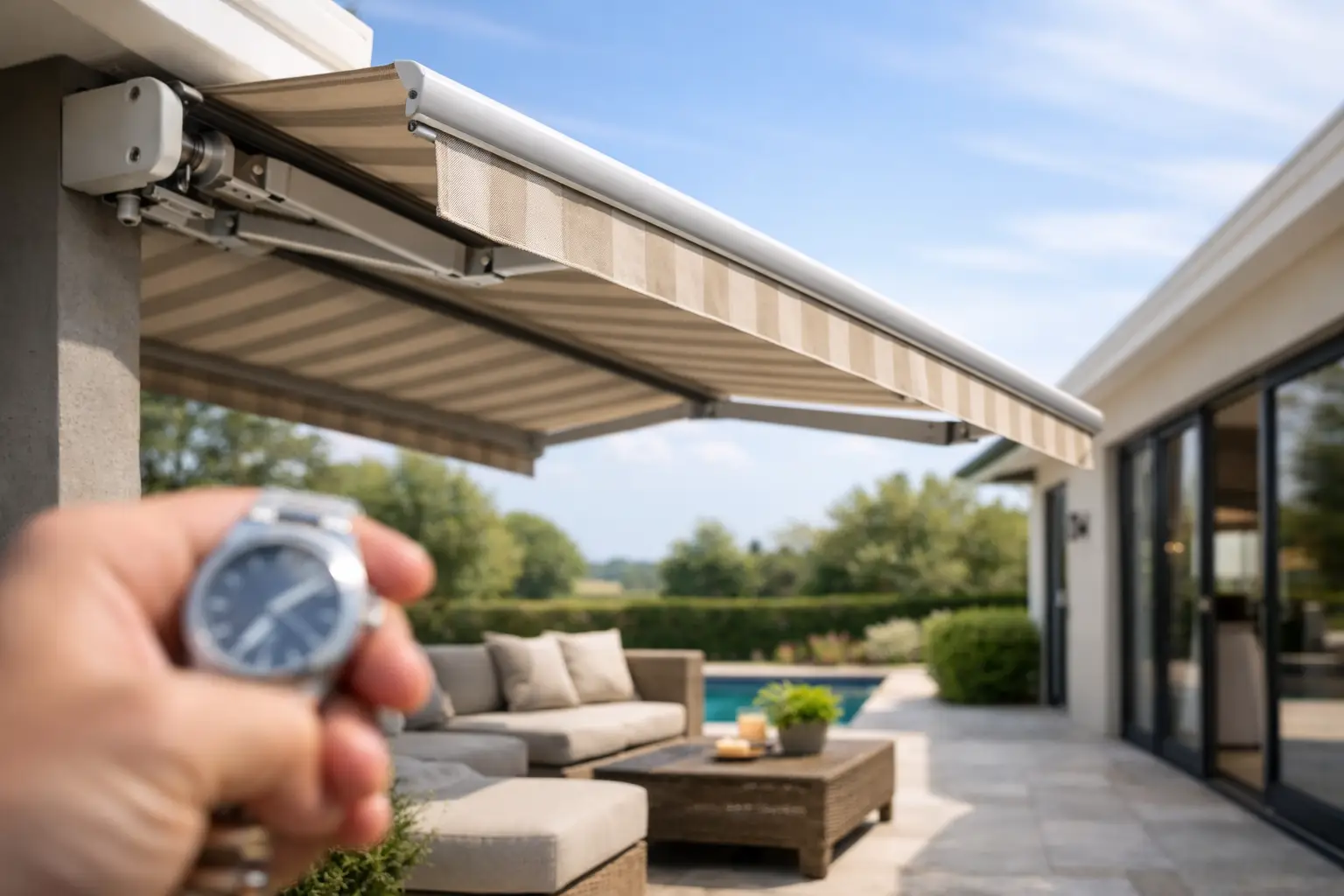
The frame is the backbone of the system. Quality retractable awnings use durable aluminum components and engineered arm systems that can handle repeated extension and retraction without loosening too quickly. Cheaper hardware tends to show its age early through wobble, uneven pitch, or arm fatigue.
The fabric also plays a major role. High-grade awning fabric is designed to resist fading, mildew, and general weather exposure, but no fabric lasts forever. Constant UV exposure will eventually wear any textile down. Darker colors can hold their look well, but performance depends more on fabric grade than shade alone.
Motorization adds convenience, but it introduces another component that affects longevity. A good motor can last many years, especially when the awning is not oversized for the drive system and when operation is smooth. Poor wiring, rushed installation, or frequent strain from weather can shorten motor life.
Then there is the mounting surface. This is often overlooked by buyers. Even an excellent awning will struggle if it is attached to a weak substrate or installed with the wrong brackets. Secure anchoring into the right structural points helps the system stay aligned and reduces wear on moving parts.
Fabric life versus frame life
One reason people get confused about retractable awning lifespan is that not every part ages at the same pace. The frame may still be structurally sound after more than a decade, while the fabric may start looking tired earlier. That does not always mean the whole awning needs replacement.
Fabric replacement can be a practical option if the arms, mounting system, and operating mechanism are still in good condition. This is often appealing for property owners who want to refresh the look of an outdoor space without replacing the full assembly. For commercial properties, it can also be a smart branding update.
On the other hand, if the frame is twisting, the arms are losing tension, or the motor is becoming unreliable, replacing fabric alone may not be worth it. This is where an expert inspection matters. The best decision is not always the cheapest immediate fix. It is the option that gives you dependable performance for the next several seasons.
Weather is the biggest variable
If you want the honest answer to how long do retractable awnings last, weather is the biggest wildcard. Retractable systems are designed for sun protection and light weather management, but they are not meant to act like permanent roofs in severe conditions.
Wind is usually the main threat. Strong gusts put stress on the arms, brackets, and front bar. Repeated wind strain can bend components, loosen hardware, and reduce smooth operation. Rain can also be a problem if water is allowed to pool because the awning pitch is not set properly.
Snow and ice are different again. A retractable awning should be closed and protected during winter conditions, especially in climates with freezing temperatures. Leaving it exposed to snow load is one of the fastest ways to shorten its life.
This is where motorized features can be especially useful. Systems paired with wind sensors or smart controls can help reduce user error. Convenience is nice, but protection is the bigger benefit. If an awning retracts when weather shifts, it is less likely to absorb avoidable damage.
Signs your retractable awning is aging
Most awnings do not fail all at once. They usually show gradual signs that performance is slipping. Fabric fading is common and mostly cosmetic at first, but fraying edges, small tears, or mildew staining suggest the cover is getting close to replacement.
You may also notice mechanical changes. The awning might extend less smoothly, retract unevenly, or make more noise than it used to. Manual systems can become harder to crank. Motorized units may hesitate, stop inconsistently, or struggle under load.
Look at the frame as well. Corrosion, loose fasteners, sagging arms, or shifting brackets all deserve attention. Catching these issues early can sometimes prevent a much larger repair later. For commercial properties, small problems should be addressed quickly because downtime affects curb appeal and customer comfort.
How to get more years from your awning
The biggest lifespan booster is simple: retract it when conditions are poor. Many owners treat retractable awnings like fixed covers, and that is where avoidable damage starts. Use the retractable feature the way it was intended.
Routine cleaning also helps. Dust, debris, bird droppings, and trapped moisture can wear down fabric faster than people expect. Light cleaning with manufacturer-appropriate methods keeps the cover in better condition and makes early damage easier to spot.
Regular inspections matter too. Check the hardware, mounting points, and arm movement before each busy season. If anything looks off, deal with it early. A small adjustment is much easier than a full replacement after the system has been strained for months.
Professional installation is another major factor. A properly measured and installed awning performs better from day one. It opens at the right pitch, carries load more evenly, and experiences less unnecessary stress. For larger residential installations and restaurant patio setups, that difference is significant.
Is repair worth it, or is replacement smarter?
It depends on the age of the system and what has failed. If the fabric is worn but the frame is strong, a re-cover can make good sense. If a motor needs replacement on an otherwise healthy awning, that can also be worth doing.
But if the system is older, out of alignment, and showing wear in several areas at once, replacement is usually the better investment. Newer models may also offer better fabric performance, cleaner cassette protection, improved motorization, and a more refined look. That matters if the awning is part of a larger patio upgrade or storefront presentation.
For buyers comparing new systems, this is why product quality and installer experience should carry real weight. The cheapest unit on day one is not always the lowest-cost option over ten years. A custom-fit awning with solid support, good materials, and proper setup tends to deliver better value.
At Welda Solar Shading Systems, this is exactly why consultation matters before installation. The goal is not just to sell shade. It is to match the right awning to the space, the exposure, and the way the customer will actually use it.
If you are planning an awning for a home or business, think beyond the first summer. Ask how the unit handles wind, what kind of fabric is being used, whether replacement parts are available, and how service is handled if something needs attention later. A retractable awning should give you years of comfort, not a few seasons of compromise.
The best awning lifespan usually comes from a simple combination: quality product, correct installation, and smart use. Get those three right, and your outdoor space stays more comfortable, more attractive, and more useful for a long time.