Retractable Awnings for Patios and Stores
A west-facing patio can look perfect at 10 a.m. and feel unusable by 3 p.m. The same goes for a restaurant sidewalk setup that loses tables when the sun gets harsh or a light rain starts. Retractable awnings solve that problem without making the space feel closed in. They give you shade when you want it, open sky when you do not, and a cleaner, more flexible way to use outdoor space.
For homeowners and business operators, that flexibility is the real selling point. A fixed cover gives constant protection, but it also commits the space to one condition all the time. With retractable awnings, you can adapt to the weather, the season, and the way the space is being used that day. That makes them a practical upgrade, not just a cosmetic one.
Why retractable awnings make sense
The biggest reason people choose retractable awnings is comfort. Direct sun can make a deck, patio, balcony, or storefront seating area too hot to enjoy. Shade changes that quickly. It reduces glare, lowers surface temperature, and makes outdoor seating more inviting for longer periods.
There is also a strong visual benefit. A properly sized awning gives the exterior a finished look and makes outdoor areas feel intentional. For homes, that can improve curb appeal and create a more polished backyard setup. For commercial properties, it can help define the patio, improve customer experience, and support a stronger street presence.
Then there is the practical side. Awnings help protect outdoor furniture, doors, and windows from constant sun exposure. Depending on the placement, they can also reduce indoor heat gain near large glass openings. That does not mean every installation will have the same energy impact, but it is often a useful side benefit, especially on sunny exposures.
Choosing the right retractable awning system
Not all retractable awnings are built the same, and this is where buyers can save themselves time and frustration by looking past price alone. The right system depends on projection, width, mounting conditions, fabric choice, and how often the awning will be used.
Manual vs motorized retractable awnings
Manual awnings still make sense for some smaller residential applications. They are straightforward, cost-effective, and work well when the unit is used occasionally. If simplicity and budget are the main priorities, a manual option can be the right fit.
Motorized retractable awnings are the better choice for larger systems, frequent use, or commercial spaces where speed and convenience matter. With the touch of a button, staff or homeowners can extend or retract the awning quickly. For wide patio covers or hard-to-reach placements, motorization is less of a luxury and more of a practical upgrade.
Some customers also want integrated controls such as remote operation, wall switches, or weather sensors. Those features add convenience, but the real value is protection. If changing weather is common, automatic retraction can help reduce unnecessary strain on the system.
Full-cassette and open styles
A full-cassette awning encloses the fabric and arms when retracted. This creates a cleaner appearance and gives better protection against dirt and weather exposure while the awning is closed. For design-conscious homeowners or street-facing commercial properties, full-cassette models often feel like the premium option for good reason.
Open or semi-cassette systems can still perform very well, especially where the mounting location offers some natural protection. They may also be a better fit when budget is tighter. The trade-off is that the components are not as fully enclosed when retracted.
Size and projection matter more than people expect
A common mistake is choosing an awning based only on wall width. Projection matters just as much because it determines how much usable shade you actually get. A stylish awning that does not reach far enough may still leave the seating area exposed during peak sun.
On the other hand, bigger is not always better. Oversizing a unit for the wall or mounting condition can create installation limitations and affect performance. That is why site-specific measuring matters. Proper selection starts with how the space is used, how the sun moves across it, and what structure is available for secure mounting.
Residential uses: more living space without a full renovation
For homeowners, retractable awnings are often the fastest way to make a patio or deck more usable. Instead of building a permanent roof structure, you can create shade only when needed and keep the area open the rest of the time. That works especially well for backyards used for dining, entertaining, or afternoon lounging.
They also fit spaces that do not always suit larger structures. Balconies, terraces, and smaller patios can benefit from shade without feeling boxed in. If you want a cleaner look and the option to preserve natural light indoors, a retractable setup often gives you more control than a permanent cover.
The customization side matters here too. Fabric color, frame finish, valance style, and cassette design all affect how the final result looks on the home. Buyers who care about architecture usually want the awning to feel integrated, not added on as an afterthought.
Commercial uses: shade that supports revenue
For restaurants, cafes, and hospitality spaces, shade is not just about comfort. It affects table turnover, guest satisfaction, and how consistently outdoor seating can be used. A patio that is too hot or too exposed loses value fast.
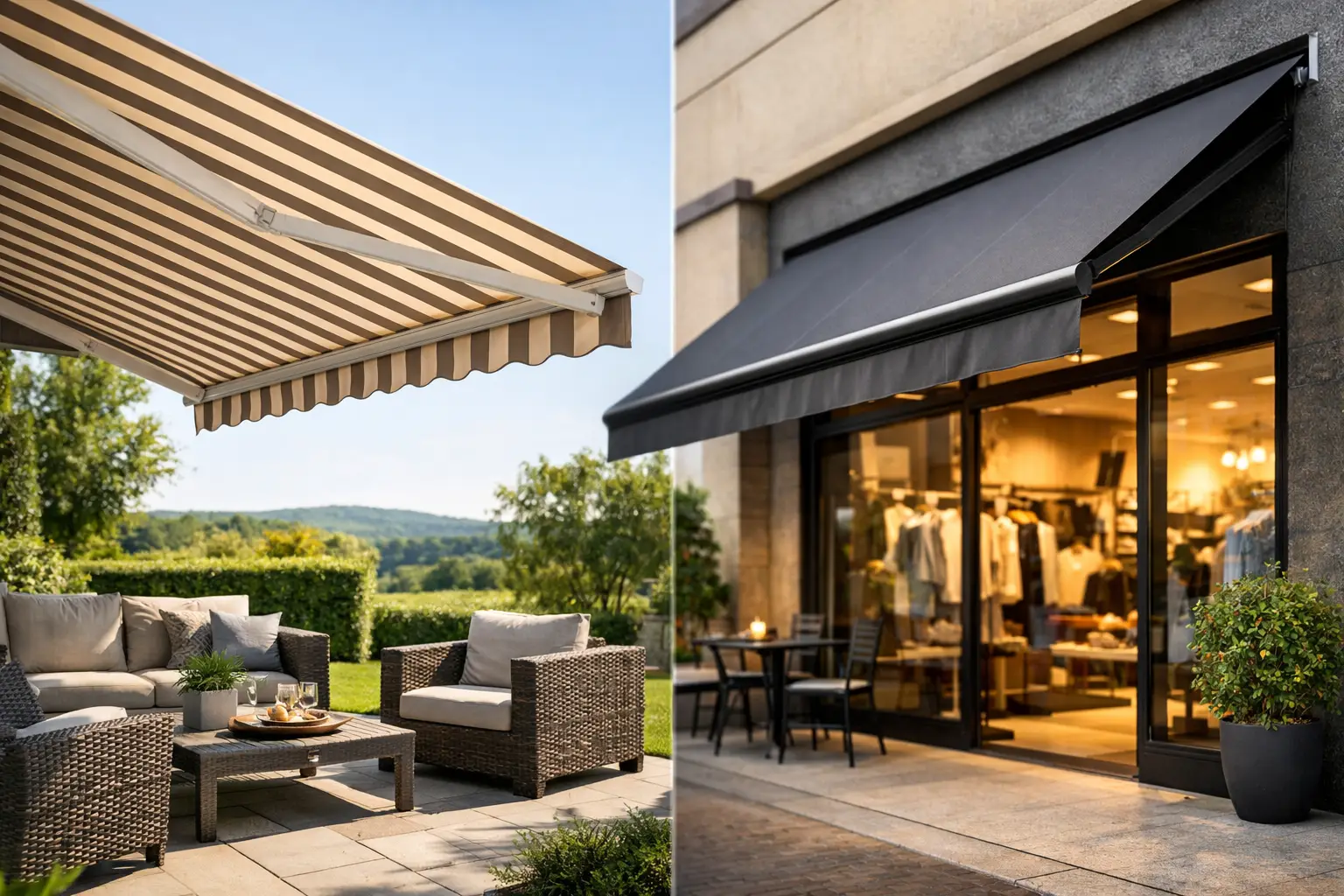
Retractable awnings give commercial operators more control over that space. During bright afternoons, they make seating more comfortable. During quieter periods or cooler weather, they can be retracted to open the area back up. That flexibility can be especially useful for businesses trying to maximize patio use across changing conditions.
Large retractable awnings are also a strong fit for storefronts and customer-facing businesses that want more than simple sun protection. They help define the frontage, support branding, and create a more finished exterior. In some cases, the awning becomes part of the business presentation as much as the signage does.
Weather, durability, and why installation matters
Awnings are outdoor products, so durability should be part of the buying decision from the start. Fabric quality, frame construction, hardware, and arm strength all matter. North American weather can be demanding, and not every system sold online is built for real long-term performance.
That does not mean a retractable awning should stay out in every condition. Wind, heavy rain, and snow loads are not what these systems are made for. A retractable design gives you the advantage of pulling the unit in when conditions turn rough. That is one reason they can outlast poorly chosen fixed shade solutions in the wrong setting.
Professional installation is just as important as product quality. An awning has to be properly measured, mounted to the right structural points, and adjusted for pitch and extension. Even a good product can underperform if the installation is rushed or based on guesswork. For custom-fit projects, especially large residential units and commercial patio covers, expert installation is not an extra. It is part of the product working as intended.
What to ask before you buy retractable awnings
A good consultation should answer more than price. You want to know how far the awning can project, what mounting surface is required, how the motor is controlled, and what fabric options hold up best in the setting. If the space gets strong afternoon sun, ask how much shade the projection will actually provide. If the awning is going over a busy patio, ask about operation speed, maintenance, and service support.
It also helps to work with a company that can guide customization instead of pushing one standard model. That matters even more if you are matching the awning to an existing patio design, storefront layout, or larger outdoor system with lighting, privacy shades, or pergola features.
At Welda Solar Shading Systems, that project-based approach is a big part of the value. Seeing options, discussing dimensions, and getting professional input before ordering usually leads to a better result than trying to force a one-size-fits-all solution.
If your patio, deck, balcony, or storefront is sitting unused during the hottest parts of the day, the fix may be simpler than you think. The right retractable awning can turn that space into something you use more often, enjoy more comfortably, and present more confidently.