Best Awnings for Restaurants: What Works
A packed patio looks great until guests start squinting into direct sun, servers are dodging light rain, and half your outdoor tables sit empty by mid-afternoon. Choosing the best awnings for restaurants is not just about appearance. It affects comfort, table turnover, seasonal revenue, and how reliably you can use your outdoor space.
For most restaurant owners, the right choice comes down to one question: do you need flexible shade, stronger all-weather coverage, or a combination of both? The answer depends on your layout, how often you use the patio, and what kind of guest experience you want to offer.
What the best awnings for restaurants need to do
A restaurant awning has a harder job than a typical residential shade system. It needs to protect guests, support staff efficiency, and hold up under frequent use. It also has to look sharp from the street. If your patio sits on a busy retail strip, the awning often becomes part of your storefront identity.
That is why the best systems balance form and function. Good coverage reduces glare and heat, helps keep food and drinks comfortable outdoors, and gives customers a reason to stay longer. In many cases, it also lets operators make better use of shoulder seasons by adding rain protection, lighting, heaters, or side shades.
Not every restaurant needs the same setup. A coffee shop with a narrow sidewalk patio has different needs than a large full-service restaurant with a deep rear terrace. That is where product selection matters.
Retractable awnings are often the most practical starting point
If you want flexibility, retractable awnings are usually the first option worth considering. They give you shade when you need it and open sky when you do not. That matters for restaurants because weather changes quickly, and patio conditions can shift hour by hour.
A retractable system works especially well when your goal is to manage sun exposure without permanently enclosing the space. During lunch service, you can extend the awning to cool tables and create a more comfortable dining area. In the evening, you may prefer to retract it and keep the patio open for ambiance.
This option also makes sense when you want to protect the fabric and hardware when not in use. A full-cassette model, for example, shields the arms and fabric when retracted, which can help with long-term appearance and durability. For restaurants investing in curb appeal, that is a real advantage.
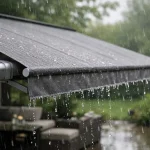
The trade-off is that retractable awnings are primarily shade and light rain solutions. They are excellent for sun control and day-to-day usability, but they are not the same as a permanent roof structure. If your patio must operate through more variable weather, you may need something more substantial.
When motorized awnings make more sense than manual ones
On a busy commercial patio, motorization is often worth it. Staff can adjust coverage quickly, and the system feels more consistent and professional during service. If the awning is large, motorization is less of a luxury and more of a practical choice.
Sensors and remote operation can also help protect the system. Sudden weather shifts are easier to manage when adjustments are fast. For restaurant operators, that can reduce wear, simplify daily setup, and avoid the problem of leaving a large awning extended when conditions turn rough.
Manual systems can still be a good fit for smaller patios or lower-traffic spaces where budget is the main concern. But for most restaurant environments, convenience usually translates into better day-to-day use.
Pergolas are better for restaurants that need a stronger outdoor room
Some patios need more than an awning. If your goal is to create a defined outdoor dining area with a more permanent feel, a pergola system may be the better investment. Aluminum pergolas are especially attractive for restaurants that want structure, clean lines, and upgrade options.
A pergola gives you a stronger visual presence and can support extras like integrated lighting, heaters, privacy screens, and insect protection. That matters if you are trying to turn your patio into a reliable revenue area rather than a fair-weather add-on.
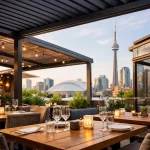
This type of system is often a better fit for larger restaurant patios, rooftop spaces, and hospitality venues where outdoor dining is central to the business model. It creates a more controlled environment and can feel closer to an extension of the interior space.
The trade-off is cost and commitment. Pergolas typically require a larger investment and more planning than retractable awnings. But if your patio is a major part of your capacity strategy, the return can justify it.
Drop shades can solve the problem overhead coverage cannot
Many restaurant owners focus on top coverage first, which makes sense, but side exposure is often what makes a patio uncomfortable. Late-day sun, wind, and reduced privacy can all limit how usable the space feels. That is where drop shades come in.
Paired with a retractable awning or pergola, vertical shade systems add another layer of comfort. They help block low-angle sun, improve privacy from street traffic, and reduce wind exposure for diners. On cooler evenings, they can also help retain warmth when used with overhead heaters.
This is one of the most effective ways to make a patio feel intentional instead of improvised. Guests notice when the space feels protected from multiple angles, not just shaded from above.
Size, projection, and layout matter more than most buyers expect
An awning can be high quality and still be wrong for the space. That usually happens when sizing decisions are based on rough estimates instead of actual patio use. Restaurant patios are working environments. Coverage has to align with table layouts, service paths, entry points, and any barriers or planters already in place.
Projection is one of the biggest factors. Too little reach and the front tables stay exposed. Too much, and you may interfere with circulation or create drainage and clearance issues. Width matters too, but broad coverage is not always the answer if the seating layout is broken into zones.
This is why custom fitting is often the better route for commercial projects. A tailored system can be designed around the patio you actually have, not the patio you wish you had.
Fabric and frame quality should match restaurant use
Restaurant awnings see more daily wear than residential systems. They open and close more often, face more exposure, and are constantly part of the guest-facing environment. Fabric quality matters because fading, sagging, or poor tension show quickly in a commercial setting.
Frames matter just as much. You want materials built for repeated use and weather conditions common to your area. In places with strong summer sun, sudden rain, and changing temperatures, durability is not a side feature. It is part of the purchase decision.
Awnings should also be easy to maintain. Restaurant operators do not need one more complicated system to manage. Clean lines, dependable mechanics, and practical finishes usually age better than anything overly decorative.
Branding and appearance still count
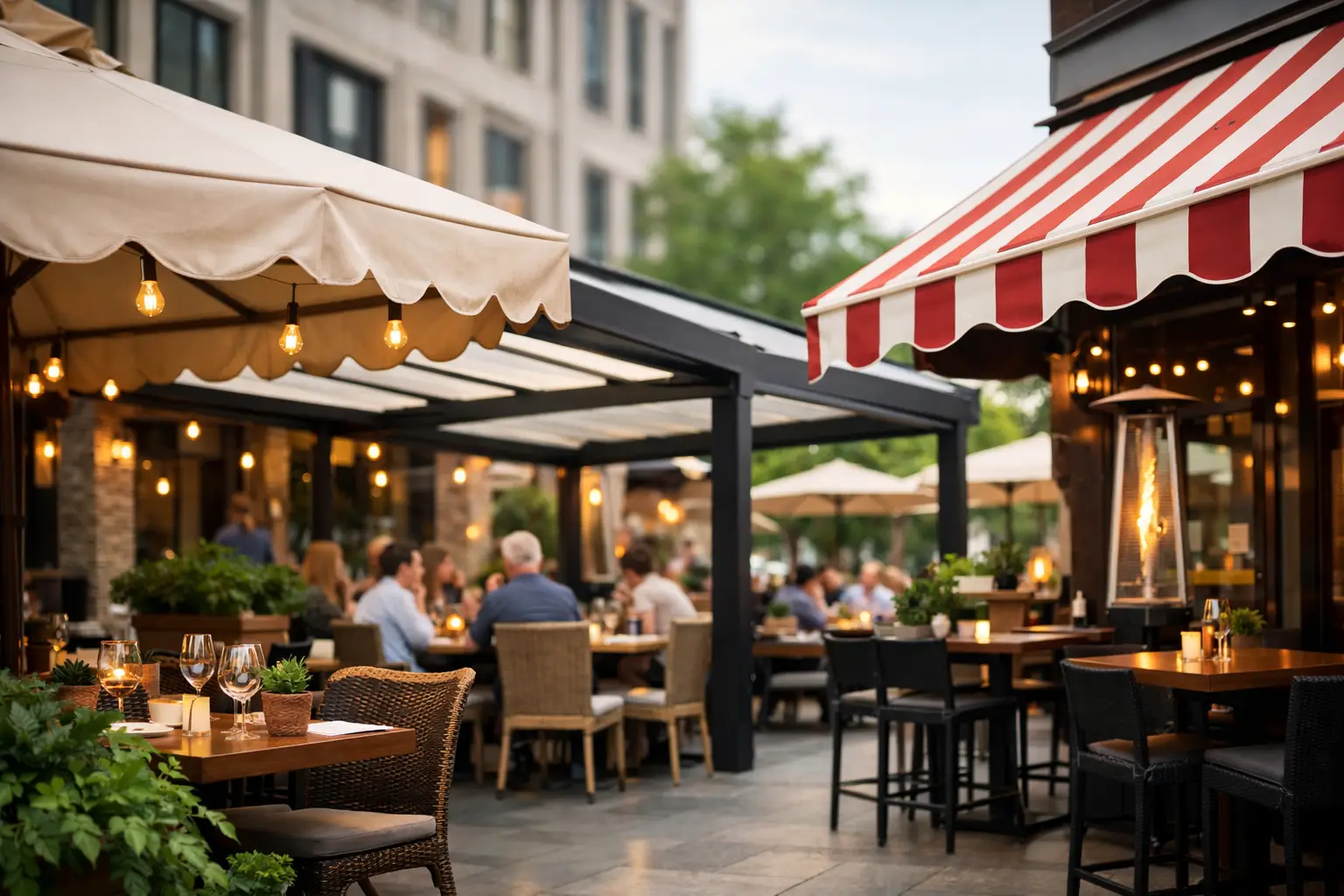
The best awnings for restaurants do more than provide shade. They shape how the business is seen from the street. Color, profile, and overall fit should support the restaurant brand rather than compete with it.
For some businesses, that means a sleek modern look with minimal framing. For others, it means a more traditional storefront style that feels warm and visible. The right answer depends on your concept, building style, and neighborhood context.
This is also where customization has real value. A standard off-the-shelf system may solve a basic shading problem, but a custom solution usually does a better job of supporting both operations and appearance. For restaurants trying to stand out, that difference is not minor.
How to choose the right system for your restaurant
If your main problem is direct sun and occasional light rain, a retractable awning is often the smartest and most cost-effective place to start. If your patio is central to your revenue and you want a more complete outdoor room, a pergola may be the better long-term solution. If the space already has overhead coverage but still feels exposed, drop shades can make a major difference.
The best choice depends on how your patio is used during real service, not just how it looks when empty. Think about your busiest hours, where the sun hits, how staff move through the space, and whether you need quick adjustments during the day. Those details usually point to the right product faster than any brochure can.
For restaurant owners who want a system that looks professional, performs reliably, and fits the space correctly, working with an experienced installer matters. A company like Welda Solar Shading Systems can help evaluate layout, usage, and customization options before you commit.
A restaurant patio should earn its square footage. The right awning helps it do that more often, in more conditions, and with a better experience for every guest who sits down.