Toronto Restaurant Patio Coverings That Work
A patio can fill up fast on a warm afternoon, then empty just as fast when the sun gets harsh or a light rain starts falling. That is why Toronto restaurant patio coverings are not just a design upgrade. They are a revenue decision. The right system keeps more tables in service, makes guests more comfortable, and gives staff a more manageable outdoor space to operate.
For restaurant owners, the question is not whether a patio covering adds value. It is which type fits the way the business actually runs. A busy sidewalk café has different needs than a rooftop lounge, and a seasonal patio has different priorities than a restaurant trying to stretch outdoor dining well beyond summer.
What restaurant owners really need from patio coverings
Most operators start by thinking about shade. That makes sense, but shade alone is rarely enough. A practical covering also needs to handle light rain, reduce glare, improve comfort during peak sun hours, and support the look of the business from the street.
That is where many off-the-shelf options fall short. Generic umbrellas and temporary canopies may seem cheaper at first, but they often leave gaps in coverage, wear out faster, and create a pieced-together appearance. For a restaurant, appearance matters because the patio is part of the customer experience before the menu even arrives.
A better approach is to choose a custom-fit system that matches the patio layout, building frontage, and day-to-day service needs. That could mean a retractable awning for flexible overhead coverage, a pergola for a more permanent structure, or a drop shade system that helps block low-angle sun and wind along the sides.
Types of Toronto restaurant patio coverings
There is no single best product for every restaurant. The right choice depends on the size of the patio, how exposed it is, how often the space is used, and how much control the operator wants.
Retractable awnings for flexible coverage
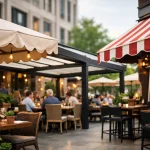
Retractable awnings are one of the most practical options for restaurants that want coverage without committing to a fixed roof structure. They extend when shade or light rain protection is needed and retract when the weather is clear or when the business wants a more open-air feel.
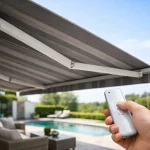
This flexibility matters. Morning service, lunch rush, and evening dining all bring different lighting conditions. A retractable system gives the operator control instead of forcing the patio to function the same way all day. Motorized models make that even easier, especially for larger commercial spaces where staff should not be dealing with manual adjustments during service.
Full-cassette and folding arm styles are especially appealing when clean lines and equipment protection matter. When retracted, the fabric and moving parts are better shielded, which can help with long-term appearance and performance.
Pergolas for structure and upscale appeal
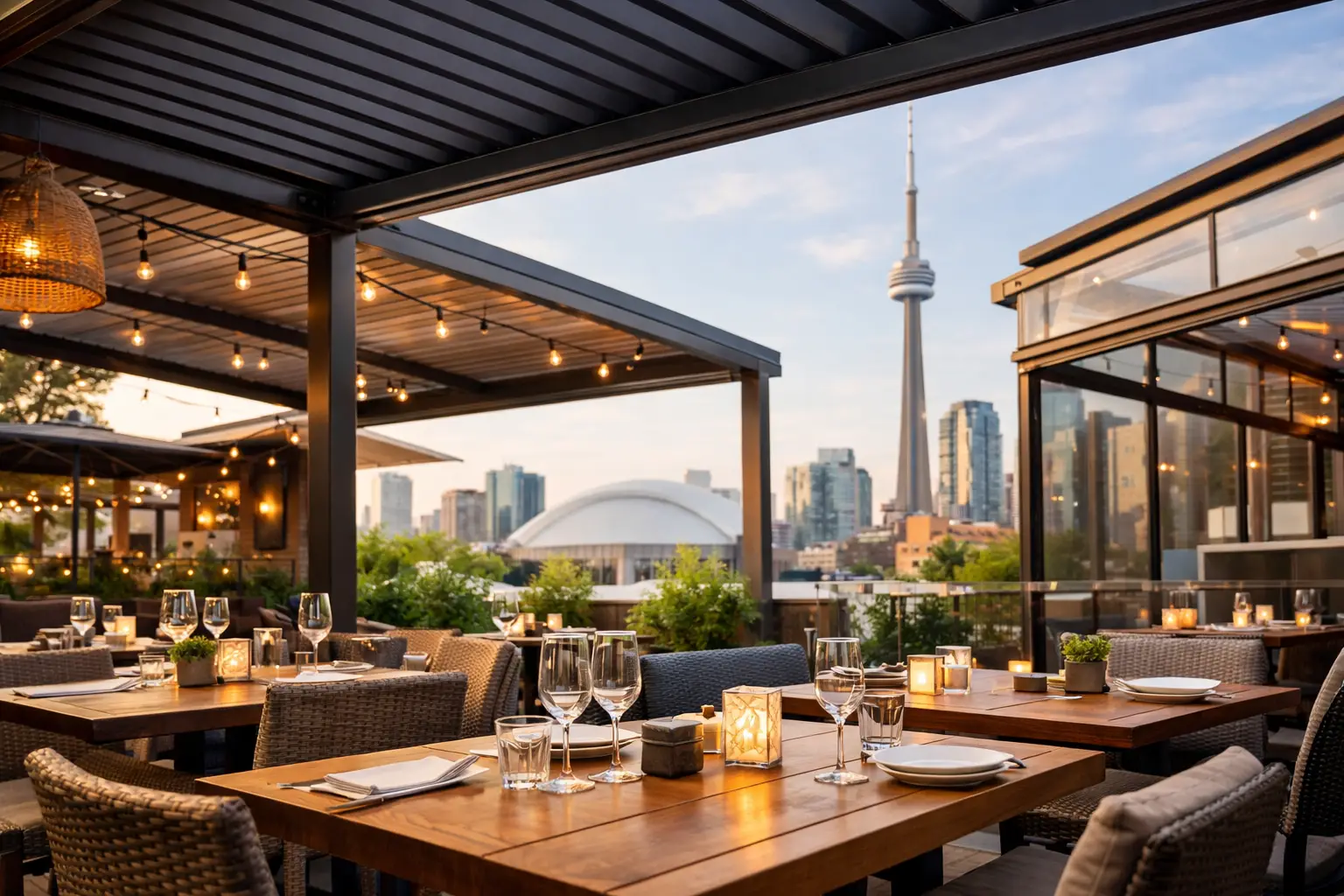
Pergolas are often the better fit when a restaurant wants a stronger architectural presence. Aluminum pergolas, especially louvered designs, create a defined outdoor room rather than just overhead shade. They can also support upgrades such as lighting, heaters, privacy screens, and insect protection.
For some restaurants, that added structure is a major advantage. It makes the patio feel intentional and premium, which can support higher guest expectations and longer stays. The trade-off is that pergolas typically require a larger investment and a more committed layout. If the patio setup changes often, a retractable awning may still be the more practical route.
Drop shades for side protection
Overhead coverage solves only part of the problem. Late-day sun, gusty wind, and passing traffic can make guests uncomfortable even with a roof above them. Drop shade systems add side protection where it counts.
These systems work well for patios with strong western exposure, corner conditions, or open edges that leave diners exposed. They can also improve privacy and help define the dining area without making it feel closed off. In some cases, combining an overhead awning or pergola with drop shades creates the most usable setup.
Why custom sizing matters more than most buyers expect
Restaurant patios are rarely simple rectangles. There may be signage to work around, uneven frontage, neighboring businesses, planters, railing systems, or service access points. A covering that looks good in a catalog can become a poor fit once those real-world details come into play.
Custom sizing helps avoid dead zones with no protection and awkward projections that interfere with traffic flow. It also allows the finished installation to look like part of the property instead of an afterthought. For commercial spaces, that polished look has real value. Guests notice when a patio feels finished, and they notice when it does not.
This is also where professional consultation makes a difference. Product selection is only part of the process. Measurements, mounting conditions, local weather exposure, motorization planning, and installation details all affect long-term performance.
Weather matters, especially in Toronto
Patio systems in this market need to do more than look good in July. Wind exposure, changing temperatures, rain events, and seasonal wear all affect how a covering performs over time. That is why durability should be part of the buying decision from the beginning, not just price.
A restaurant owner may save money upfront with a lighter-duty product, but replacement costs, maintenance issues, and lost usability can erase that savings quickly. Commercial patios see repeated use and higher expectations. The system has to stand up to real operating conditions.
Products designed for North American weather generally make more sense than lightweight decorative options built around appearance alone. Frame strength, fabric quality, hardware reliability, and the quality of installation all matter. If the system is motorized, the control components matter too.
Motorization is not just a luxury feature
For restaurants, motorization often moves from nice-to-have to practical very quickly. If staff need to open, close, or adjust a large awning manually, the task may be delayed or skipped when service gets busy. That can leave the patio underused at exactly the wrong time.
Motorized awnings and screens make the space easier to manage. Adjustments happen faster. The patio can respond to changing weather without disrupting staff workflow. The overall experience feels more professional because the environment is being actively managed rather than improvised.
For larger patios or businesses with a polished hospitality focus, automation also supports consistency. The space looks ready when guests arrive. That matters more than many operators realize.
Design still counts because patios sell the restaurant
A patio covering should work hard, but it also needs to look right on the building. The style, projection, frame finish, and fabric selection all shape how the storefront is perceived. In some cases, the covering becomes one of the strongest visual features of the business from the street.
This does not mean every restaurant needs an elaborate setup. It means the system should support the brand image. A modern restaurant may lean toward a clean-lined pergola or cassette awning. A casual café may prefer a softer, more relaxed fabric-forward look. Either way, utility and appearance should work together.
That balance is one reason many owners choose a provider that can both supply and install. When one team handles product guidance, customization, and execution, the result is usually more cohesive.
Choosing the right partner for Toronto restaurant patio coverings
The product matters, but the process matters too. Restaurant owners should look for a supplier that offers consultation, clear product recommendations, and installation experience with commercial properties. Patio projects are rarely plug-and-play. They involve measurements, site conditions, mounting considerations, and often a mix of functional goals.
A showroom can help, especially for buyers comparing fabric choices, frame styles, and motorized features. Being able to see systems in person often makes the decision easier. It also gives operators more confidence in what they are buying.
Welda Solar Shading Systems works with both residential and commercial clients, but for restaurant operators the key value is straightforward: custom-fit patio coverings, practical guidance, and professional installation that helps the space perform the way it should.
If your patio is losing seats to glare, heat, or unpredictable weather, waiting usually costs more than acting. The right covering can turn a difficult outdoor area into one of the most dependable parts of the business. Start with the way your patio is used, choose a system built for real conditions, and make the space easier for guests to enjoy and easier for your team to run.