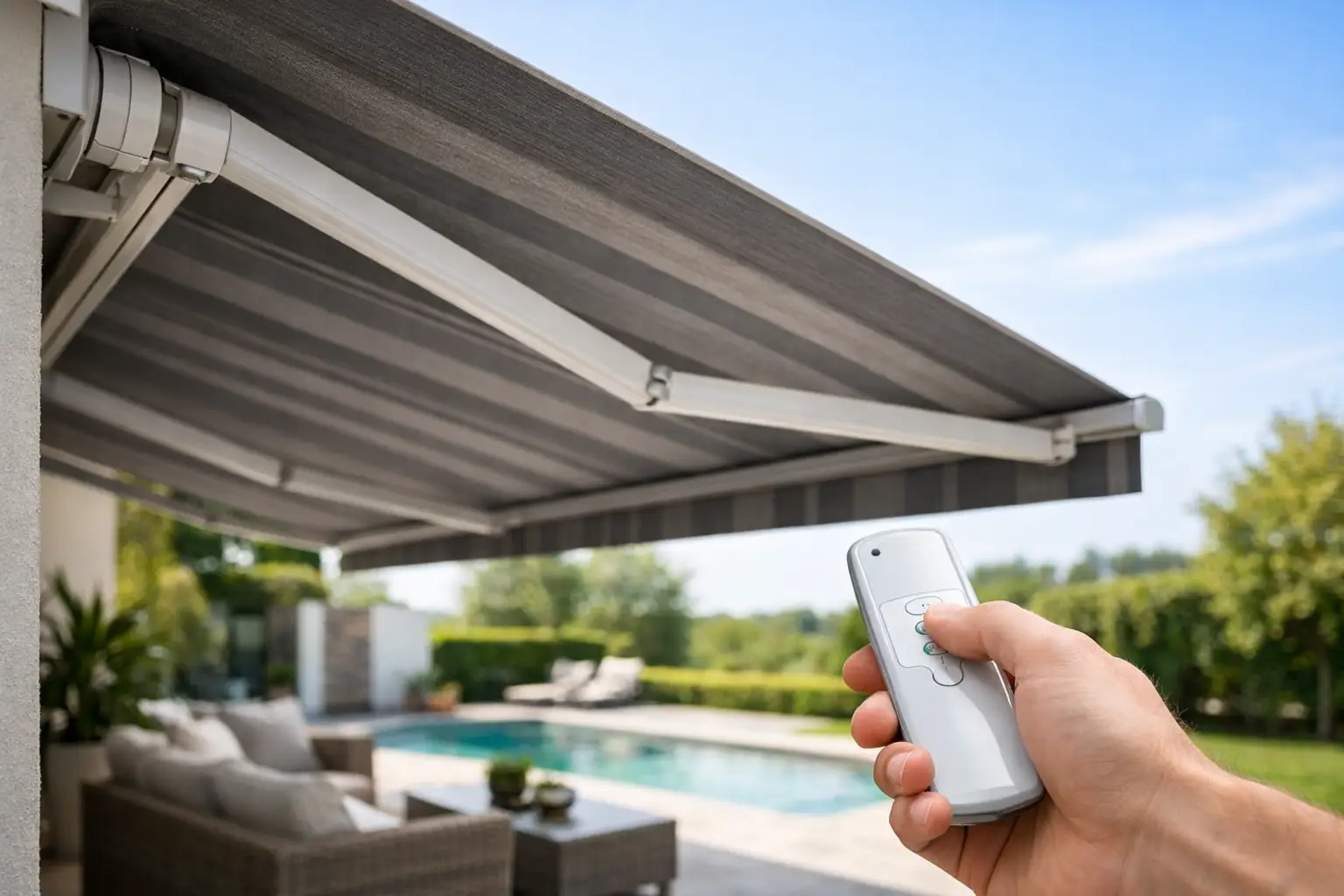
How to Motorize Patio Awning Systems
If you are tired of wrestling with a hand crank every time the sun shifts or the weather changes, learning how to motorize patio awning setups starts with one basic question – can your current awning handle a retrofit? That matters more than the motor brand, the remote, or any smart-home feature. Some awnings are built for a clean upgrade, while others were never designed to carry the extra load or wiring requirements of a motorized system.
For many homeowners and commercial patio operators, motorization is not just about convenience. It changes how often the awning actually gets used. A patio cover that opens with a wall switch or remote tends to be used more consistently, which means better sun protection, better comfort, and more value from the system you already own.
How to motorize patio awning setups the right way
The shortest answer is this: you replace or adapt the manual operating mechanism with a tubular motor that fits inside the awning roller tube, then connect it to power and controls. In some cases, that is a straightforward retrofit. In others, the smarter move is replacing the awning with a motor-ready model.
The process depends on the awning type, size, age, and condition. A small residential retractable awning with a compatible roller tube is a very different project from a wide commercial patio awning that sees daily use and needs reliable performance in changing weather.
If the frame is worn, the arms are out of alignment, or the fabric is near the end of its life, adding a motor may not be the best investment. Motorization improves operation, but it does not fix structural problems. A good installer will look at the full system before recommending a retrofit.
Start with awning compatibility
Not every retractable awning can be motorized after the fact. The key factor is whether the roller tube can accept a tubular motor and whether the mounting structure can support the updated setup.
A professional will usually check the diameter and shape of the roller tube, the condition of the brackets, the projection of the awning, and the overall weight of the system. They also look at how the manual gearbox is attached and whether removing it will affect the awning’s balance or operation.
Older awnings can be tricky. Some were built with proprietary components or outdated hardware that makes retrofitting more expensive than expected. If replacement parts are hard to source, labor can rise quickly. That is where homeowners often discover that a new motorized awning gives better long-term value than trying to upgrade a tired manual one.
What parts are needed to motorize an awning
Most motorized patio awning retrofits use a tubular motor installed inside the roller tube. That motor connects to a power source and is controlled by a switch, remote, or automation system. Depending on the model, you may also need an adapter set for the tube, revised brackets, a receiver, and weather sensors.
Wind sensors are worth serious consideration, especially for larger retractable awnings. They can trigger automatic retraction when conditions become risky. That feature is not just convenient. It can help prevent expensive damage if gusts pick up while nobody is home or while staff are busy inside a restaurant or café.
Sun sensors can also be useful, but they are more about comfort and energy control than protection. Some owners love the automation. Others prefer simpler remote control without extra electronics. It depends on how you use the space and how much control you want over daily operation.
Power options and control choices
When people ask how to motorize patio awning systems, they often picture a remote-controlled upgrade and stop there. In practice, the power source is one of the biggest decisions.
A hardwired motor is common because it offers dependable performance and suits larger awnings well. It does, however, require electrical access. If the awning location is far from a power source, installation becomes more involved. Surface-mounted conduit may be acceptable in utility areas, but many homeowners want a cleaner look, which can mean additional electrical work.
Plug-in options exist for some systems, and they can reduce installation complexity in the right setting. Battery-powered solutions are less common for full-size retractable awnings and are generally better suited to smaller shading products. For large patio applications, hardwired motorization remains the more practical choice.
As for controls, a wall switch is simple and reliable. A remote adds convenience. Smart-home integration appeals to buyers who want app control, scheduling, or voice commands. The trade-off is cost and complexity. The more automation you add, the more important proper setup becomes.
DIY retrofit or professional installation?
This is where expectations need to stay realistic. Technically, some awnings can be motorized by an experienced DIY homeowner. But the job involves more than swapping a crank for a motor.
You are dealing with spring tension, moving arms, electrical connections, motor limits, and alignment. If the limits are not set correctly, the awning may not retract fully or may strain the fabric and frame. If the motor is undersized, it will wear out faster. If the brackets are not secure, the whole system can become unsafe.
For that reason, professional installation is usually the better route, especially for wide projections, commercial patios, second-story installations, and premium cassette awnings. A proper retrofit should feel smooth, quiet, and balanced. If it jerks, stalls, or twists, something is wrong.
When retrofitting makes sense
A retrofit is often the right choice when the awning frame is in good shape, the fabric still has useful life left, and the system was originally built with upgrade potential. In that situation, motorization can extend the usefulness of the awning without requiring a full replacement.
This can be especially appealing for homeowners who want easier operation as they age, or for businesses that need staff to open and close patio coverage quickly during service hours. Convenience becomes an operational benefit, not just a luxury.
A retrofit also makes sense when the awning is custom-sized, professionally mounted, and structurally solid. If the existing installation already fits the space well, keeping the core system and upgrading the controls can be a cost-effective move.
When replacement is the smarter investment
Sometimes the real answer to how to motorize patio awning systems is: do not force a retrofit onto the wrong product. If the awning is old, undersized, manually awkward, or showing signs of wear, putting money into motorization may only delay a replacement you will need soon anyway.
A new motorized awning can give you a cleaner install, stronger components, updated fabric, better weather resistance, and integrated features like wind sensors and LED lighting. It also removes the guesswork around compatibility. For many property owners, that is the more predictable investment.
This is particularly true for commercial settings where reliability matters. If a restaurant patio awning fails during business hours, it is more than an inconvenience. It affects guest comfort, operations, and revenue. In those cases, a purpose-built motorized system usually makes more sense than piecing together an upgrade on an older frame.
Cost factors to expect
Motorizing an awning is not one flat-price project. The final cost depends on the size of the awning, motor type, control system, electrical access, and whether structural adjustments are needed.
A straightforward residential retrofit costs less than a large commercial installation with sensors and custom wiring. But low price should not be the only filter. A cheap motor paired with the wrong tube adapter or poor installation can lead to repeated service issues.
What matters is getting the motor size, controls, and installation method matched to the awning. That is where expert guidance pays off. A properly selected system should operate reliably for years, not just work on day one.
A better result starts with the right assessment
If you want your patio awning to open at the push of a button, the first step is not shopping for a motor online. It is having the awning assessed properly. Compatibility, structural condition, power access, and intended use all affect the answer.
For homeowners and business owners who want dependable shading with less effort, motorization is often a worthwhile upgrade. And if your current setup is not the right candidate, replacing it with a motor-ready system can save time, frustration, and repair costs later. A quick professional evaluation will tell you which path gives you the better result, and that is usually the smartest place to start.