Outdoor Privacy Screens for Pergola Ideas
A pergola can make a patio feel finished, but once the sun shifts or the neighbors are in full view, that open structure stops feeling as comfortable as it should. That is why outdoor privacy screens for pergola setups have become one of the most practical upgrades for both homes and commercial patios. The right screen does more than block sightlines. It improves shade, reduces glare, adds wind control, and makes the space more usable throughout the day.
For many property owners, the question is not whether privacy matters. It is how to add it without making the pergola look closed off, heavy, or temporary. That is where choosing the right screen system makes a real difference.
Why outdoor privacy screens for pergola systems work so well
A pergola gives structure and style, but by design it leaves the sides open. That openness is part of the appeal, yet it also creates the most common complaints. Morning sun comes in low from the side. Nearby homes overlook the seating area. Wind pushes through during dinner service or family gatherings. Insects become more noticeable at the exact time people want to relax outdoors.
A well-designed privacy screen helps solve several of those problems at once. It creates visual separation without taking away the open-air feel entirely. In many cases, it also improves comfort enough that the space gets used more often, which is the real goal behind any patio upgrade.
For restaurants, cafes, and hospitality spaces, privacy screens can also make outdoor seating feel more intentional and premium. Guests are more likely to stay longer when they feel sheltered from direct sun, passing traffic, and nearby distractions. For homeowners, that same principle applies to family meals, entertaining, and everyday downtime.
What to look for in a pergola privacy screen
Not every screen is built for long-term outdoor use. Some look acceptable in photos, but they fade, sag, or wear out quickly once exposed to real weather. A pergola privacy screen should be chosen the same way you would choose the pergola itself – with attention to structure, durability, and how the system will actually function day to day.
Material matters first. Exterior-grade mesh and performance fabrics are popular because they allow airflow while still reducing visibility and glare. Aluminum screen frames and guided side systems tend to hold up better than lightweight add-ons, especially in areas where wind is a factor. If the pergola is already a premium feature, attaching a cheap screen usually brings down the whole result.
Operation matters just as much. Fixed screens offer consistent coverage, but they reduce flexibility. Retractable privacy screens are often the better choice when you want to open the space at certain times and close it when conditions change. Motorized options are especially useful for larger pergolas or commercial spaces where convenience and speed matter.
Appearance should not be treated as a secondary concern. The best systems look integrated with the pergola, not tacked on afterward. Clean lines, coordinated frame colors, and concealed hardware go a long way toward keeping the space modern and polished.
Fixed panels vs. retractable screens
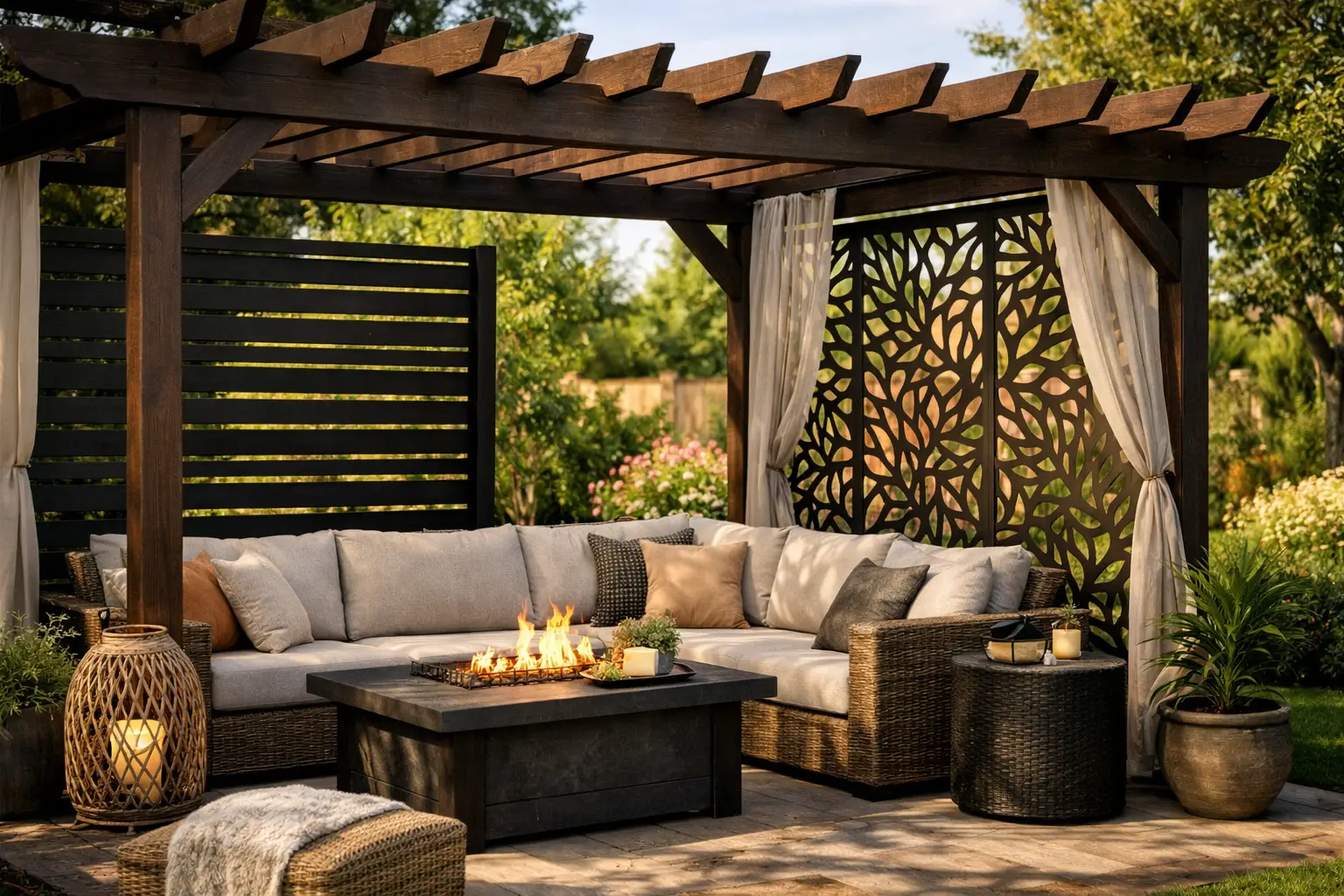
This is where many buyers need practical guidance. Fixed privacy panels can make sense if there is one view you always want blocked or one side that constantly takes wind or low-angle sun. They can also work well when the design goal is a more architectural look, especially with aluminum slats or decorative panel systems.
But fixed solutions come with trade-offs. They limit openness year-round, and they do not adapt well when you want more airflow or a wider view. If your patio use changes by season, time of day, or event type, fixed panels can feel restrictive.
Retractable drop screens are usually the more versatile option. They can be lowered when privacy or shade is needed and raised when you want the pergola fully open. For homeowners, that flexibility helps the space feel less confined. For businesses, it helps staff respond quickly to changing weather and customer comfort.
Motorization adds another layer of convenience. Instead of manually adjusting each section, the screens can be operated with a switch, remote, or integrated control system. On larger pergolas, that is not a luxury feature. It is a practical one.
Best materials for long-term performance
If you are investing in a pergola upgrade, choose materials based on performance first and appearance second. The good news is that quality systems can deliver both.
Outdoor-rated mesh fabrics are a strong choice for most privacy screen applications. They reduce visibility from outside while still allowing filtered light and ventilation. They also tend to perform well in heat, making them useful for patios that become too bright or hot during peak sun hours.
Aluminum is one of the best frame materials because it resists rust and supports a cleaner, more durable finish. In pergola systems, that matters. The screen needs to handle movement, tension, and weather exposure without warping or looking worn after one or two seasons.
Decorative metal panels, louvers, and composite privacy walls can also work, particularly when the project is focused on permanent visual screening. These options can look excellent, but they are less flexible and may block more airflow. That is often the trade-off. More privacy and structure usually means less adaptability.
Design decisions that affect comfort
Privacy is not just about blocking a view. It is also about how the space feels once the screen is installed. A screen that is too dark can make the pergola feel enclosed. A screen that is too open may not solve the visibility problem enough to justify the investment.
The right openness factor depends on exposure, surrounding properties, and how the pergola is used. A backyard lounge area may need a different screen density than a restaurant patio facing a busy street. Sun direction also matters. West-facing pergolas often benefit from stronger glare reduction in the late afternoon, while side screens on other exposures may be chosen mainly for privacy.
Color plays a role too. Darker mesh can improve outward visibility from inside the space while still reducing visibility from the outside during the day. Lighter colors may reflect more heat, but they can change the visual effect. This is one of those decisions where seeing samples in person often helps more than looking at photos.
Why custom fit matters
Pergolas are rarely one-size-fits-all, and privacy screens should not be either. A poor fit creates gaps, inconsistent tension, and a finish that looks improvised. On a windy day, that can turn into noise, wear, and early replacement.
Custom sizing is especially important for motorized drop screens, side channels, and integrated pergola systems. Proper measurements affect how smoothly the screen operates and how cleanly it closes. It also affects how well the system stands up to everyday use.
Professional installation usually delivers better long-term value than trying to piece together a generic solution. The screen has to align with the pergola frame, operate correctly, and hold up through changing weather. For homeowners and commercial property owners making a significant patio investment, that level of finish matters.
A smarter upgrade for homes and businesses
For residential spaces, pergola privacy screens create a more comfortable setting for dining, relaxing, and entertaining. They help turn a patio into an outdoor room without fully enclosing it. That balance is what makes them so effective.
For commercial properties, they can improve guest comfort, increase perceived quality, and make patio seating more usable across different times of day. They also help create a more controlled environment without losing the visibility and open-air appeal that outdoor dining depends on.
At that point, the screen is not just an accessory. It becomes part of how the space performs.
Choosing a system that matches your pergola
The best result comes from thinking about the pergola and privacy screen as one complete system. Frame finish, screen color, control options, and weather performance should all work together. If the pergola is modern and streamlined, the privacy solution should follow that same direction. If ease of use is a priority, retractable and motorized options are worth serious consideration.
For property owners in Toronto and the GTA, this is also where local experience matters. Products need to suit real outdoor conditions, not just showroom displays. A provider that can guide product selection, customization, and installation from start to finish will usually save time and prevent expensive missteps. Welda Solar Shading Systems helps customers choose pergola upgrades that look right, function properly, and hold up over time.
If your pergola looks good but still does not feel private or comfortable enough to use the way you want, a well-designed screen system can change that faster than most major patio renovations.